

We’ve all been there. That perfect pair of running tights, the one that felt like a second skin, has suddenly betrayed you. It’s a universal moment of mourning for your favorite gear. That “moisture-wicking” shirt now holds more sweat than a sponge, or the sun hoodie that forgot its UPF 50+ promise after a few washes. You’re not imagining it.
We’re not just talking about a loose thread or a fading color. We’re talking about the technical heart of your gear failing. It’s not you; it’s the fabric science that gave up. We’re talking about antimicrobial treatments that quit after 15 washes, leaving a persistent locker-room aura. We’re talking about UPF coatings that degrade, leaving you with a fancy sunburn. A staggering 68% of athletes report dissatisfaction with their gear’s performance in summer months, a statistic that’s more than a number—it’s a collective sigh of frustration.
This isn’t just wear and tear; it’s a technical fabric failure. The real investigation begins by asking the right question: not what failed, but why it failed. Was it the persistent odor from a failed antimicrobial treatment? The moisture-wicking that now just wicks the will to live out of you? The UPF that’s gone AWOL? This is the crime scene, and the evidence points to five key suspects: odor, poor cooling, UV degradation, moisture management failure, and the slow, silent death of a fabric’s function.
So, before you invest in your next piece of durable activewear materials, let’s put on our detective hats. Let’s stop asking why our gear is failing and start learning how to spot the durable activewear that can actually go the distance.
Fabric longevity analysis
Think of your activewear as a tiny, high-tech metropolis. The yarns are the skyscrapers, the weave is the city grid, and the fabric finish is the public transit system. When it all works, you get a smooth, functional city that handles your sweat, stretches with your lunge, and bounces back from a wash. But what happens when the urban planning fails? The pilling, the pilling, the stretched-out seams? Let’s break down the urban decay of your activewear.
The Anatomy of a Fabric’s Breakdown
Your workout gear doesn’t just “wear out.” It undergoes a systematic, molecular-level coup. Standard polyester, the concrete of the activewear world, is a polymer chain—a long, repeating molecule. Every squat, lunge, and downward dog introduces micro-abrasions, like tiny earthquakes along a fault line. Over time, these micro-tears compromise the fabric’s integrity. This is where the tech in long lasting workout clothes makes a seismic difference.
Consider the difference between a standard polyester shirt and one engineered with microporous yarn technology. The standard poly is like a single-lane country road for moisture—sweat gets trapped, bacteria thrive, and you’re left with a garment that smells like a locker room. Now, imagine that road becomes an eight-lane superhighway. That’s microporous yarn technology: it increases the fiber’s surface area exponentially, creating a capillary network that whisks moisture away from your skin at an Olympic pace. This isn’t just about staying dry; it’s about removing the swampy environment where odor-causing bacteria throw a week-long rave.

Odor isn’t just a social faux pas; it’s a sign of bacterial real estate development. Standard fabrics are like a city with no zoning laws—bacteria move in, set up colonies, and refuse to leave, even after a wash. This is where nano-zinc ion technology, a feature in advanced fabrics, acts as the ultimate city planner. These microscopic ions are embedded in the fiber, not just sprayed on the surface. They don’t wash out. It’s the difference between a coat of paint and the brick itself being fireproof. One fabric stress testing reveals that this tech can survive 200+ washes, while a typical anti-odor coating taps out after a dozen. That’s the difference between a garment that lasts a season and one that becomes a gym bag staple.
The Usual Suspects: Why Your Gear Gives Up
Let’s line up the usual suspects in the lineup of fabric degradation. First, the color-fading culprit: UV damage. Sunlight, specially UV rays, is like a slow bleach for synthetic fibers, breaking down the polymer chains. Premium long lasting workout clothes use titanium dioxide or other UV-blocking agents integrated at the fiber level, giving UPF 50+ protection that won’t wash out, unlike a surface coating that flakes off like a bad spray tan.
Next, the pilling and bobbling. This is the fabric equivalent of urban decay—loose fibers balling up on the surface. High-quality, long-staple fibers and tight weaves resist this, but cheap, short-staple fibers will pill faster than you can say “pilling.” The result? A garment that looks old and worn after a few washes.
Lastly, the seams. This is often the first point of failure, where a gym fail becomes a wardrobe malfunction. The stress on a seam during a deep squat or a full-range lunge is immense. Double-stitched, reinforced flatlock seams are the unsung heroes of durable activewear, preventing the catastrophic wardrobe failures that populate fail compilations.
In the end, long lasting workout clothes aren’t just about thicker fabric; they’re about smarter engineering. It’s urban planning for your epidermis—better infrastructure, smarter materials, and zoning laws that keep the bacterial riff-raff out.
Stitch quality review
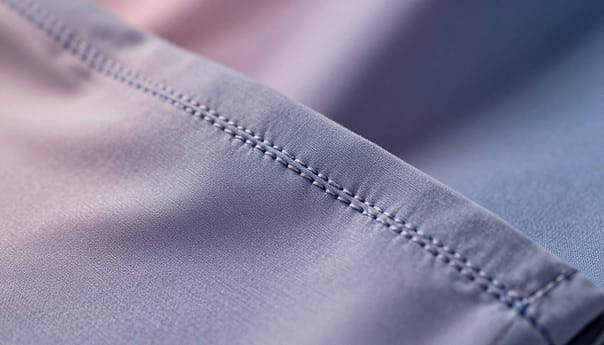
The stitch is a key part of activewear, keeping it together and strong. While we focus on fabrics that wick moisture and stretch, the seams are what really matter. They let our clothes move and last longer.
When durable activewear starts to fall apart, it’s often the seams that show the first signs. This is because the seams are like the joints of our clothes, holding everything together.
The Seams of Our Lives
Think of a seam as a joint. A bad seam in your running tights is like a weak spot in a bridge. It might seem fine at first, but it will break under stress.
The way a garment is stitched is what really matters. We often talk about how it feels and looks, but the seams are what show its true quality.
Construction Quality
In durable activewear, two stitches stand out: the flatlock and the overlock. The overlock stitch is quick and cheap, but it’s not as strong. It’s like fast food for your clothes.
The flatlock stitch, on the other hand, is made for durability. It creates a smooth seam that doesn’t chafe and lasts longer. It’s like the difference between a sloppy hem and a well-made one.
High-stress areas like the gusset and underarm need special care. A simple stitch here can lead to a big problem. Good construction uses strong, bar-tacked stitches in these spots.
The fast-fashion trend often fails here. Real performance gear is made for movement, not just looking good. Brands that care about their workers usually make better, more durable clothes.
Looking for durable activewear means checking the seams, not just the fabric. Are the seams flat and strong, or are they weak? This is what really makes a garment last.
Pilling resistance
Have you ever pulled out your favorite workout clothes from the dryer to find them covered in fabric pills? It’s not just a sign of cheap quality. It’s a battle between fibers and friction.
The Battle Against the Fuzz
Pilling is a natural process, not a sign of bad luck. It happens when fibers break down from wear and tear. Not all fabrics pill the same way. The question is, when and how much will yours pill?
Fabric Composition and Pilling
The secret to fighting pilling lies in the fabric’s makeup. Stronger fibers and tighter weaves help resist pilling. Quality fabrics often hide behind flashy marketing. When checking 5 tests for sportswear fabric quality, look closely at pilling resistance.
Let’s dive into the science. Pills form when fibers break and tangle. To prevent this, use stronger, longer fibers and tighter weaves. Here’s how budget gym clothes and premium lines compare:
| Fabric Type | Fiber Twist & Staple | Pilling Tendency | Best For |
|---|---|---|---|
| Standard Polyester/Spandex | Low-twist, short staple | High | Basic, low-friction wear |
| High-Twist Merino Wool | High-twist, long staple | Very Low | Base layers, odor resistance |
| High-Density Nylon (e.g., Supplex) | High-twist, filament yarn | Low | High-abrasion areas (leggings, jackets) |
| Bamboo/Tencel Blends | Lyocell-based, smooth filament | Low-Moderate | Softness, moisture-wicking |
Long-staple fibers and high-twist yarns are key in the fight against pilling. They keep fibers together, preventing pills. This is why “long lasting workout clothes” are tested in real use, not just in photos.
Don’t worry too much about a little fuzz. But if your clothes pill a lot, it’s a sign of weak fibers. Look for durable fabrics like “high-density knit” or “combed long-staple cotton.” These are your long lasting workout clothes, built to last.
Care tips
So, you’ve bought what you thought was durable activewear. You’ve sweated, stretched, and maybe even fallen in it. But now, the tag says “Machine Wash Cold” and you’re unsure. Is it a suggestion or a rule? Welcome to the first test of your gear’s life, not on the trail or in the gym, but in the laundry room.
The care you give your activewear is key to its life. Doing it wrong is like treating a sports car wrong. Let’s help you understand.
Washing and Drying for Longevity
Think of your durable activewear as a precision tool, not old socks. The tag is not a suggestion; it’s a guide. Most of us treat laundry as a mystery. But for performance fabrics, it’s a battle against heat, abrasion, and chemicals.
Heat is the main enemy. Elastane, which gives your gear its fit, is damaged by heat. Washing in hot water and drying in high heat is like slow-cooking it. This breaks down the fibers, causing them to lose their shape.
This is why the tag advises cold water. It’s not about saving energy; it’s to preserve your gear.
The Right Way to Launder Performance Gear
This is about understanding fabric chemistry, not just washing clothes. It’s not about being picky; it’s about knowing the science.
First, turn your garments inside out. This protects the outer layer from wear. Washing it inside-out shields the technical side of the fabric.
Second, the detergent. Standard detergents and fabric softeners harm durable activewear. They coat fibers, which blocks moisture-wicking. Use a small amount of technical sports detergent or free-and-clear detergent.
Third, avoid the dryer. Its heat damages the fabric. Air drying is the safest option for your gear.
Let’s talk about the tech in your durable activewear. That “odor control” or “anti-microbial” treatment? Harsh detergents or bleach can damage these finishes. You’re washing away the tech you paid for.
Here’s your new laundry guide for durable activewear:
- Cold Water Only: Protects elastane and prevents color bleeding.
- No Fabric Softener, Ever: It’s harmful to technical fabrics.
- Turn Garments Inside Out: Protects the technical face of the fabric.
- Air Dry, Always: Tumble dryers harm performance fabrics.
- Zippers & Velcro: Fasten all zippers to prevent snags, and close Velcro tabs to avoid pilling on other garments.
This isn’t just about keeping your gear looking new. It’s about respecting the engineering. Treating your durable activewear with care makes it last longer. It becomes a reliable tool, season after season. Now, let’s see how the brands compare in durability.
Brand durability rankings
Which brands offer long lasting workout clothes that last? It’s not just about the price. Our final verdict is based on more than just numbers. It’s about the quality of the fabric, how it’s made, and the brand’s values.
Durability is a conversation between the clothes and the person wearing them. Some brands are better at this conversation than others.
From Fast Fashion to Lasting Function
Let’s move away from fast fashion’s cycle of wear and tear. Top brands like Patagonia focus on making clothes that last. They use technical fabrics and offer a repair-or-replace policy. This is a real promise of durability.
Brands that care about making things right, like Girlfriend Collective, also make clothes that last. They use factories that meet high standards. A Vogue article shows how brands like Alo Yoga and Lululemon focus on making clothes that perform well over time.
It’s not just about thick fabrics. It’s about smart design. Brands like Patagonia and Lululemon use special fabrics that don’t pill and keep their shape. Sustainable brands like Pact and Boody show that you can make clothes that last without harming the planet.
The best gear is an investment, not just a purchase. It’s about using smart fabrics, making clothes ethically, and keeping promises. The Sage’s final word? True durability is a promise kept, not just a fancy label on expensive leggings.