

Sports Bra Support & Sizing Guide
Choosing the right sports bra is essential for comfort, performance, and long-term support during physical activity. Unlike everyday bras, sports bras are designed to control movement, reduce strain on breast tissue, and improve stability during exercise.
Different activities place different demands on the body. A sports bra suitable for yoga may not provide enough support for running or high-impact workouts. Understanding how sports bras work—and how to measure for the correct size—helps athletes choose gear that performs well during training.
This guide explains sports bra support levels, sizing techniques, materials, and how to choose the right sports bra for different workouts.
Why Sports Bra Support Matters
During exercise, breast tissue can move in multiple directions. Without adequate support, this movement can cause discomfort and strain on the ligaments that support breast tissue.
A properly fitted sports bra helps reduce motion, improve comfort, and maintain stability during workouts.
Key benefits of proper sports bra support include:
reduced breast movement during exercise
improved comfort during high-impact activities
better posture during training
improved confidence while exercising
Choosing the right support level depends on the type of workout and the individual’s body shape.
Sports Bra Support Levels
Sports bras are typically categorized into three support levels.
| Support Level | Best For |
|---|---|
| Low Support | Yoga, walking, stretching |
| Medium Support | Cycling, weight training |
| High Support | Running, HIIT, intense cardio |
Low-support sports bras prioritize comfort and flexibility, while high-support bras focus on minimizing movement during intense workouts.
Selecting the appropriate support level helps reduce discomfort during exercise.
Types of Sports Bras
Sports bras use different construction styles to control movement.
Compression Sports Bras
Compression bras hold the chest close to the body and reduce motion by applying pressure.
Common features include:
simple pullover design
stretch fabrics
minimal cup separation
These are often used for low to medium impact workouts.
Encapsulation Sports Bras
Encapsulation bras use individual cups to support each breast separately.
Benefits include:
improved shape
stronger support
better comfort during high-impact workouts
These are often used for low to medium impact workouts.
Hybrid Sports Bras
Hybrid designs combine compression and encapsulation to provide both stability and comfort.
These are often recommended for high-impact training or larger bust sizes.
How to Measure Your Sports Bra Size
Proper sizing is critical for sports bra performance. A bra that is too loose may not provide enough support, while a bra that is too tight can restrict breathing and movement.
To measure your sports bra size:
- Measure your band size around the rib cage.
- Measure your bust at the fullest point.
- Compare measurements with sizing charts provided by manufacturers.
Because sports bras vary between brands, trying different sizes and styles can help identify the most comfortable fit.
Sports Bra Materials Explained
Sports bras rely on specialized fabrics that provide stretch, breathability, and moisture control.
Common materials include:
| Fabric | Purpose |
|---|---|
| Nylon | Durable and flexible |
| Polyester | Moisture-resistant |
| Spandex | Provides stretch and compression |
Fabric blends determine how well a sports bra manages sweat, maintains elasticity, and supports movement during exercise.
Choosing a Sports Bra for Different Workouts
Different workouts require different support levels.
| Activity | Recommended Support |
|---|---|
| Yoga | Low support |
| Strength training | Medium support |
| Cycling | Medium support |
| Running | High support |
| HIIT workouts | High support |
Matching the sports bra to the workout helps maintain comfort and stability throughout the training session.
Signs Your Sports Bra Does Not Fit Properly
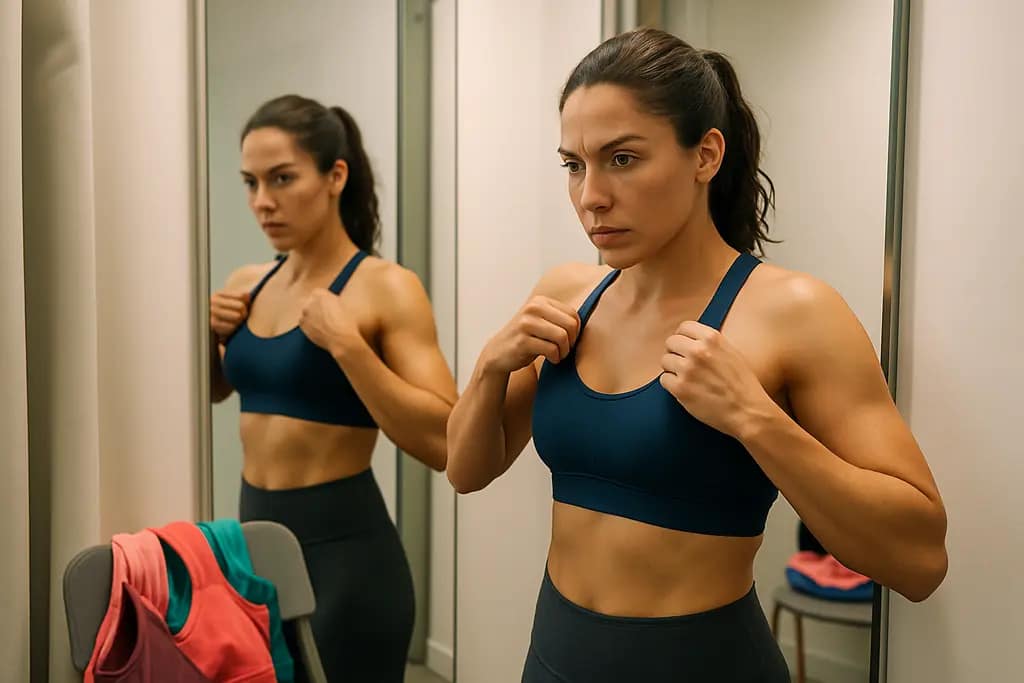
Even high-quality sports bras can perform poorly if the fit is incorrect.
Common signs of a poor fit include:
- straps digging into shoulders
- band riding up during workouts
- excessive movement during running
- discomfort or chafing
Adjusting band size, strap tension, or bra style can often resolve these issues.
When to Replace a Sports Bra
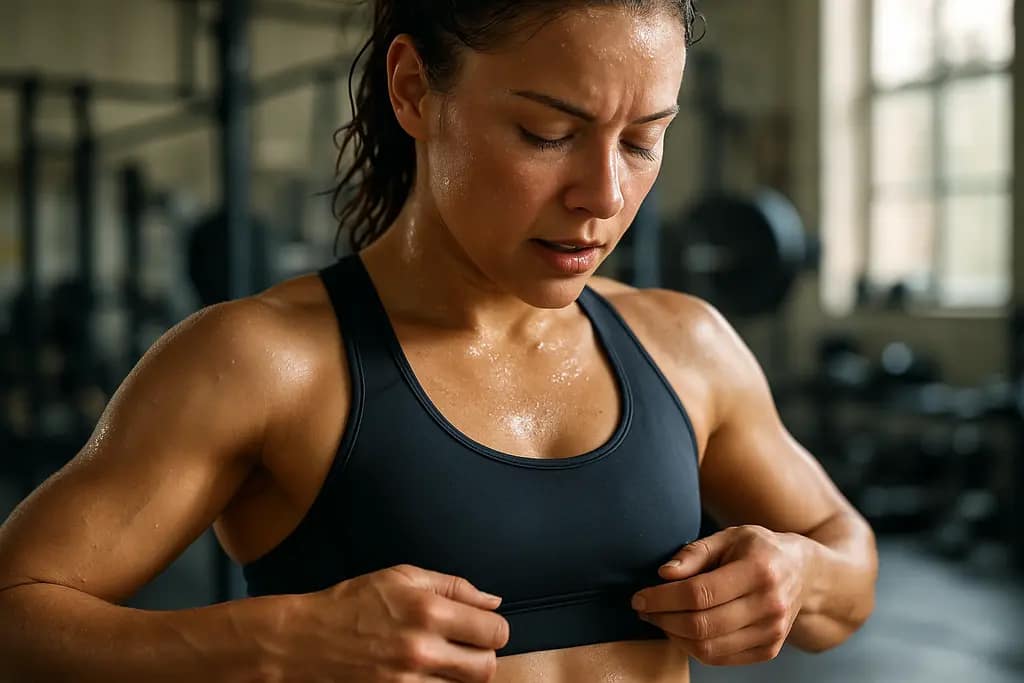
Sports bras lose elasticity over time due to sweat exposure and repeated washing.
Signs that a sports bra may need replacement include:
- stretched band
- reduced support
- worn fabric
- increased movement during workouts
For frequent exercisers, replacing sports bras every 6–12 months is common.
Related Sports Bra Guides
-
Sports Bra Testing For Fit And Support Checks

Sports Bra Testing helps active people assess fit, support, tightness, and movement before relying on a bra for training.
-
Sports Bra Sizing For Diverse Body Types
Sports bra sizing is shifting toward better body data, clearer support tests, and fit checks for running, studio work, and strength training.
-
Sports Bra Testing Tools And Fit Tradeoffs
Sports bra testing now uses 4D scans and manikins to study fit, motion, pressure, and support tradeoffs without promising one ideal bra.
-
Can High-Impact Sports Bras Keep You Cool Without Becoming Restrictive?

A high-impact sports bra has a difficult engineering problem to solve. It needs to control breast movement during running, jumping, court sports, and high-intensity training.…
-
Can a Workout Tank Really Replace a Sports Bra?
The line between workout tops and sports bras is getting harder to see. A fitted tank used to be straightforward: wear a sports bra underneath…
-
High-Support Sports Bras After Curve New York
High-Support Sports Bras trends from Curve New York: wider sizing, wire-free structure, fuller coverage, fabric caution, and fit questions.


Caring for Sports Bras
Sports Bra Support Guide Summary
Sports bras play a critical role in comfort and support during exercise. Understanding support levels, construction styles, and proper sizing makes it easier to select sports bras that perform well during different types of training.
By combining the right support level with proper fit and fabric performance, athletes can improve comfort, reduce strain, and enhance overall workout performance.