

Evaluating upper-body activewear requires looking past colorways and strap patterns. A high-performance sports bra acts as structural equipment for the chest. The designs dominating April 2026 abandon pure compression mechanics. Modern manufacturers construct tops using targeted encapsulation and advanced textile mapping to manage multi-directional impact. This engineering allows for optimal respiratory function and unrestricted shoulder mobility during heavy physical exertion.
The Shift From Compression to Encapsulation
Traditional compression bras treat the chest as a single mass. They press tissue aggressively against the ribcage. This reduces vertical bounce but introduces heavy lateral strain. The leading designs this season isolate and support each breast individually. This encapsulation method manages kinetic displacement without restricting the thoracic cavity. Clinical research on breast biomechanics proves independent structural support reduces mechanical tissue damage significantly during high-impact movement.

Zoned Ventilation and Hydrophilic Polymers
Thermal regulation dictates the comfort of any athletic top. The standout garments this month prioritize hydrophilic polymers that rapidly draw moisture away from the skin. Brands use micro-mapping technology to achieve this effect. Areas with the highest heat generation feature a porous knit. Zones requiring structural integrity maintain a tighter weave. This gradient approach to fabric elasticity lets the top drape across the torso without clinging. You can review our extensive analysis of these thermal mechanisms in our sports bras and tops archive.
The Architecture of the Underband
The underband performs the vast majority of the supportive work. Flimsy elastic bands degrade rapidly under tension. Premium designs utilize bonded, wide-format anchors that move seamlessly with the latissimus dorsi. A rigid anchor prevents the garment from riding up during overhead movements. Prolonged exposure to sweat breaks down standard polyurethane threads over time. Advanced garments now incorporate high-tenacity yarns to resist this chemical breakdown. Textile engineers studying elastane degradation confirm that sweat acidity directly attacks weak polymer bonds.
Diagnosing Your Support Needs
Matching the garment’s structural intent to your specific kinetic output prevents wardrobe failures. A bra built for lateral agility fails during heavy vertical loading. A compressive yoga crop feels suffocating on a long-distance run. The following table breaks down the mechanical mechanisms of this month’s top-tier garments.
| Garment | Biomechanical Mechanism | Targeted Output |
| Lululemon Run Times | Individual cup encapsulation | High-impact running |
| Alo Yoga Peak Bra | Uniform tension and physical restriction | Low-impact mobility |
| Nike Dri-FIT Swoosh | Zoned thermal regulation and stretch | High-aerobic training |
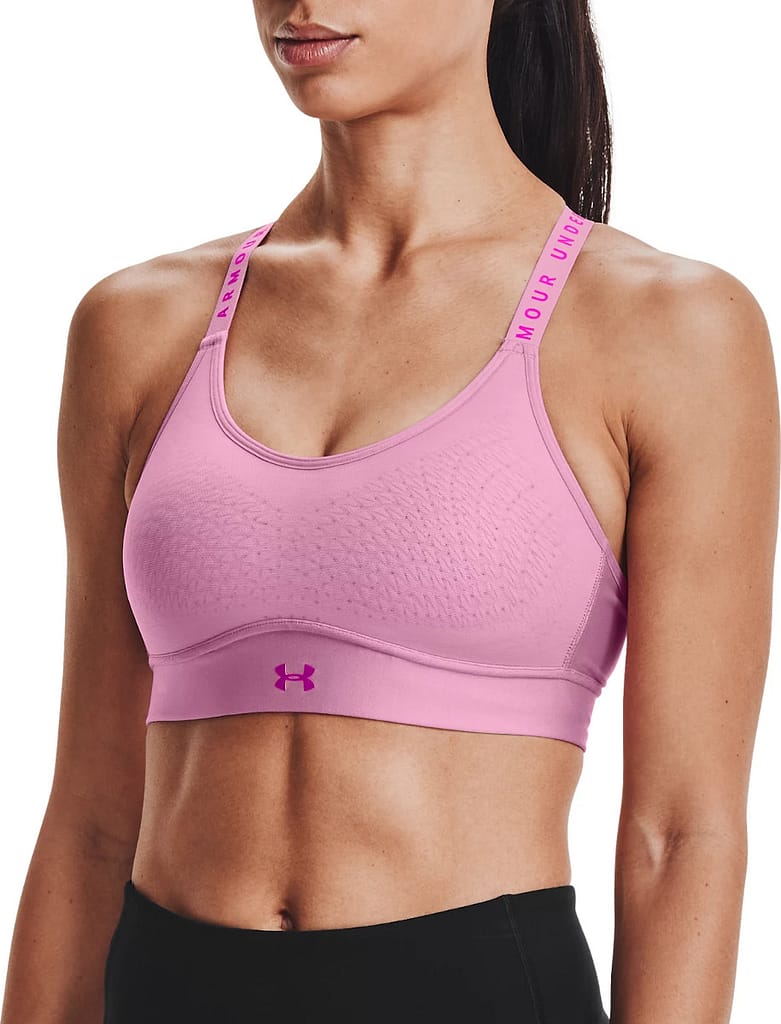
| Under Armour Infinity | Polyurethane injected figure-eight support | Plyometrics |
Selecting gear requires focusing on structural engineering over aesthetic trends. Proper upper-body equipment protects your kinetic chain. This approach maximizes your athletic potential and keeps your focus entirely on the workout.