

Seamless-front leggings can solve one very specific activewear issue: they remove a line of stitching from an area that repeatedly bends, stretches, and changes tension during running, squats, Pilates, cycling, HIIT, and strength training.
What they cannot do is guarantee a comfortable fit for every body.
That distinction matters with Beyond Yoga’s Glowzone collection, launched on July 21, 2026 as the Los Angeles activewear company’s first line developed specifically for high-sweat performance. The collection took roughly two years to develop and was shaped through customer feedback, wear testing, and product iteration, according to reporting on the Beyond Yoga Glowzone launch.
The standout piece for fit-focused shoppers is the Glowzone High Waisted Midi Legging, which removes both the front-rise seam and conventional side seams. It combines that construction with a lined four-inch waistband, medium compression, a 28-inch inseam, and a 75% recycled nylon and 25% elastane fabric blend.
A recent real-world test gives the design additional context. Women’s Health editor Sidney Lee wore the leggings through running, reformer and Cadillac Pilates, low-impact sculpt, HIIT, squatting, sweating, and machine washing. Her Glowzone performance review found that the leggings stayed secure, remained opaque during squats, and felt better suited to sweaty exercise than the brand’s traditional Spacedye material.
For more body-neutral coverage focused on clothing rather than judging the body wearing it, cameltoe.org’s activewear fit and movement comfort coverage follows the same principle: fit problems are garment-design questions, not personal flaws.
What Beyond Yoga Changed With Glowzone
Beyond Yoga has historically built much of its identity around softness and all-day comfort. Glowzone pushes the brand further toward technical performance.
At launch, the line included six main silhouettes: the High Waisted Midi Legging, Biker Short, Medium Impact Bra, Medium Impact Cropped Tank, Strappy Cropped Tank, and Hybrid Straight Leg Pant. Color options included Pitch Black, Legacy Pine, Cocoa Plum, Deep Ocean, and Electric Fuchsia.
Beyond Yoga positions the fabric around higher-intensity movement, moisture management, four-way stretch, lightweight construction, and UPF 50+ coverage. CEO Nancy Green said the collection was shaped through extensive community feedback and wear testing rather than simply adding a new fabric to existing silhouettes.
That matters because Glowzone is not merely a standard Beyond Yoga legging with the center seam removed.
The underlying fabric has also changed. Lee reported that Glowzone’s recycled nylon-elastane blend felt smoother, thinner, and more breathable than Spacedye, while also providing noticeably more compression.
By comparison, Beyond Yoga describes its current Spacedye leggings as soft, four-way-stretch activewear that can move between exercise and everyday use. The contrast helps define Glowzone’s purpose: it is intended to sit closer to technical training apparel than lounge-first leggings.
What “Seamless-Front” Actually Means
The term “seamless-front” can be misleading because the leggings are not literally made without seams.
Glowzone removes the center front-rise seam and conventional side seams. Back shaping seams remain part of the construction.
That distinction is important.
A conventional front seam joins two fabric panels through an area that undergoes substantial tension changes during hip flexion, running, sitting, squatting, and lunging. Depending on pattern shape, fabric stretch, rise, sizing, and individual proportions, that seam may go completely unnoticed—or become an area where fabric pulls, shifts, or feels distracting.
Removing it eliminates one potential pressure and friction point.
Beyond Yoga has also adopted no-front-seam construction elsewhere. Its official Spacedye No Front Seam Midi Legging uses a one-piece front with a curved back waistband seam, showing that the company now treats front-seam placement as a broader fit-design variable rather than a Glowzone-only feature.
But removing the center seam does not remove every possible fit problem.
Fabric can still migrate toward areas of greater tension. Waistbands can still roll. Leggings can still be incorrectly sized or proportioned for a particular wearer. The rise can still be too long or short. Back seams, gusset construction, compression, and stretch recovery still influence how the garment behaves.
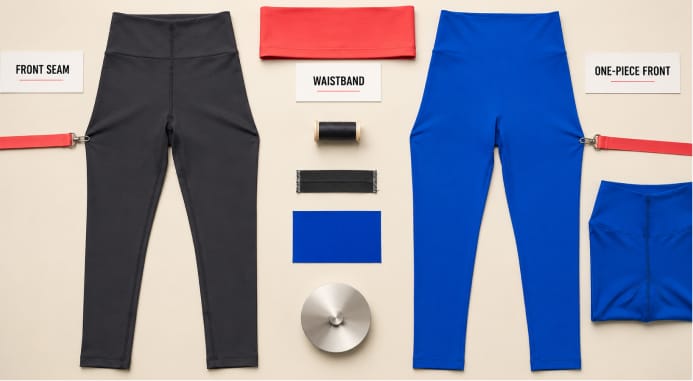
A seamless front is therefore one design tool, not a universal anatomical solution.
Why Seam Placement Matters More During Sweaty Workouts
Sweat changes the interaction between fabric and skin.
The Cleveland Clinic’s chafing guidance explains that chafing results from repeated friction and can be worsened by moisture, clothing fit, repetitive activity, and rough materials. That does not mean a front seam automatically causes irritation, nor does it mean seamless leggings medically prevent chafing. It does explain why seam placement becomes more noticeable during hot, repetitive movement.
When fabric is dry, a seam that sits comfortably may be almost invisible to the wearer. After 30 minutes of running or a heated studio class, damp material can behave differently.
That makes Glowzone’s combination of fewer front seams and sweat-oriented fabric more relevant than simply removing stitching for appearance.
Lee’s test is useful here because she did not evaluate the leggings only while standing in front of a mirror. She wore them through running, Pilates, sculpt training, and HIIT and deliberately tested sweating, stretching, squatting, and washing.
The leggings remained opaque during her squat test, and she reported that they stayed in position during jogging and jump squats.
That is much more informative for activewear buyers than a static product photograph.
What Glowzone Gets Right During Real Movement
Several features worked together during Lee’s testing.
The first was waistband stability. She reported that the leggings stayed in place during jogging and jump squats, meaning she was not repeatedly pulling them upward between movements.
The second was opacity under stretch. The leggings remained non-transparent during her squat testing. That does not mean every size and color will perform identically, because opacity can change with fabric tension, sizing, lighting, underwear contrast, and individual fit. It does show that one tested pair handled deep flexion successfully.
Third, Glowzone felt noticeably lighter and more breathable than Spacedye during sweaty workouts. Lee specifically contrasted the new fabric with Spacedye, which she preferred for lower-intensity use and lounging because it felt warmer during demanding sessions.
Fourth, the medium compression helped keep both the leggings and matching bra stable during faster movement.
There is a tradeoff.
Lee also considered that compression level too restrictive for all-day lounging.
That is not necessarily a negative result. A legging designed for HIIT or running does not have to feel like sleepwear. It simply means shoppers should decide whether they want a dedicated training garment or something they can comfortably wear from morning through evening.
Compression Is Useful Until It Becomes The Problem
Compression is often marketed as though more is automatically better.
It is not.
Appropriate compression can make leggings feel stable, reduce fabric shifting, and help the waistband remain positioned during running, jumping, and strength movements. Excessive compression can instead create uncomfortable waistband pressure or make deep flexion less comfortable.
Glowzone is deliberately more compressive than Beyond Yoga’s Spacedye fabric. In Lee’s experience, the garments initially felt snug but remained comfortable during training. She recommended her usual brand size for people who want the intended held-in sensation, but that remains one reviewer’s sizing experience rather than universal advice.
A more useful personal test is movement.
Perform a deep squat, lunge, forward hinge, seated position, brisk walk, and several high-knee steps. Take a few deep breaths.
If the waistband continuously rolls, digs sharply, pulls the rest of the garment out of position, or makes normal movement uncomfortable, the printed size on the label matters less than what the garment is actually doing.
Performance fit should support movement without demanding constant attention.
The Four-Inch Waistband Is As Important As The Missing Seam
The Glowzone Midi Legging uses a four-inch high-rise waistband with a lined construction. The 28-inch inseam places it in Beyond Yoga’s midi or 7/8-length category.
That waistband deserves as much attention as the seamless front.
A stable waistband helps distribute tension across the upper portion of the garment. If it stays positioned correctly, the material below it has less opportunity to migrate repeatedly during movement.
If the waistband is too loose, the leggings may slide.
If it is too tight or shaped poorly for the wearer, it can roll or create uncomfortable abdominal pressure.
Deep squatting places different tension across the back and hip panels than standing. Running then introduces thousands of smaller repeated movements. The waistband, rear shaping seams, stretch recovery, and front panel all need to function as one system.
A seamless front cannot compensate for a waistband that does not fit.
Sweat Visibility And Moisture Management Are Different
One of the most useful details in the Women’s Health review was not entirely positive.
Lee reported that her Legacy Pine set showed visible sweat.
That does not necessarily mean the fabric handled sweat poorly.
Moisture management and sweat visibility are two different characteristics.
A moisture-managing textile is designed to move or spread perspiration so it can evaporate more efficiently. Sweat visibility simply describes how obvious the wet material looks.
A fabric can perform reasonably well while still darkening when damp.
Another garment can disguise sweat effectively because it is black or heavily patterned while retaining substantial moisture against the body.
That distinction is particularly useful for shoppers choosing between colors. If visible sweat marks affect concentration or confidence during a class, a darker color may feel more comfortable psychologically even if the underlying fabric technology is identical.
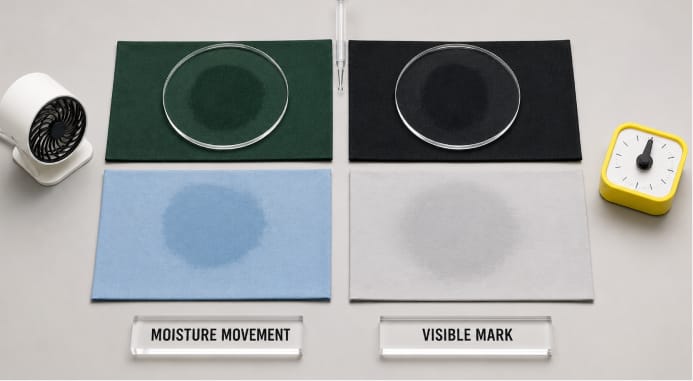
The important part is not to confuse appearance with physiological cooling.
Workout clothing can influence comfort, but no legging makes exercising in unsafe heat risk-free.
Glowzone And Spacedye Solve Different Problems
Glowzone does not make Beyond Yoga’s older fabrics irrelevant.
The two materials are aimed at different use cases.
| Feature | Glowzone | Spacedye |
|---|---|---|
| Primary Use | Higher-sweat performance | Soft everyday movement |
| Feel | Smooth and lightweight | Soft, brushed texture |
| Compression | Medium | Generally gentler |
| Current Review Strength | Running, HIIT, heated classes, strength | Pilates, walking, lower-intensity use |
| Front Construction | No front-rise seam on Glowzone Midi | Varies by Spacedye style |
| All-Day Comfort | More workout-focused | Better suited to extended casual wear |
Beyond Yoga’s current leggings collection reinforces that the company now offers different constructions for different activity levels rather than relying on one universal fabric.
Someone who primarily walks, stretches, does gentle Pilates, or wears leggings throughout the day may prefer less compression and a softer surface.
A runner, heated-class participant, or HIIT athlete may care more about reduced weight, waistband stability, moisture behavior, and fewer adjustments.
The better legging depends on the job.
The Matching Bra Needs A Separate Test
The Glowzone Medium Impact Bra should not automatically receive the same verdict as the leggings simply because the two pieces form a matching set.
As of August 2026, REI lists the Glowzone bra at $78, with medium-impact support, an encapsulation-style construction, and fabric made from 75% recycled polyamide and 25% elastane. REI’s Beyond Yoga sports-bra listing provides a useful current retail reference.
Lee reported that the bra’s wide straps remained comfortable and that the garment stayed secure during jogging and HIIT. She also identified an important limitation: the medium-impact design may not provide enough support for some larger-busted wearers.
That caution aligns with sports-bra biomechanics research showing that construction changes breast movement during running.
A 2024 study involving 12 participants running at 10 km/h found that the breast and torso spent more than 90% of the gait cycle moving in phase when either an encapsulation or compression sports bra was worn, compared with roughly 66% in the unsupported condition. The researchers also observed differences between encapsulation and compression designs.
That does not establish that one bra type is universally superior. It shows why the words “medium impact” should not replace an individual movement test.
What To Test Before Keeping Glowzone Leggings
The Glowzone design has enough thoughtful construction to make it worth evaluating seriously, particularly for people who find conventional front-rise seams distracting.
Before deciding that the fit works, test the entire garment rather than focusing only on the missing seam:
- Perform deep squats, lunges, hinges, and seated positions and check waistband stability.
- Jog in place and perform controlled high-knee movements.
- Check opacity under bright lighting while the fabric is stretched.
- Notice whether the front panel remains comfortable without repeated adjustment.
- Evaluate back seams and waistband pressure as carefully as the seamless front.
- Decide whether medium compression feels secure or unnecessarily restrictive.
- If buying the matching bra, test jogging or controlled hops separately.
- Consider whether visible sweat in your chosen color affects your comfort.
- Follow the care instructions and reassess fit after repeated washing.
These checks keep the emphasis where it belongs: on garment behavior rather than body shape.
No Front Seam Works Better For Some People, Not Everyone
No legging pattern works identically across all bodies.
People with the same waist measurement can have very different hip-to-waist proportions, torso lengths, pelvic shapes, thigh circumferences, and preferred rises.
The same person can also need different construction for different workouts.
A one-piece front panel may reduce visible stitching and eliminate one possible pressure point. But if the fabric is overstretched, the rise is wrong, or the waistband does not match the wearer’s proportions, the leggings can still move in ways that feel distracting.
Conversely, someone else may wear a traditional front-seam legging through years of workouts without ever noticing the stitching.
Neither result reflects something wrong with the wearer.
For activewear, comfort comes from the interaction between pattern, fabric, movement, size, and individual proportions.
That is why the seamless-front trend is most useful when brands treat it as one construction option rather than a universal fix.
When Irritation Needs More Than Different Leggings
Mild rubbing that appears only during a particular workout may improve when someone changes garment fit, seam placement, fabric, or moisture management.
Persistent or severe symptoms deserve a different approach.
Cleveland Clinic notes that significant chafing can progress to marked irritation, blistering, cracking, bleeding, or pain. Clinical chafing information can help distinguish ordinary friction from symptoms that warrant more attention.
A healthcare professional or dermatologist can evaluate persistent, recurrent, painful, or unusual skin symptoms rather than assuming a legging seam is the only cause.
Workout clothing may improve comfort.
It should not be used as a diagnosis.
What Glowzone Gets Right
Beyond Yoga’s Glowzone High Waisted Midi Legging makes a convincing case that seamless-front construction can belong in serious high-sweat activewear rather than functioning only as an aesthetic trend.
The strongest part of the design is that the company did not rely on the missing seam alone.
Glowzone combines the one-piece front with a 75% recycled nylon and 25% elastane fabric, four-way stretch, sweat-oriented construction, medium compression, a lined four-inch waistband, and a 28-inch inseam. The line took approximately two years to develop and involved wear testing and customer feedback.
Sidney Lee’s independent workout test adds useful evidence from actual movement. Her pair remained opaque during squats, stayed positioned during jogging and jump squats, and felt lighter and more breathable during sweaty training than the Spacedye leggings she had previously tested.
The limitations are equally valuable.
She found Glowzone too compressive for all-day lounging, observed visible sweat in Legacy Pine, and cautioned that the matching medium-impact bra may not supply enough support for every larger-busted wearer.
That makes the takeaway more useful than a simple product endorsement.
The seamless front removes one potential source of distraction. The waistband, compression, fabric, opacity, moisture behavior, bra support, and individual fit determine whether the full set actually works.
For running, HIIT, heated studio workouts, and strength sessions, Glowzone now has credible real-world wear testing behind it. The final test for any shopper remains much simpler: squat, run, bend, sweat, and see whether the clothing stays out of the way.