

A $40 pair of brushed leggings can survive regular gym use and repeated washing, but softness alone tells you very little about durability.
That distinction is useful after a recent real-world test of Quince’s Ultra-Soft High-Rise Leggings, currently priced at $39.90. Business Insider contributor Rebecca Strong reported in August 2026 that she had worn Quince’s Ultra-Soft Performance activewear through weightlifting, Pilates, cycling, errands, and repeated washes. She reported no noticeable pilling, stretching out, or fading during her test period.
Quince currently lists the leggings as 86% polyester and 14% spandex, with four-way stretch, moisture-wicking and antimicrobial claims. The company describes them primarily for yoga, low-impact exercise, and everyday comfort rather than high-impact training. The standard version is available with 25-inch and 28-inch inseams and is machine washable on a cold gentle cycle.
That makes these leggings a useful case study for a broader question: what actually determines whether a buttery-soft, brushed gym fabric survives sweat, friction, stretching, and laundering?
The answer is not price alone. Fiber blend, surface construction, stretch recovery, pilling resistance, seam quality, washing conditions, and the type of exercise all matter.
For readers interested in body-neutral activewear fit and fabric performance, cameltoe.org focuses on how clothing behaves during real movement rather than treating body shape as the problem. Learn more with our Activewear Fabric Guide.
What Makes A Brushed Legging Feel So Soft?
“Brushed” describes a textile finishing process rather than a particular fiber.
A fabric surface can be mechanically treated so very small fibers rise from the knit, creating the peachy, suede-like or “buttery” hand feel common in yoga leggings and athleisure.
That surface can make a synthetic textile feel noticeably softer against skin. It can also create a tradeoff.
The tiny raised fibers that produce softness are exposed to friction. Repeated rubbing between thighs, against gym benches, under bags, or inside a washing machine can eventually cause loose fibers to tangle into small balls known as pills.
That does not mean every brushed fabric pills quickly.
How strongly the fibers are anchored, the yarn quality, knit density, finishing method, and garment construction all influence durability.
Quince’s current Ultra-Soft leggings use an 86% polyester / 14% spandex blend. Polyester provides most of the textile structure, while spandex supplies substantial stretch and recovery.
That composition is common territory for soft activewear because it can deliver both surface comfort and close-fitting stretch.
The more important question is whether those properties remain stable after dozens of wear-and-wash cycles.
A $39.90 Price Does Not Automatically Mean Lower Durability
One of the easiest activewear assumptions to make is that expensive leggings must use better fabric.
Independent testing does not support that as a universal rule.
The Good Housekeeping Institute’s recent workout-legging evaluations assess products for pilling resistance, stretch recovery, moisture management, opacity, construction, and laundering performance. Its 2026 testing included inexpensive leggings that competed well with significantly more expensive products.
That matters because price reflects far more than fabric engineering.
Brand marketing, physical stores, endorsements, packaging, product-development costs, returns, distribution, and profit margins all contribute to retail price.
Conversely, an inexpensive garment can still use a competent polyester-spandex knit.
The Quince product is particularly interesting because the company itself compares its $39.90 leggings with products from Beyond Yoga, Vuori, and Lululemon priced substantially higher. Those comparisons are Quince marketing rather than independent proof of equivalent performance.
A lower price therefore should not be interpreted as proof of poor durability—but neither should a comparison chart be treated as proof that the fabrics are functionally identical.
What The Recent Real-World Test Found
Strong’s August 2026 Business Insider review gives the Quince set something product pages cannot: actual wear.
She tested the activewear through several contexts rather than a single yoga session, including weightlifting, Pilates, cycling, everyday errands, and repeated laundering.
She described the fabric as unusually soft with a suede-like feel and found the leggings stayed secure without excessive rolling or bunching. Most relevant to durability, she reported that frequent wearing and washing had not produced visible pilling, fading, or stretching out during her test period.
That is meaningful consumer evidence.
It is not the same as a controlled long-term textile test.
The review does not establish how the leggings will look after 50, 100, or 200 washes. It does not quantify abrasion cycles or measure elastic recovery before and after laundering.
Still, it provides a useful signal: the low price did not translate into immediate deterioration under normal mixed use.
Pilling Is Usually The First Major Test For Brushed Fabric
Pilling develops when fibers work loose from a textile surface and become entangled through friction.
Brushed fabrics deserve particular attention because their soft surface deliberately exposes more fiber ends than a very smooth technical knit.
Professional legging tests typically evaluate this mechanically.
Good Housekeeping describes using an abrasion machine that repeatedly rubs fabric samples against one another to see whether small balls of fiber form. Analysts also inspect appearance after repeated wash-and-dry cycles.
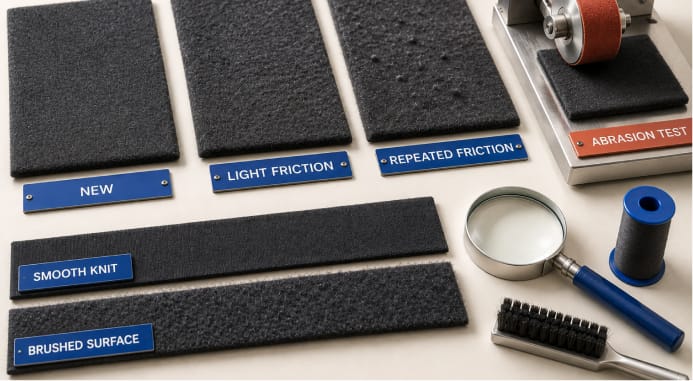
For gym clothing, several areas experience especially high friction:
inner thighs, the seat, the sides of the hips, areas touching benches, and portions of the waistband that repeatedly contact tops or jackets.
Someone who primarily does Pilates may put relatively little abrasive stress on leggings.
Someone who deadlifts against a knurled barbell, sits on textured gym benches, or wears a rough backpack over the fabric may create significantly more.
This is why “Will these leggings pill?” has no universal answer without considering use. Why Do Sports Leggings Need High-Stretch Fabrics?
Strength Training Can Be Harder On Leggings Than Yoga
Quince describes its Ultra-Soft leggings as designed for low-impact workouts such as yoga or everyday comfort.
That recommendation is worth taking seriously.
Low-impact does not necessarily mean easy for the wearer, but it usually exposes fabric to less repeated impact and fewer abrasive surfaces than some forms of gym training.
Heavy lifting creates different fabric stresses.
During a deep squat, the textile stretches strongly across the hips, knees, and seat. During deadlifts, a bar can contact the thighs. On benches, rough upholstery repeatedly rubs the back of the garment.
Barbell knurling is particularly unfriendly to brushed textiles.
A soft pair of leggings may survive months of Pilates while developing visible abrasion much faster if repeatedly dragged against rough steel.
That does not make the fabric inadequate.
It means the workout environment should match the textile.
Stretch Recovery Matters As Much As Surface Pilling
Leggings can look perfectly smooth and still wear out mechanically.
A common failure is loss of recovery.
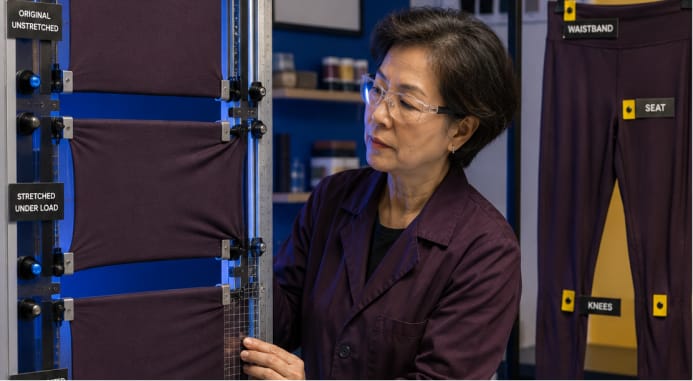
After repeated stretching, the knees may remain slightly baggy. The waistband may stop returning to its original dimensions. The seat can begin feeling loose even though the fabric has not ripped.
Spandex helps prevent this.
Quince’s 14% spandex content is substantial enough to support four-way stretch, although fiber percentage alone cannot predict recovery quality. Knit structure, yarn tension, heat setting, and garment construction also matter.
A useful home test is simple.
After wearing leggings through several deep squats or a longer workout, lay them flat for 10 to 15 minutes.
Check whether the knees still show obvious bulging.
Inspect whether the waistband appears stretched wider than before.
Then reassess after washing.
A durable performance fabric should return reasonably close to its original dimensions repeatedly, not merely on the first wear.
Frequent Washing Is Where Cheap Activewear Often Gets Exposed
Workout clothing has a harder laundering schedule than many everyday garments.
Sweat, body oils, deodorant, sunscreen, and repeated skin contact can make regular washing necessary.
Quince currently instructs owners of the Ultra-Soft leggings to machine wash cold on a gentle cycle with like colors and tumble dry low, while avoiding ironing and dry cleaning.
Those directions are less restrictive than hand-wash-only activewear, but they still matter.
Heat can accelerate degradation in stretch fibers.
Aggressive washing can increase friction between garments.
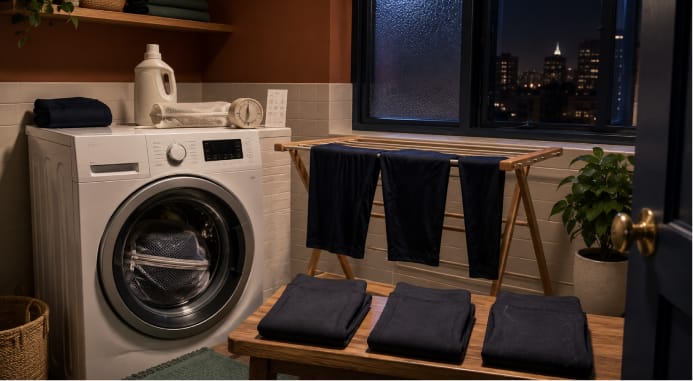
Rough items such as jeans, hook-and-loop fasteners, exposed zippers, or towels may also abrade a brushed surface.
Good Housekeeping’s leggings protocol evaluates appearance and shrinkage after repeated laundering because a product that performs well before washing may change substantially afterward.
A $40 legging that remains stable through repeated cold washing may therefore be better value than a $100 pair that pills rapidly under the same conditions.
Tumble Drying Is Convenient, But Lower Heat Is Safer
Quince permits tumble drying on low heat.
That is convenient, particularly for people who train frequently and need activewear back into rotation quickly.
Air drying can still reduce heat exposure.
Elastane and similar stretch fibers generally dislike prolonged high temperatures. That does not mean one warm dryer cycle destroys leggings, but repeated excessive heat can contribute to reduced elasticity over time.
If longevity is the priority, a practical routine is:
- wash in cool water,
- use a gentle cycle,
- avoid rough garments in the same load,
- avoid chlorine bleach,
- use low dryer heat or air dry when practical.
There is no need to avoid washing sweaty leggings in an attempt to preserve the fabric.
Hygiene and skin comfort remain important. The better strategy is appropriate laundering rather than insufficient laundering.
Moisture-Wicking Claims Need Context
Quince describes the fabric as moisture-wicking.
That is plausible for a polyester-rich textile, but “moisture-wicking” does not mean a garment prevents sweat or stays visually dry.
Wicking refers to moving liquid moisture away from one area and spreading it through the fabric so it can evaporate more efficiently.
The brushed surface can complicate perception.
A buttery-soft textile may feel pleasant when dry but retain a different skin feel once saturated compared with a thin, smooth running fabric.
That is another reason Quince positions this particular legging toward low-impact exercise rather than aggressive high-sweat performance.
For yoga, Pilates, strength work with long rest periods, and everyday wear, that balance may be completely appropriate.
For hot yoga, hard treadmill intervals, or summer outdoor running, someone may prefer a thinner and less brushed fabric optimized more aggressively for drying.
“Antimicrobial” Does Not Mean You Can Skip Washing
Quince also markets the Ultra-Soft fabric as antimicrobial.
That term deserves restraint.
An antimicrobial textile treatment may be designed to reduce the growth of certain microorganisms or help manage odor under specified conditions.
It does not make leggings sterile.
It does not prevent all odor.
It does not eliminate sweat, skin oils, dirt, or the need for routine cleaning.
Unless a brand supplies detailed testing, consumers also should not assume an antimicrobial claim translates into a particular health benefit.
For gym use, treat odor-control technology as a garment-management feature rather than medical protection.
How The Leggings Compare With A True High-Intensity Fabric
The strongest comparison is not between prices.
It is between intended uses.
| Property | Soft Brushed Legging | Technical HIIT Legging |
|---|---|---|
| Surface feel | Very soft, peachy or suede-like | Usually smoother and cooler |
| Compression | Often light to moderate | Often moderate to firm |
| Best use | Yoga, Pilates, lifting, everyday wear | Intervals, running, heated training |
| Pilling risk | Potentially higher from abrasion | Often lower with smooth surfaces |
| Sweat feel | May feel warmer | Typically prioritized for drying |
| All-day comfort | Usually strong | Can feel more restrictive |
| Abrasion resistance | Highly construction-dependent | Often emphasized more strongly |
This is why a buttery-soft legging should not automatically be judged against a running tight.
The two products may solve different problems.
Someone who spends most gym time lifting, stretching, or doing Pilates may prefer the comfort of brushed fabric.
Someone training for repeated running intervals may reasonably sacrifice softness for faster drying and a smoother, more abrasion-resistant face.
The Lack Of Pockets May Matter More Than The Fabric
One limitation Strong identified had nothing to do with textile durability: the standard Quince leggings lack external pockets.
Quince does offer a separate Ultra-Soft High-Rise Pocket Legging using the same 86% polyester and 14% spandex composition. That version adds two bonded-edge side pockets plus hidden waistband storage.
Pocket construction can affect durability too.
Bonded edges, extra fabric layers, seams, and the weight of a phone create different stresses than a simple uninterrupted legging panel.
A pocket full of a heavy smartphone can pull against fabric during running or squatting.
That does not make pockets undesirable. It illustrates why finished-garment engineering matters as much as textile composition.
Fit Can Make A Durable Fabric Fail Early
Poor fit creates extra stress.
If leggings are too small, the fabric remains under greater tension throughout the workout. Opacity can decrease, seams can experience more force, and surface fibers can rub more aggressively.
If they are too large, material may fold or shift, increasing friction in places where the fabric repeatedly rubs against itself.
Quince currently offers the Ultra-Soft leggings in 25-inch and 28-inch inseams.
That length choice is useful because excessive bunching around the ankles is not merely cosmetic. Folded fabric creates additional rubbing during movement.
A durable legging should fit closely without requiring extreme stretching to get it on.
For body-neutral activewear evaluation, the key principle is straightforward: when a garment rolls, pulls, gaps, or strains, the problem may be pattern and size—not the wearer’s body. These leggings promise to depuff and smooth skin — but do they really work?
What To Check After 5, 20, And 50 Washes
A useful durability review should become more demanding over time.
After approximately five washes, look for early color fading, twisting seams, waistband changes, and obvious surface fuzz.
After around 20 washes, inspect the inner thighs, seat, knees, and waistband for pilling. Compare the legging’s unstretched width with how it looked when new if possible.
After longer use, the key question becomes whether the fabric still performs rather than whether it still looks perfect.
Does the waistband stay up?
Are the knees recovering?
Is the fabric still opaque?
Have seams remained flat?
Has the material become rougher?
Does the legging require more adjustment during movement than it once did?
These questions reveal functional aging better than a small amount of cosmetic wear.
When Pilling Is Cosmetic Rather Than Functional Failure
A few pills do not necessarily mean leggings have failed.
Pilling is often superficial. A garment may still retain good opacity, stretch, waistband stability, and comfort even after minor fuzz develops.
That distinction matters with brushed activewear.
The soft surface may show cosmetic aging before the structural knit fails.
Severe pilling accompanied by thinning fabric is more concerning because loss of material can eventually affect coverage and durability.
Similarly, stretched-out knees or an unstable waistband represent a more meaningful functional problem than small cosmetic changes on an otherwise stable garment.
The best durability judgment considers appearance and performance separately.
Is A $39.90 Brushed Legging Good Value?
Based on the evidence currently available, Quince’s Ultra-Soft High-Rise Legging makes a credible case that affordable brushed activewear can survive normal mixed gym use.
The current product costs $39.90, uses 86% polyester and 14% spandex, offers four-way stretch, and is specifically positioned for yoga, low-impact workouts, and everyday comfort.
Rebecca Strong’s August 2026 real-world test is encouraging: after weightlifting, Pilates, cycling, errands, and frequent washes, she reported no pilling, fading, or loss of shape during the review period.
That does not prove indefinite durability.
Nor does it establish that the fabric can tolerate repeated barbell abrasion, months of high-intensity running, or hundreds of wash cycles as well as a purpose-built high-performance textile.
What it does show is more useful:
A $40 brushed legging does not automatically have to be disposable activewear.
For low- to moderate-impact gym use, the Quince fabric appears to offer a reasonable combination of softness, stretch, recovery, moisture management, and early wash durability.
Its biggest limitation may be the same characteristic that makes it appealing: the brushed surface.
Protect that surface from unnecessary abrasion, wash it according to the care instructions, keep dryer heat low, and use it for workouts suited to its design.
A soft fabric can survive the gym.
It simply should not be expected to behave exactly like a smooth technical running tight built for a different job. The best leggings of 2026, tested by editors.