

Adaptive stretch fabrics are being positioned as a next step in activewear because they aim to respond differently at rest and during motion. LYCRA’s ADAPTIV fiber is the clearest example in the current research notes: a patented polymer-based fiber that the company says can feel more compressive while still, then reduce stiffness as the wearer moves. That is a useful direction for leggings, training tops, and sports bras, but it should be read as fabric engineering rather than a promise that any garment will improve athletic results.
The most careful way to assess this development is to separate fiber behavior from whole-garment support. A stretch fiber can affect recovery, compression feel, and movement tolerance. A sports bra still depends on underband tension, strap design, cup or panel structure, coverage, closures, and sizing. Leggings still depend on rise, seam placement, opacity, waistband construction, and fabric weight. The textile matters, but it is not the whole product.
How Adaptive Stretch Fabrics Change Fit
LYCRA ADAPTIV Fiber At Rest And In Motion
LYCRA introduced ADAPTIV fiber as a patented polymer-based innovation designed to alter elasticity depending on wear state. The company says the fiber can provide stronger compression and shaping while the wearer is at rest, then become less stiff during movement. It also reported internal testing that found better comfort in motion, more freedom of movement, and improved shape retention compared with fabrics using generic spandex, according to LYCRA’s ADAPTIV fiber announcement.
Those are meaningful claims for activewear design, but the wording matters. Internal tests are not the same as independent, activity-specific trials across many body types and sports. A fabric may show improved stretch recovery in one construction and behave differently in another. A knit legging, a high-support sports bra, and a fitted yoga top place different loads on the same fiber.
Why Movement State Matters
The core idea behind adaptive stretch fabrics is not simply more stretch. Many garments already stretch. The more interesting claim is variable resistance: firmer support when the body is still, with less restrictive feel during motion. For low-impact movement such as yoga, mobility training, or walking, that may translate into a smoother fit if the garment is well cut. For running, jumping, or court sports, the garment may need stronger structural features beyond fiber response.
This distinction is especially relevant for shoppers who equate tightness with support. A very tight underband or waistband can feel secure, but pressure alone is a blunt tool. The better test is whether the garment stays positioned without limiting breathing, arm swing, torso rotation, hip flexion, or repeated bending. If a fabric relaxes slightly in motion, designers may have more room to balance support and comfort, but the finished garment still has to pass real movement tests.
Sports Bra Support Beyond The Fiber
Adaptive Stretch Fabrics And Sports Bra Support
Sports bras are where adaptive stretch fabrics raise the most interesting fit questions. Breast support is not created by elastane content alone. Compression bras generally press tissue closer to the body. Encapsulation designs use separate cup or panel structures. Many modern training bras combine both approaches. The lower band often provides much of the anchoring, while straps help manage vertical and lateral movement.
If a bra uses LYCRA ADAPTIV fiber or a similar material, the possible advantage is not that the fiber replaces the support system. Instead, it may help the fabric recover shape after stretch and may reduce the stiff feeling some wearers notice during upper-body movement. That could matter in studio training, strength sessions, or mixed workouts where the arms move overhead and across the body. Still, the bra’s support level must match the activity and the wearer’s needs.
Activity Fit Tests For Bras
A cautious fit test should include the movements the bra is meant to handle. For yoga or Pilates, that may include forward folds, twists, planks, and side bends. For gym training, it may include overhead pressing motion, rowing motion, loaded carries, and torso rotation. For running or interval work, a controlled jog-in-place or small hops can show whether the band shifts or the straps dig.
During those checks, the band should feel firm without causing distracting pressure. The cups or front panel should contain movement without gaping, spilling, or folding. Straps should not carry the full load. If support improves only because the bra feels uncomfortably tight, the design may not be right for that wearer. These are fit observations, not medical guidance; persistent pain, numbness, skin irritation, or unusual symptoms should be discussed with a qualified clinician.
What DynamicFlex Shows About Activewear Crossing Categories
Four-Way Stretch Beyond Gym Clothing
LYCRA’s newer work also shows how performance fabric ideas are moving outside classic gym apparel. In April 2026, LYCRA and Panther Denim launched the DynamicFlex fabric collection, combining LYCRA ADAPTIV fiber with LYCRA dualFX technology and LYCRA T400 30D fibers. The companies described the result as ultra-lightweight four-way stretch denim with activewear-like properties, including wrinkle resistance, shape retention, zero weft shrinkage, UV protection, and stain resistance, as stated in the DynamicFlex launch details.
For activewear buyers, the denim example matters because it shows a broader design trend: garments for work, travel, casual wear, and movement are borrowing from performance textiles. That does not mean denim becomes a substitute for workout leggings or a sports bra. It means stretch recovery, shape retention, and mobility are becoming normal expectations beyond the gym.
Performance Claims Need Context
The word performance can mean several things. In fabric development, it may refer to stretch recovery, color retention, moisture movement, durability, shrinkage control, or resistance to wrinkling. In exercise, people may hear performance and think speed, strength, endurance, or reduced injury risk. Those are different categories of evidence.
Based on the research notes, LYCRA’s supported claims are mainly textile claims and company-reported wear or laboratory findings. They should not be converted into claims that a garment will make someone train better, avoid discomfort, or get fitness results. A good fabric can reduce distraction for some wearers, but individual fit, activity type, garment design, laundering, and personal preference all shape the outcome.
How To Evaluate Activewear With New Stretch Fibers
Fit Questions Before Fabric Claims
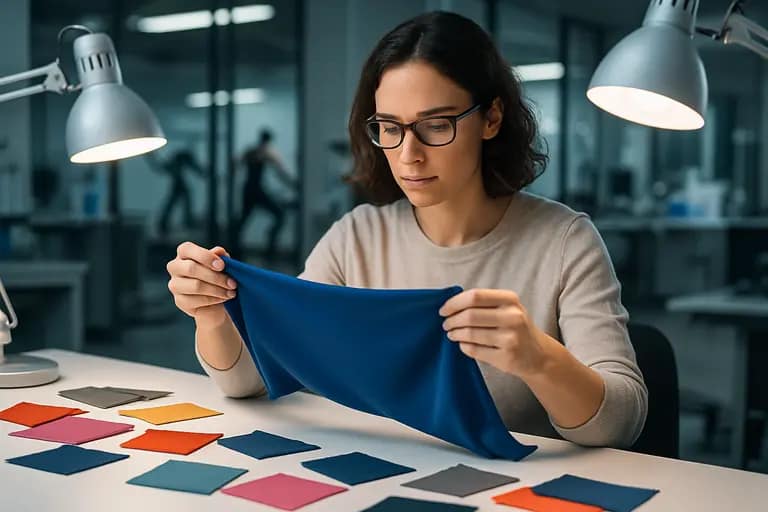
Before focusing on the fiber name, start with the job the garment has to do. A studio legging may need soft hand feel, recovery after deep flexion, and stable coverage. A running tight may need a secure waistband, sweat handling, and minimal bounce from pockets or seams. A sports bra may need more anchoring and coverage than a low-impact crop top, even if both use similar stretch fibers.
A practical fitting-room sequence is simple: squat, hinge, sit, reach overhead, twist, and walk briskly. For bras, add arm circles and controlled impact if the garment is intended for higher-movement exercise. Watch for rolling bands, shifting straps, fabric that stays overstretched, seam pressure, and opacity changes. Activewear that feels excellent while standing still can behave differently after five minutes of movement.
- For low-impact studio work: prioritize stretch recovery, low seam distraction, and comfort in flexed positions.
- For strength training: look for stable waistbands, coverage under load, and fabric that does not need constant adjustment.
- For running or jumping: assess bra support separately from leggings, since bounce control depends on construction as well as fabric.
- For long wear: consider pressure over time, not just the first try-on feel.
Care also affects stretch garments. Elastane-containing activewear can lose recovery through wear, heat, and laundering practices, so fabric performance should be judged over the life of the garment rather than only on day one. For related fabric-care context, see this site’s discussion of why activewear loses stretch. For insights into time-use and wellness that connect fabric choices to broader life considerations, visit Take Back Your Time.
LYCRA Adaptive Stretch Fabrics In Practice
Where The Evidence Is Strongest
The strongest supported takeaway is that LYCRA is developing fibers and fabric systems intended to improve fit behavior, stretch response, and shape retention. ADAPTIV fiber is positioned around variable elasticity. DynamicFlex shows that the same activewear logic is extending into denim. The research notes also describe later ADAPTIV variants, including BLACK for deeper color performance and XTRA LIFE for durability in swimwear applications, though each use case should be evaluated in its own garment category.
The more cautious takeaway is just as important: adaptive stretch fabrics are not a shortcut around fit. Sports bras still need the right support architecture. Leggings still need appropriate rise, coverage, and waistband behavior. Tops still need arm mobility and stable hems. No fiber name can guarantee that a finished garment will suit every body or every activity.
What To Ask Before Buying Or Recommending
Useful questions include: What activity is this garment designed for? Is the support level described separately from the fabric? Does the garment recover after stretching? Does the band stay put without excessive pressure? Is the fabric opaque in the positions used during training? Has the brand explained whether claims come from internal testing, lab testing, wearer trials, or general marketing language?
For sports bras in particular, ask whether the design uses compression, encapsulation, or a hybrid approach, and whether the band and straps can be adjusted. If you experience persistent discomfort, breathing restriction, skin irritation, numbness, or symptoms that seem unusual during exercise, discuss them with a qualified clinician rather than trying to solve the issue through fabric choice alone.