

The exercise dress has spent years occupying an uncertain place between activewear and athleisure. It looks ready for tennis, Pilates, or a summer walk, but it can just as easily become an outfit for grocery shopping, travel, or sitting comfortably at home.
Built-in shorts are what increasingly make that crossover possible.
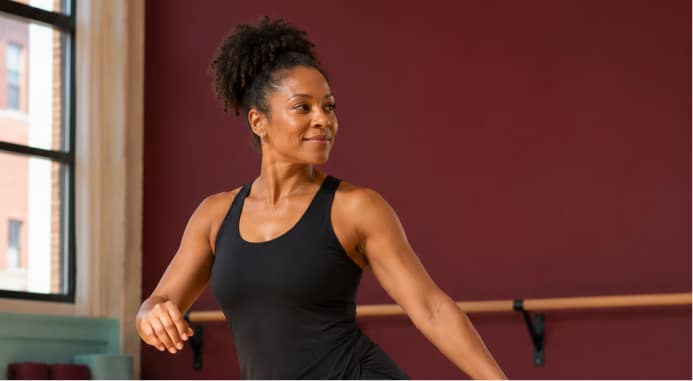
A fresh example arrived in U.S. lifestyle coverage on August 18, 2026, when Page Six Style tested the Halara SoftlyZero Active Dress during a dance class with Reece Weaver, a former Dallas Cowboys Cheerleader who is now performing on Broadway. The $45 dress combines stretchy fabric with built-in shorts and pockets, and the reviewer found that it remained functional during an actual dance workout rather than merely looking athletic.
That same construction concept now appears across the market. Adidas sells a Train Essentials Workout Dress with attached inner shorts, lightweight fabric and moisture-management construction, while QINSEN offers multiple tennis and workout dresses built around stretch fabrics, internal shorts and undershort pockets.
For consumers, however, the useful question is not whether a garment is called an “exercise dress.”
It is whether the hidden layer underneath the skirt works like genuine workout gear.
Built-in shorts can improve coverage, manage some thigh-to-thigh friction, provide pockets and make a skirted silhouette much easier to move in. But they can also ride up, trap additional heat, make bathroom breaks awkward or create a second layer of damp fabric.
So yes: built-in shorts can turn an exercise dress into legitimate workout clothing. But only when the shorts, outer dress and upper-body construction function together during the activity being performed.
The Exercise Dress Is Having Another Activewear Moment
The timing of the Halara coverage is useful because the dress was actually worn during movement.
On August 18, Page Six Style reported testing the SoftlyZero dress at a dance class with Weaver. The design incorporates internal shorts with side pockets beneath the skirt, along with a stretch-oriented outer construction.
That is a much better functional test than standing in front of a mirror.
Dance introduces repeated leg movement, directional changes, bending and arm movement. An exercise dress that stays comfortable through those actions has cleared at least some of the hurdles separating ordinary casual dresses from activewear.
Halara is far from alone.
Adidas’ current Train Essentials Workout Dress uses an X-back, attached inner shorts and lightweight polyester-elastane fabric, while Outdoor Voices continues to sell its well-known Exercise Dress with built-in shorts.
Even Amazon’s current best-selling athletic-dress category illustrates the same demand. Recent August coverage highlighted an Anrabess dress with internal shorts, pockets and stretchy construction that consumers are using across casual activities and sports such as tennis and pickleball.
The exercise dress is therefore no longer just a tennis-inspired fashion silhouette.
It has become a garment category with several different levels of actual athletic capability.
Built-In Shorts Solve The Dress’s Most Obvious Workout Problem
Try doing a deep squat, high knee or lateral lunge in a conventional short dress and the problem becomes obvious.
The skirt moves independently from the body.

That may be irrelevant while walking around a store. During exercise, it can create unwanted exposure and make the wearer repeatedly think about where the skirt is positioned.
Internal shorts change that.
They create a fitted base layer beneath the loose outer garment.
If the skirt lifts during a tennis serve, dance movement or gust of wind, the shorts remain in place. The wearer can therefore treat the outer skirt primarily as a design layer rather than relying on it for coverage during every movement.
That psychological difference can matter.
Workout clothing is easier to forget about when the wearer does not have to constantly monitor it.
Coverage Is Only One Part Of The Job
Simply sewing shorts underneath a dress does not make those shorts good.
A useful internal short needs to work like any other piece of fitted activewear.
The inseam has to be appropriate.
The leg opening should remain comfortable.
The fabric needs sufficient stretch.
The crotch and gusset geometry need to accommodate movement.
The waistband or attachment point cannot create unnecessary pressure.
And the shorts need enough recovery to return toward their original shape after repeated stretching.
If any of those elements fail, the attractive outer dress cannot compensate for them.
In fact, internal shorts can sometimes be harder to adjust because they are underneath another garment.
Ride-Up Is Probably The First Thing To Test
One of the biggest practical questions is whether the shorts stay positioned.
Very short internal shorts can migrate upward during walking, running or repetitive leg movement.
That can defeat one of their main purposes.
A longer inseam may provide additional coverage and more material across areas where skin-to-skin contact occurs, but longer is not automatically better either. Some people prefer minimal inner shorts and find longer fitted layers too warm.
Individual proportions also matter.
The same short inseam will land differently on people with different leg lengths and thigh proportions.
That makes the movement test more useful than a product photograph.
Walk quickly.
Squat.
Perform several lunges.
Lift each knee.
Sit down and stand again.
If the internal shorts repeatedly require adjustment during those movements, they are unlikely to become less distracting during a longer workout.
QINSEN Shows Why This Category Works Beyond The Gym
QINSEN is particularly relevant because its current exercise-dress range demonstrates how easily this category crosses between athletic and ordinary clothing.
The brand currently offers several dress configurations rather than one single exercise-dress formula. Examples include square-neck dresses, racerback styles, zip-front polo dresses and tennis-oriented silhouettes. Current QINSEN listings describe versions using nylon-elastane stretch fabrics with built-in mesh shorts and two side pockets. https://qinsens.com/
That internal construction helps explain why an exercise dress can be unusually comfortable for casual wear.
At home, someone can get much of the freedom associated with shorts while wearing a single outer garment. The skirt does not require the same constant positioning awareness that an ordinary short dress might create when sitting on the sofa, bending to pick something up, working at a desk or moving around the house.
For shopping and errands, the same principle applies.
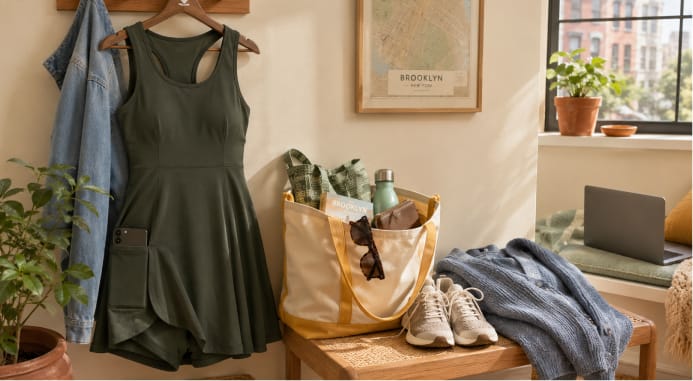
The fitted internal layer provides coverage while the skirt gives the garment a more everyday appearance than conventional bike shorts or leggings. Undershort pockets can also provide somewhere to keep a phone or small item without adding a visible athletic pocket to the exterior of the dress.
QINSEN’s current zip-front model, for example, combines built-in mesh shorts with two undershort pockets and is explicitly positioned for both activities such as tennis and golf and casual uses such as running errands.
That makes the exercise dress an interesting example of athleisure becoming useful rather than simply looking sporty.
Comfortable At Home Does Not Automatically Mean Good For HIIT
This distinction is important.
A dress can be exceptionally comfortable for lounging, working from home, walking the dog and grocery shopping without being appropriate for an intense workout.
Those activities create very different demands.
Sitting on the couch requires little sweat management.
Walking around a supermarket creates relatively modest fabric movement.
A high-intensity interval session can involve repeated jumping, substantial perspiration and rapid multidirectional movement.
The fact that a QINSEN or another exercise dress feels comfortable during an afternoon at home does not establish that it will perform equally well during a 5K run.
That is not a flaw.
Clothing does not need to work for every activity to be useful.
QINSEN Also Illustrates Why You Need To Read The Construction Details
Two dresses from the same brand can work very differently.
One current QINSEN square-neck model uses a nylon-elastane blend with built-in mesh shorts and pockets. Another zip-front tennis model combines a racerback upper section, side slit, internal mesh shorts and pockets. The latter does not include a built-in bra according to the current product information.
That matters.
Someone shopping for an all-in-one workout outfit could see “exercise dress with built-in shorts” and assume the garment also handles breast support.
It may not.
The internal shorts solve a lower-body coverage problem.
They tell you very little about upper-body support.
For running, court sports or other higher-movement exercise, someone who wants breast support should evaluate the dress’s upper construction separately and use an appropriate sports bra if needed.
Built-In Bras Are Another Variable Entirely
Some exercise dresses add a bra shelf or cups.
Others do not.
A built-in bra can make an exercise dress even more convenient for low- or moderate-movement activities because it reduces the number of separate garments required.
But “built-in bra” does not tell you the level of support.
A lightly lined shelf structure and a high-impact sports bra are fundamentally different garments.
Support requirements vary considerably among individuals and activities.
Someone comfortable walking in an integrated shelf bra may still prefer substantially more support for running.
This is why the best exercise dress should not necessarily be the one with the greatest number of built-in features.
It should have the right features for its intended use.
Pockets Become Much More Useful When They Are In The Shorts
Exercise dresses present an interesting storage problem.
Put a phone in a conventional dress pocket and its weight can pull the skirt downward and make the object swing with every stride.
Attaching pockets to the fitted internal shorts changes the mechanics.
The object sits closer to the body.
QINSEN’s current designs use this approach, placing two pockets in the undershorts. Halara’s SoftlyZero dress also incorporates side pockets in its built-in shorts.
That can work well for small objects.
But pocket performance should still be tested.
A large phone adds meaningful weight to lightweight stretch fabric. During running, that weight can create bounce or pull the shorts downward.
A pocket that works perfectly while walking through Target may become irritating during repeated running strides.
Again, the intended activity determines whether the feature works.
Bathroom Access Is The Hidden Exercise-Dress Compromise
This is one of the least glamorous but most practical differences between an exercise dress and separate shorts plus a top.
Integrated construction can complicate bathroom breaks.
With many one-piece exercise dresses, the shorts cannot simply be pulled down independently because they are attached to the upper garment.
A current verified-purchase review on QINSEN’s zip-front tennis dress specifically notes having to remove the entire garment for bathroom access.
That may be a minor inconvenience during a 45-minute class.
It can become much more noticeable during:
long walks,
all-day shopping,
travel,
golf,
festivals,
or extended sightseeing.
Some brands have experimented with detached-back liners or other bathroom-friendly constructions, but shoppers should never assume that functionality is present.
Before buying, inspect how the internal shorts connect to the dress.
Two Layers Can Mean More Heat
Built-in shorts inevitably add material.
The wearer has fitted fabric directly against the lower body and another layer hanging over it.
In an air-conditioned Pilates studio, that may barely matter.
During an outdoor August workout, it can.
The American College of Sports Medicine advises people exercising in hot conditions to use lightweight, loose-fitting and moisture-wicking clothing, while also adjusting workout intensity and timing when environmental conditions increase heat stress. Its guidance makes clear that clothing is only one part of heat management. ACSM guidance for exercising in heat
An exercise dress has an interesting combination: a relatively loose outer skirt but a fitted inner short.
Whether that feels cooler than leggings or hotter than ordinary running shorts depends on fabric weight, airflow, sweat, humidity and construction.
The dress silhouette alone cannot answer the question.
Fabric Still Matters More Than The Word “Dress”
An exercise dress made from heavy casual jersey is fundamentally different from one made from lightweight technical fabric.
Adidas’ current Train Essentials model provides a useful example. The company lists 88% recycled polyester and 12% elastane, attached shorts, lightweight construction and CLIMACOOL moisture-management technology. Adidas workout dress details
QINSEN takes another approach in some current models, using stretch nylon/polyamide and elastane combinations.
Neither fiber label alone tells you which dress is more comfortable.
Knit structure, fabric mass, fit, ventilation, finishing treatments and the amount of fabric all contribute.
That becomes especially important because exercise dresses contain more material than a basic sports bra and shorts combination.
Chafing Is More Complicated Than “Shorts Prevent It”
Built-in shorts are often promoted as an anti-chafing feature.
They certainly can reduce direct skin-to-skin contact where they provide coverage.
But that does not mean every internal short prevents irritation.
The shorts themselves introduce seams, leg openings and fabric contact.
If the fabric repeatedly moves against the skin, the garment can become part of the friction problem.
Perspiration can further change how those surfaces interact.
People prone to exercise-related irritation should pay attention to seam placement, inseam length, fabric feel and whether the shorts stay in position.
Persistent, severe or unexplained skin irritation should be discussed with an appropriate healthcare professional rather than assuming a different dress alone will resolve it. Athletic Gym Shorts: Complete Guide 2026.https://interprofitness.com/blogs/news/athletic-gym-shorts-complete-guide-2026?srsltid=AfmBOoow_DqKCfhXwlrBEqTu09Of59I_QgcLh5X0ETVKmuu6qzLx5k2n
Tennis Is Probably The Most Natural Use Case
There is a reason so many exercise dresses borrow from tennis.
Tennis already has a long history of combining skirts with fitted undershorts.
The activity also makes the benefit obvious.
Players need to sprint, rotate, lunge and change direction without monitoring skirt coverage.
Integrated shorts make that possible.
Pockets can also provide storage, although tennis-specific ball storage has different requirements from ordinary phone pockets.
For recreational tennis, a properly fitted exercise dress can therefore be genuine sports clothing rather than athleisure pretending to be performance apparel.
Pickleball Fits The Formula Too
Pickleball creates similar but generally smaller-court movement demands.
There are lateral steps, quick accelerations, lunges and repeated bending.
An exercise dress with stable undershorts can accommodate those movements while giving someone the skirted silhouette they prefer.
Again, the key word is stable.
If the internal shorts ride upward during lateral movement, the design advantage disappears quickly.
A few side shuffles in a fitting room can reveal more than a static mirror check.
Pilates Creates Different Demands
Pilates is less concerned with sprinting and more concerned with body position.
An exercise dress can work for some Pilates sessions, but the outer skirt becomes an additional variable during floor and reformer movements.
Inversions or certain leg positions may cause the skirt to fall toward the torso.
Built-in shorts maintain coverage, but the loose fabric itself may still feel distracting.
For someone who enjoys the silhouette, that may be completely acceptable.
Someone who wants clothing to remain very close to the body throughout a reformer session may prefer leggings or fitted shorts.
Neither preference is more correct.
Running Is A Much Tougher Test
Running magnifies small garment problems through repetition.
An internal short that moves only slightly with each stride may eventually migrate substantially.
A phone that barely bounces during walking can become annoying after a mile.
Wet fabric can cling differently.
A built-in bra that feels secure while standing may provide less support than the wearer wants once running begins.
The skirt itself also encounters airflow continuously.
None of this means exercise dresses cannot be used for running.
Some are designed for it.
It means the word exercise on the product page should not replace an actual running test.
Strength Training Depends On The Exercise
For many strength sessions, an exercise dress can work surprisingly well.
Dumbbell exercises, cable work, moderate machine training and upper-body sessions may place few unusual demands on the skirt.
Barbell training creates other considerations.
Loose outer fabric can interact differently with equipment than close-fitting leggings or shorts.
For movements where the bar travels close to the thighs, a skirt may be less convenient.
Gym equipment with moving components also deserves caution around loose clothing.
The appropriate garment therefore depends on what “strength training” means in that particular session.
Exercise Dresses May Be Even Better At Errands Than Exercise
That is not an insult to the category.
It may actually be one of its biggest strengths.
An exercise dress can provide the softness and stretch people enjoy in activewear while looking more like an ordinary casual outfit.
That makes designs from QINSEN and similar brands easy to imagine in a normal Saturday routine:
wear it while making breakfast,
walk the dog,
drive to a store,
shop for groceries,
stop for coffee,
take a longer walk,
then return home without changing clothes.
The internal shorts provide coverage during bending, getting in and out of a car, sitting, carrying bags and moving around the house.
Stretch fabric can make prolonged sitting comfortable.
Pockets can handle small essentials.
And unlike leggings, the outfit does not necessarily announce itself visually as gym clothing.
That versatility is a genuine functional benefit even if no serious workout happens that day.
“All-Day Comfortable” Still Depends On The Person
There is one caveat.
Someone who enjoys compression shorts may find integrated liners extremely comfortable for hours.
Someone else may eventually become annoyed by having fitted fabric around the thighs all day.
Warm weather can magnify the difference.
So can seam sensitivity.
Even something as basic as inseam length can determine whether a dress feels excellent for six hours or becomes distracting after 45 minutes.
This is why customer comments such as “comfortable” are useful signals but cannot establish universal comfort.
Fit is an interaction between garment and wearer.
What To Check Before Buying An Exercise Dress
| Feature | What To Test |
|---|---|
| Internal shorts | Walk, squat and lunge to check ride-up |
| Short inseam | Check where the leg opening lands on your thighs |
| Skirt | Make sure it does not restrict stride |
| Fabric | Consider sweat, drying and temperature |
| Pockets | Test them with the objects you actually carry |
| Upper support | Determine whether a separate sports bra is needed |
| Seams | Check high-friction areas during movement |
| Bathroom access | Find out whether the shorts detach or the entire dress must come down |
| Opacity | Check both shorts and outer layer under movement |
| Recovery | See whether stretched areas return to shape |
A dress does not need every feature to be good.
It needs the right combination for what the wearer intends to do.
The Best Exercise Dress May Not Be The Best Workout Dress
That sounds contradictory, but it reflects how broad this category has become.
One dress might excel at tennis because it has secure shorts, excellent movement and useful ball storage.
Another may be better for running because it is lightweight and minimizes bounce.
A third might be mediocre for both but outstanding for travel, shopping and casual wear because it is soft, comfortable and easy to style. Adaptive Stretch Fabrics In Activewear Fit.
QINSEN’s variety of current designs illustrates that difference particularly well. Some emphasize tennis styling, some use zip fronts, some include built-in bras, and others combine simple stretch dresses with internal shorts and pockets.
There is no reason to force them all into the same performance category.
Built-In Shorts Make Exercise Dresses More Than A Fashion Trend
The strongest evidence for the exercise dress is not that it looks athletic.
It is that manufacturers are increasingly engineering the layer underneath it.
The August 18, 2026 Halara coverage demonstrated a current dress being used in an actual dance class with Reece Weaver. Adidas is selling a technical workout dress with attached inner shorts. QINSEN offers several versions combining stretch construction with built-in mesh shorts and storage. Outdoor Voices continues to position the exercise dress as clothing that can move between activity and everyday life.
That makes the answer to the article’s question a qualified yes.
Built-in shorts have helped transform exercise dresses from sporty-looking casual dresses into potentially legitimate activewear.
But the shorts themselves have to perform.
They need to stay positioned, allow unrestricted movement, provide the desired coverage and remain comfortable as sweat and movement increase. The dress still needs appropriate fabric, and upper-body support has to be evaluated separately.
For lighter days, the category may be even more convincing.
A comfortable QINSEN-style exercise dress with stretch fabric, internal shorts and pockets can make perfect sense at home, while walking, or for an afternoon of shopping and errands, even when no workout is planned. That versatility is not a lesser form of performance—it is simply a different kind of usefulness.
The exercise dress does not have to replace leggings, running shorts or specialized training apparel.
Its real advantage is that it can occupy the space between them: enough activewear construction to move comfortably, combined with enough everyday styling to keep wearing after the workout ends.