

Studio street activewear is no longer just a question of wearing leggings after class. Recent fashion reporting suggests a more selective approach: leggings still work well in studio settings, but street outfits are moving toward looser bottoms, structured layers, and pieces that read less like a gym uniform.
That shift matters for leggings and bottoms because studio clothing has to solve two different problems. In class, the garment needs stretch, coverage, waistband stability, and enough comfort for repeated bending or floor work. Outside the studio, the same garment has to sit in a public outfit without looking unfinished. Those are related goals, but they are not identical.
The more useful question is not whether leggings are “in” or “out.” It is whether a bottom, bra, and outer layer match the movement, the setting after class, and the wearer’s comfort preferences. For people who train before errands, commuting, or social plans, versatility can reduce outfit changes without treating activewear as one-size-fits-all.
Why Studio Street Activewear Is Changing
Studio Street Activewear And The Leggings Question
The strongest recent signal is that leggings have not disappeared from workouts. The Washington Post reported on April 21, 2026, that leggings remain visible in the studio circuit, including 7/8-length calf-hugging styles often paired with matching sports bras, while their dominance in street outfits is being challenged by roomier hiking and cargo-pant silhouettes Washington Post fashion reporting.
That distinction is useful. A legging can still be appropriate for Pilates, barre, stretching, indoor cycling, or strength work while feeling less current as the only visible element of an everyday outfit. The issue is context. A matching bra and tight legging may make functional sense in a controlled studio, yet feel too exposed or too sport-specific for a grocery stop or coffee afterward.
The Move Toward Public-Ready Layers
USA TODAY reported on July 28, 2026, that the “Pilates girl” look was shifting away from basic leggings and sports-bra pairings toward more versatile pieces such as oversized button-downs, barrel-leg pants, skorts, sleek quarter-zips, and ballet wrap tops USA TODAY trend coverage.
Those examples point to a practical formula rather than a strict trend rule. The studio item can remain close-fitting and movement-ready, while the visible outer layer or bottom shape adds more everyday structure. A button-down, wrap top, or quarter-zip can make a sports bra feel less like the main garment. A barrel-leg or wide-leg bottom can change the proportions after class if the activity does not require a tight legging.
The Fit Shift Away From Leggings-Only Outfits
Why Looser Bottoms Are Gaining Space
Research notes for 2025 and 2026 describe a broader shift toward straight-leg, flared, wide-leg, cargo-style, and other roomier bottoms, especially among younger consumers. Because only selected source links are used here, the safest interpretation is directional: leggings still have a studio role, but shoppers are showing interest in silhouettes that feel less body-hugging in public settings.
This does not mean loose bottoms are always better. A wide-leg pant may work for walking, errands, travel, and low-intensity days. It may be less practical for cycling, fast treadmill work, or equipment where excess fabric could get in the way. A flared legging may feel more street-ready than a traditional tight ankle style, yet it still needs enough stretch and recovery for class.
Fit Should Be Activity-Specific
For leggings, the studio test remains simple: bend, squat, sit, lunge, and walk. If the waistband rolls, the fabric turns sheer, or the front rise feels distracting, the outfit is not improved by adding a better jacket. For looser bottoms, the test changes. Check whether the hem length drags, whether the crotch depth limits movement, and whether the waistband stays in place without constant adjustment.
Inclusive sizing and clearer garment dimensions can help shoppers compare bottoms more thoughtfully, especially across leggings, skorts, flares, and relaxed pants. Related fit questions are covered in this discussion of inclusive activewear fit, where fabric, size ranges, and body variation are treated as design issues rather than afterthoughts.
Building Studio Street Activewear Around Bottoms
Use The Bottom As The Anchor
Studio street activewear works best when the bottom sets the outfit’s intent. A matte 7/8 legging signals a studio-first look. A flare softens that signal and can pair more naturally with a longer top. A skort may bridge movement and errands when the activity allows it. A barrel-leg or cargo-style bottom can read more street-first, provided the fabric and cut still support the planned movement.
The key is not to demand every bottom perform every task. A tight legging is useful where fabric control matters. A relaxed pant is useful where coverage, airflow, and street proportions matter more. A skort can work for some studio-adjacent routines, but it may not suit all mat work or higher-intensity classes. The garment’s job should come before the trend label.
Balance Tight With Loose, Or Soft With Structured
A cautious outfit formula is to avoid tight-on-tight styling unless it fits the setting and the wearer’s comfort. If the leggings are close-fitting, a roomier button-down, longer quarter-zip, wrap layer, or structured outer piece can shift the look away from pure workout wear. If the bottom is wide or barrel-shaped, a more compact top may keep the outfit from feeling bulky.
- For Pilates or barre followed by errands: 7/8 leggings, a supportive bra, and an oversized button-down or wrap top.
- For walking plus casual plans: a wide-leg or barrel-leg active bottom with a fitted tank and light jacket.
- For low-impact studio days: a skort or flare may work if it passes bending, sitting, and coverage checks.
- For mixed gym work: a secure legging may still be the more practical choice, with the street element added through the top layer.
For readers looking to streamline how they manage daily routines alongside fashion choices, Take Back Your Time provides valuable insights into time management and integrating activewear effectively into one’s schedule. The same principle applies to activewear planning: an outfit that reduces friction between class, errands, and travel can be useful, but only if it still performs during movement.
How To Test Transition Outfits Before Leaving Class
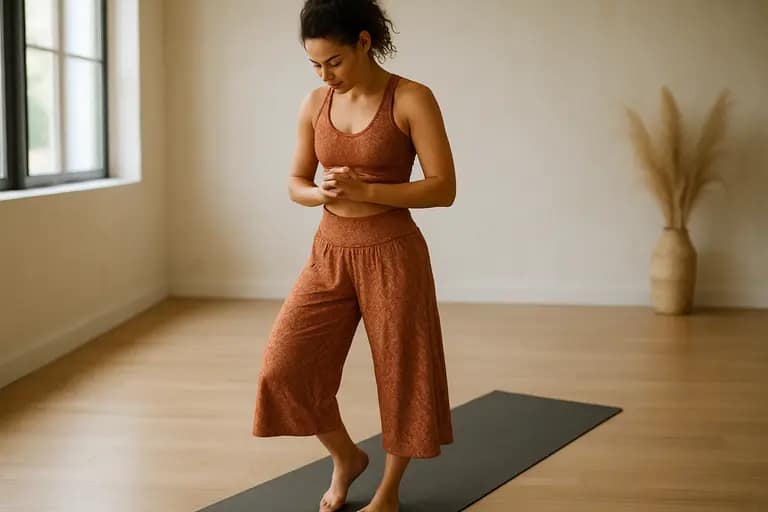
Check Movement Before Styling
A studio-to-street outfit should be tested in the order it will be used. Movement comes first. Stand, sit, hinge, squat, twist, and walk before judging the outfit in a mirror. If the garment needs repeated tugging during those checks, it may become more distracting during class.
Opacity deserves special attention with leggings and flares. Lighting, fabric stretch, and body position can change coverage. A pair that looks opaque while standing may behave differently during a deep squat or seated forward fold. For looser bottoms, the coverage issue may be less about sheerness and more about shifting, gaping, or riding up.
Then Check Street Proportion
Once the movement test is passed, assess the public-facing proportion. Does the outer layer cover what the wearer wants covered? Does the shoe choice make the hem length safe and comfortable? Does the bag, jacket, or top layer make the outfit feel intentional rather than unfinished?
Fabric finish can also change how activewear reads. Matte fabrics often appear quieter than shiny ones. Ribbed or textured fabrics may look less like compression gear, though texture can feel different during sweat and repeated motion. Heavier bottoms may create a more polished line, while lighter bottoms may feel better after class in warm conditions. The best choice depends on activity, climate, and personal comfort rather than one rule.
Transitioning Activewear For Studio And Street
The current shift is not an argument against leggings. It is an argument for using leggings more precisely. Studio street activewear should start with the physical demands of the class and then add street-ready elements through silhouette, layering, and proportion.
For some people, that will mean keeping a reliable legging and changing the top layer. For others, it will mean rotating flares, skorts, cargo-inspired pants, or barrel-leg bottoms on days when the workout allows more fabric movement. The most versatile wardrobe may include one studio-first bottom and one street-first bottom, rather than several nearly identical leggings.
This is general clothing and fitness-context education, not medical advice. If compression, waist pressure, bra-band pressure, skin irritation, numbness, or breathing discomfort persists during or after activity, it is worth discussing those symptoms with a qualified clinician rather than assuming a different outfit will address the cause.