

Activewear Transparency Tools matter because workout apparel is not judged only by how it stretches in a studio or dries after a hard session. For decorators, teams, gyms, and individual buyers, the care question now includes material documentation, supplier standards, packaging choices, and whether sustainability claims can be checked against records rather than slogans.
S&S Activewear has made transparency a more visible part of its business through sustainability reporting, product documentation, compliance pages, and customer-facing product filters. The available information does not prove that every item sold through the company has a lower impact than an alternative. It does give buyers more structured ways to ask what a garment is made from, how a product claim is supported, and what operational practices sit behind the shipment.
Why Activewear Transparency Tools Matter To Care Teams
Activewear Transparency Tools And Buyer Claims
For activewear care, transparency starts before the first wash. Fiber content, manufacturing standards, material certifications, and brand documentation can influence laundering expectations, durability questions, and whether a product fits an organization’s purchasing policy. A polyester training shirt, cotton-blend warmup layer, and fleece team hoodie may all be sold as apparel for movement, but they do not present the same wash, drying, pilling, or decoration considerations.
S&S says its “Responsible Products” experience allows customers to filter by material certifications and manufacturing standards, identify brands that meet environmental or labor standards, and access supporting documentation for regulatory or compliance needs. That type of tool is most useful when buyers treat it as a screening step, not as a final verdict. A certification filter can narrow a catalog, but the individual product page, fabric description, intended use, and care label still need review.
This is especially relevant for bulk activewear orders. A gym buying staff shirts, a youth sports program choosing practice gear, or a wellness event sourcing branded apparel may need more than color and price. They may need a record of what claim was used, which standard it referenced, and whether the garment care instructions are realistic for repeated washing. For a broader set of questions buyers can ask before accepting fabric claims, the related discussion on activewear transparency is a useful companion.
Care Labels Still Carry The Daily Burden
Transparency tools can support better purchasing, but they do not replace garment care labels. Activewear often combines fibers, elastane, dyes, finishes, trims, and decoration methods. A sustainability report may explain company practices, while a care label tells the wearer how that specific garment should be washed and dried. Those are different layers of information.
As a fabric-care specialist, I would treat product documentation as the “why this item was selected” record and the care label as the “how this item should be handled” instruction. If those two sources conflict, the garment-specific care instructions deserve close attention because they reflect the finished product rather than a category-level claim.
What S&S Reported In 2025 And 2026
Climate Risk Reporting And Assurance
On September 3, 2026, S&S published its second annual Sustainability Report. The company said the report included, for the first time, a climate risk assessment aligned with the TCFD framework and independent limited assurance over its greenhouse gas emissions inventory, according to the S&S pressroom. Those details matter because they move the reporting structure beyond general environmental language and toward named frameworks and outside review of emissions data.
Limited assurance should be read carefully. It is not the same as saying every sustainability claim attached to every product has been independently verified. It does indicate that the company subjected its greenhouse gas emissions inventory to an external assurance process. For apparel buyers comparing vendors, that distinction is meaningful: transparency is stronger when companies identify the scope of review rather than asking customers to infer it.
The First Annual Report Set A Baseline
S&S released its first Annual Sustainability Report on September 2, 2025, covering environmental, social, and governance performance during 2024. In that release, the company reported more than 2.6 million kWh of renewable energy generated, 1,770 short tons of waste recycled or diverted, and installation of low-flow toilets and waterless urinals to reduce water usage, as described in the 2025 sustainability report release.
Those figures relate to operations, not the washing performance of a pair of leggings or the lifespan of a sports bra. That boundary matters. Operational improvements can be relevant to a buyer’s supplier review, while product durability, shrinkage, opacity, stretch recovery, and drying behavior still need to be assessed at the garment level.
The research supplied for this article also states that S&S reported solar investments across five distribution centers plus its corporate headquarters as of 2024, generating about 2,662,000 kWh of renewable energy. It also states that the company reused 59% of supplier outbound packaging for shipments and eliminated approximately 895,000 single-use plastic bottles through refill stations and water-conservation measures in 2024. These figures help describe the operational side of sustainability, but they should not be converted into unsupported claims about individual product performance.
How The Tools Affect Activewear Care Decisions
Certifications, Packaging, And Receiving Workflows
Activewear care begins with correct identification. A receiving team that knows exactly what arrived can separate cotton-rich items from synthetic performance items, preserve documentation for decorated garments, and reduce the chance that the wrong care instructions get applied across an order. The Digital Packing Slip described in the research allows customers to scan a QR code on a shipping label and view box-level contents. That can support inventory verification and sorting, particularly for large orders with mixed styles and colors.
Care teams should still keep expectations practical. A packing slip can show what is in a box. It cannot tell a laundry manager that a garment will tolerate high heat, aggressive stain treatment, or repeated tumble drying unless that information is supported by the product’s care label or documentation. The tool is a logistics aid, not a fabric test.
Supplier Codes And Product Records
The research also states that S&S requires all mills in the supply chain for its owned brands to sign an updated Supplier Code of Conduct. It reports engagement with the Fair Labor Association for labor rights and supply chain accreditation, Milestone 2 status for owned brands, annual full audits of owned-brand suppliers, and use of Sayari to identify upstream risk. For buyers, these details may be relevant when apparel decisions are tied to procurement policies or organizational values.
These records do not remove the need to evaluate comfort, fit, or care performance. A garment can have more documentation and still be the wrong choice for a hot yoga studio, a screen-printed fundraiser shirt, or a high-friction training environment. Transparency supports decision-making; it does not make the decision automatic.
- Ask which product claim is being documented: fiber content, certification, labor standard, safety compliance, or packaging practice.
- Check whether the documentation applies to the exact item, the brand, the facility, or the broader company.
- Compare the care label with the intended use, including heat exposure, decoration method, and wash frequency.
- Keep purchase records with packing slips, certification documents, and care instructions for repeat orders.
Limits Shoppers Should Keep In View
Transparency Is Not The Same As A Performance Guarantee
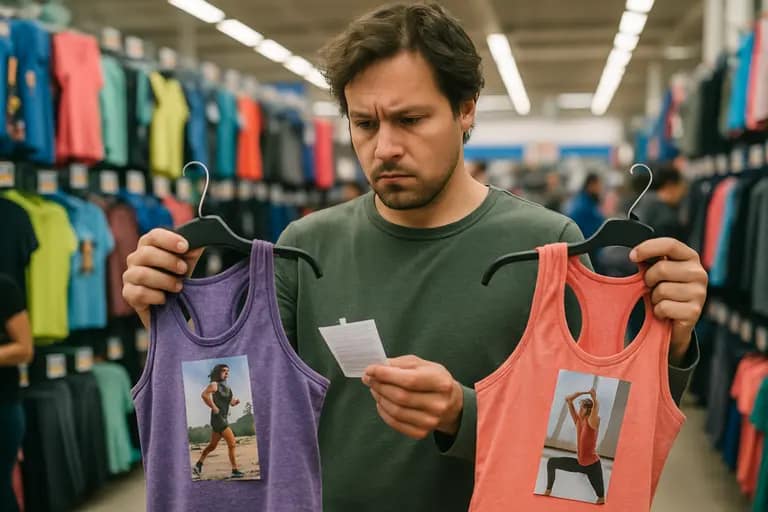
Activewear Transparency Tools can make claims easier to examine, but they should not be read as guarantees of fit, durability, or comfort. A recycled-content claim does not prove that a legging will remain opaque through squats. A labor policy does not tell a runner whether a waistband will roll. A climate-risk assessment does not show whether a shirt will dry quickly after an interval class.
This distinction is not a criticism of reporting. It is a way to use reporting accurately. Sustainability documents are strongest when they answer governance, operations, sourcing, and compliance questions. Fabric testing, wear trials, wash results, and care-label review answer a different set of questions about how apparel behaves in use.
Values-Based Buying Still Needs Evidence
Many buyers want activewear that better matches their values. That can include environmental data, labor policies, packaging choices, community programs, or documentation for product safety. A values-based purchase should still be evidence-based. Short marketing phrases are weaker than named standards, dated reports, and product-level documents that can be saved with order records.
For those who find apparel choices also reflect their lifestyle and value considerations, the broader themes covered by Spiritual Endeavors offer insights into the intersection of wellness and values. In apparel purchasing, though, the practical test remains documentation: what is claimed, where the proof sits, and whether the garment suits the activity and care routine.
For skin irritation, pressure discomfort, numbness, or symptoms that persist after changing clothing or laundering practices, activewear selection should not be treated as a medical solution. A qualified clinician can help assess concerns that go beyond fabric, fit, or detergent choice.
S&S Activewear Transparency Tools In Practice
S&S has put more public structure around sustainability and compliance than a simple product catalog would provide. Its reports, certification filters, compliance documentation, supplier conduct tools, and packing information can help buyers create a clearer record of why a garment was chosen and how it should be managed after arrival.
The most careful way to use Activewear Transparency Tools is to separate three questions. First, what does the company report about its operations and supply chain? Second, what documentation supports the specific product or brand being purchased? Third, does the garment’s fabric, construction, decoration, and care label match the real fitness environment where it will be worn?
That approach keeps sustainability claims in proportion. S&S reporting can inform supplier review. Product filters can narrow choices. Digital packing information can support receiving accuracy. Care labels and wear needs still decide whether the activewear is practical for repeated laundering, movement, and daily use.
For buyers, the value of Activewear Transparency Tools is not that they make every choice simple. Their value is that they make better questions possible before an order becomes a wardrobe, a uniform program, or a recurring care problem.