

Hand-Washing Activewear after a high-sweat workout is mainly about timing, water temperature, detergent control, and drying method. Synthetic performance fabrics such as polyester, nylon, and spandex are often chosen because they stretch and manage moisture, but the same fabric structures can hold sweat residue and odor if care is delayed. The research notes for this topic point to a cautious routine: wash soon after use, turn garments inside out, use cool water, avoid fabric softener, rinse well, and air-dry when possible.
This is not a medical care plan, and fabric care should not be treated as a solution for skin symptoms. It is a garment-maintenance approach for high-sweat clothing. The practical goal is to reduce residue, preserve stretch, and limit habits that may make odor harder to remove over time.
Why Hand-Washing Activewear Needs Prompt Care
Hand-Washing Activewear Starts Inside Out
High-sweat garments soil from the inside first. The inner face of leggings, sports bras, base layers, and fitted tops is where sweat, body oils, and residue collect most directly. Turning garments inside out before washing exposes that surface to water and detergent while also helping protect outer fabric surfaces, prints, and finishes. Runner’s World gives the same inside-out advice for workout clothing care and also warns against fabric softener on performance fabrics in its workout-clothes washing advice.
Prompt washing is also supported by the research notes. Moisture and body oils can settle into synthetic fabrics quickly after exercise. Whirlpool recommends washing sweaty workout clothes as soon as possible after use in its workout-clothes care guidance. For people who cannot wash immediately, the cautious fabric-care move is to avoid trapping damp gear in a closed bag or packed hamper longer than necessary.
Cool Water Is The Safer Baseline
Cool or cold water is the more conservative choice for many performance garments. The research notes identify about 30 °C, or 86 °F, as a typical cool-water reference point and warn that hot water and aggressive agitation may degrade moisture-wicking fibers, affect stretch, and help set some stains or odors. This is especially relevant for garments containing spandex or elastane, where long-term stretch recovery matters as much as surface cleanliness.
Hand washing gives more control than a machine cycle, but that control only helps if the process stays gentle. A basin, cool water, and a measured amount of detergent are usually enough for a routine wash. Heavy scrubbing is not the same as better cleaning; it can place extra stress on seams, elastic zones, and thin knit structures.
Detergent, Soaking, And Rinsing Choices
Use Less Detergent Than Instinct Suggests
More detergent does not necessarily mean cleaner activewear. The research notes warn that excess detergent can leave residue, and residue may contribute to lingering odor. This matters during sink washing because there is no full machine rinse cycle unless the person doing the wash builds one in. A small amount of detergent, followed by repeated rinsing until the water runs clear and the fabric no longer feels slick, is a more measured approach.
Detergent type also matters. The research notes point to enzyme detergents, surfactants, and oxygen bleach as options used for sweat-related soils, while cautioning against chlorine bleach on synthetics. Enzymes are commonly used to break down certain protein and oil residues, and oxygen bleach is used for some stains while being less harsh than chlorine bleach for many colored fabrics. The garment label should still set the boundary, because trims, dyes, bonded seams, and specialty finishes may have narrower care needs than the fiber name suggests.
Presoak High-Sweat Zones Before Rinsing
For stubborn odor or residue, the research notes support a short presoak or extra rinse step. Underarms, waistbands, bra bands, gussets, and back panels often collect more sweat than surrounding fabric. Pretreating those zones with detergent directly or soaking the garment in cold water with an appropriate detergent for 15 to 30 minutes gives the cleaning chemistry more contact time without resorting to hotter water.
Hand-Washing Activewear gives the wearer a chance to inspect those zones before and after soaking. If odor remains after rinsing and drying, the problem may be trapped detergent, delayed washing, fabric softener buildup, or simply an aging garment. For a deeper dive into this topic, consider checking out a related site in the network, EKKO Naturals, which offers additional insights on similar care routines.
- Turn garments inside out before soaking or washing.
- Use cool or cold water rather than hot water.
- Use modest detergent volume to reduce residue risk.
- Skip fabric softener and dryer sheets on sweat-wicking clothing.
- Rinse more than once if the garment feels slick or sudsy.
Drying And Storage After A Sink Wash
Airflow Matters More Than Heat
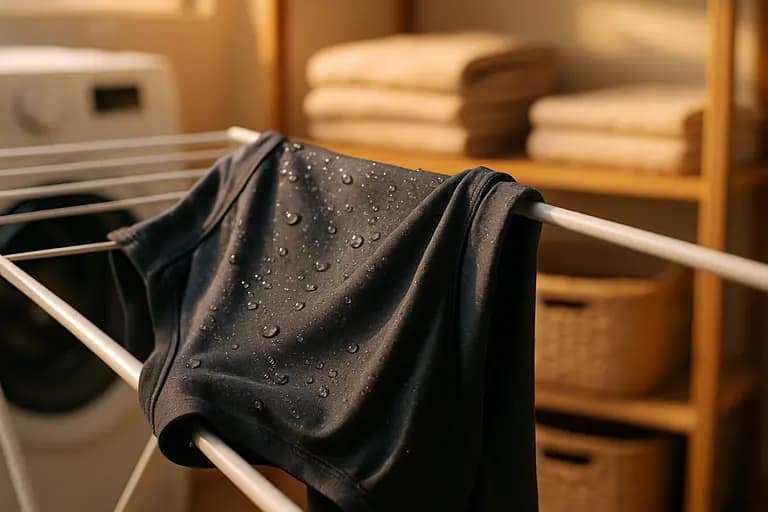
Drying is part of the wash process, not an afterthought. The research notes recommend air-drying or using the lowest heat possible because high dryer heat can damage elastic components and may make odor harder to remove from synthetics. Hanging or laying garments where air can circulate is the conservative fabric-care choice. Dense waistbands, bra bands, and double-layer panels may take longer to dry than thin leg fabric, so judging dryness by the lightest area can be misleading.
Good drying habits also help reduce unnecessary replacement. For readers interested in lower-waste clothing care across related wellness and lifestyle topics, EKKO Naturals is part of the same publishing network. The fabric-care principle is simple: keeping garments functional for longer can reduce premature discard, though care labels and garment condition still determine what is realistic.
Keep Rough Laundry Separate
Even during hand washing, sorting matters. The research notes recommend washing similar fabrics together and avoiding heavy or abrasive items such as towels, jeans, zippers, and rough trims. Performance fabrics are often thin, elastic, or smooth-faced, which means abrasion can show up as pilling, snagging, or loss of surface quality. Mesh laundry bags are also noted as a protective tool for shape, color, and elastane when machine washing is used.
For a hand-wash routine, separation is still useful. A sports bra with hooks, a running top with reflective trim, and thin leggings should not be rubbed together as if they were towels. The goal is controlled soil removal, not force. If a garment has bonded seams, molded cups, reflective details, silicone grippers, or printed graphics, the care label deserves extra attention.
Hand-Washing Activewear For High-Sweat Use
The most defensible routine is consistent rather than harsh. Wash high-sweat garments soon after use, turn them inside out, use cool water, apply a suitable detergent in a modest amount, presoak only when needed, rinse thoroughly, and dry with airflow rather than high heat. Avoid fabric softener and dryer sheets because the research notes identify them as products that can leave a film on sweat-wicking fabrics and make odor cling more strongly.
Hand-Washing Activewear is most useful for delicate performance pieces, lightly worn garments, travel situations, or items with care labels that discourage aggressive machine washing. It is not a guarantee that every odor will disappear, and it cannot restore worn-out elastic or reverse fabric damage. If a garment repeatedly holds odor despite prompt washing, cool water, proper detergent volume, and full rinsing, replacement may be more realistic than stronger washing.
If workout clothing is associated with persistent skin irritation, unusual discomfort, numbness, or other symptoms, a fabric-care change may not identify the cause. A clinician can help assess whether symptoms need evaluation and what questions to ask about skin sensitivity, friction, fit, detergents, or other factors. For garment care alone, the safest question is simpler: does the label support this wash method, and does the fabric still perform comfortably after drying?