

Recent leggings design trends show a clear shift: shoppers are asking bottoms to do more than cover a workout. The same pair may be expected to handle studio movement, commuting, travel, relaxed work-from-home dressing, and style-led outfits. That does not mean one design can satisfy every body or every activity. It means brands are under pressure to balance comfort, stretch, opacity, material claims, storage, and size range without treating any single feature as proof of better performance.
The market data supports that pressure. IMARC Group reported that the global sustainable athleisure market reached US $113.4 billion in 2025 and projected a 6.43% compound annual growth rate from 2026 through 2034, with demand tied to comfort, wellness-oriented dressing, eco-conscious materials, and clothing that can move between workouts and daily wear IMARC sustainable athleisure data. Leggings sit directly inside that demand pattern, but design claims still need careful reading.
Why Leggings Design Trends Are Moving Toward Utility
Leggings Design Trends And Everyday Use
The strongest consumer signal is multifunctionality. Research notes from mid-2026 describe leggings being used beyond yoga and gym settings, including travel, remote work, fashion outfits, maternity needs, and modest or adaptive dressing. That creates a more demanding brief for designers. A waistband that feels acceptable for a one-hour class may feel too restrictive during a long seated commute. A fabric that looks smooth in a mirror may become distracting if it loses shape after repeated bending. A pocket that works for a key may not control the bounce of a larger device.
This is where support mechanisms matter. In a sports bra, support is not only about tightness; it comes from the band, straps, coverage, fabric recovery, and the way the garment distributes motion. Leggings have a comparable design problem, though they support a different part of the body. The waistband, rise, panel shape, seam placement, pocket construction, knit recovery, and fabric weight all affect how stable the garment feels during movement.
For low-impact studio work, a softer hand feel and higher stretch may matter more than a highly compressive sensation. For running errands after training, pocket security and fabric recovery may matter more. For strength training or deep flexion, opacity and waistband stability often become more noticeable. These are practical design questions, not proof that one legging category is universally better.
Why Pockets And Waistbands Are Becoming Design Priorities
Functionality features such as side pockets, back pockets, internal key sleeves, and design details intended to reduce item movement are appearing more often in performance and commute-oriented leggings. The user need is easy to understand: many shoppers want to carry a phone, key, card, or small device without switching to a bag for every errand or workout.
The caution is that storage changes the garment. A pocket adds fabric layers and can change stretch, heat retention, and pressure against the body. A phone pocket may feel secure while walking but less stable during faster movement. Designers are responding by placing pockets along the thigh, inside the waistband, or near the back yoke, but the best placement still depends on body shape, activity, and what is being carried.
Materials Are Being Asked To Balance Competing Needs
Polyester Still Leads, But Blends Are Gaining Attention
Material choice is one reason leggings design trends are becoming more technical. Mordor Intelligence reported that polyester composites held the largest material share of the leggings market in 2025, at about 40.62%. The same source forecast blended fabrics, including combinations such as polyester with cotton, nylon, or elastane, to grow at around 6.54% annually through 2031 as shoppers seek a balance of performance, comfort, and sustainability considerations Mordor leggings market data.
That shift should not be read as a simple ranking of good and bad fabrics. Polyester can be used in light, stretchy, moisture-managing constructions. Cotton blends may feel softer to some wearers but can hold moisture differently depending on yarn, knit structure, and finish. Nylon blends may offer a smooth surface and strong recovery, but the exact feel depends on the fabric engineering. Elastane can support stretch and recovery, but more stretch fiber does not automatically solve fit or durability.
For buyers, the safer reading is that blends are becoming a way to tune properties. A designer may use a blend to soften the surface, improve recovery, adjust opacity, or change drying behavior. The label alone rarely tells the full story. Fabric weight, knit density, finish, construction, and pattern design all shape the wearing experience.
Sustainability Claims Need Specifics
The growth of sustainable athleisure suggests that shoppers are paying attention to material impact. Still, sustainability language can be broad. A legging may mention recycled content, lower-impact fibers, bio-based inputs, or durability, but those are different claims. A recycled polyester legging is not the same design proposition as a natural-fiber blend, and a durable garment that is worn often may raise different questions than a fashion-led item worn only a few times.
For a cautious assessment, shoppers can look for clear material percentages, care instructions, durability expectations, and whether the garment is designed for the activity they actually do. Sustainability is not only a fiber question; it is also a use question. A pair that fits poorly, rolls down, or becomes see-through under stretch is less likely to stay in rotation.
Fit Inclusivity Is Becoming A Design Requirement
More Bodies Means More Pattern Decisions
Research notes identify extended sizes, petite and tall lengths, maternity waistbands, and adaptive clothing as rising priorities. This is one of the more meaningful directions in leggings design trends, because fit cannot be solved by scaling one pattern up or down forever. A waistband that works on one torso length may sit poorly on another. A rise that feels secure on one body may create pressure or gaping on another.
Inclusive design asks for more than size labels. It can involve different inseam choices, varied rises, gusset shapes, waistband heights, fabric recovery levels, and easier dressing features. For maternity designs, a waistband may need to accommodate changing shape without claiming to provide medical benefit. For adaptive clothing, closures, openings, seam placement, and hand strength considerations may matter as much as stretch.
Some brands are using 3D fit data and virtual try-on tools to reduce returns and improve satisfaction, according to the research notes. Those tools may help identify fit patterns at scale, but they do not remove the need for movement testing. A digital fit estimate cannot fully show how a waistband feels after sitting, how a pocket behaves with a phone, or whether fabric remains opaque during a deep squat.
Gender Demand Is Broadening
Mordor Intelligence reported that women accounted for about 70.26% of leggings revenues in 2025, while the men’s segment was expected to grow faster, at around 7.21% CAGR through 2031. That points to broader demand rather than a single consumer profile. Designers may respond with different rises, pouch or front-panel shaping, length options, less gendered color ranges, and varied compression levels.
The risk is assuming that a gender label solves fit. It does not. A more useful approach is to examine body measurements, intended use, fabric stretch, and garment construction. A shopper may prefer a design marketed outside their gender category if the support, coverage, and movement feel are better for the activity.
Style Shifts Are Changing What Performance Bottoms Look Like
Flares, Capris, Texture, And Finish
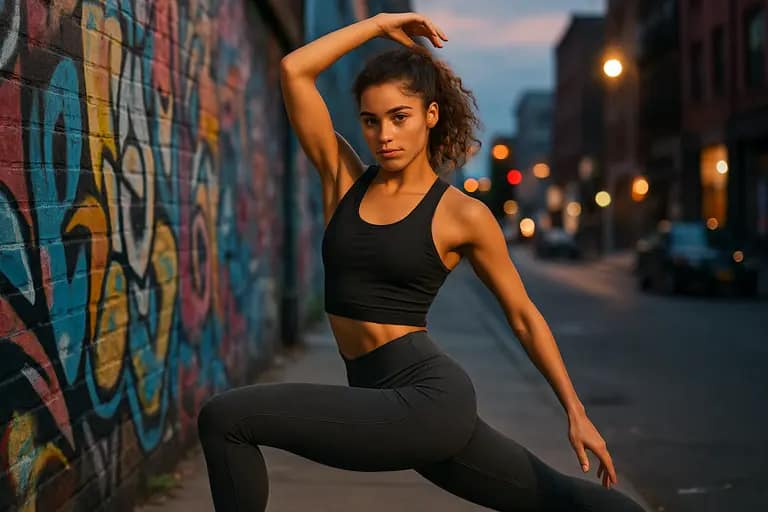
By 2026, the research notes describe visible style movement toward flared and bootcut shapes, stirrup and split-hem designs, capri lengths, brown tones, and more finished textures. This matters because leggings are no longer designed only as hidden base layers or gym-only basics. They are often expected to work as visible outfit pieces.
Style changes, though, can alter function. A flare may feel polished for daily wear but can be less practical near moving gym equipment. A stirrup can stabilize the lower leg line but may feel distracting inside some shoes. A split hem may improve drape yet change how fabric behaves during floor work. Capri length may suit warmer conditions or style preference, but some wearers may prefer full coverage for mat contact or outdoor settings.
None of these designs is automatically better or worse. The key is matching the silhouette to the use case. A person who mainly walks, travels, or dresses leggings as casual wear may prioritize drape and finish. Someone doing cycling, lifting, or high-knee drills may prioritize closer fit, pocket stability, and fewer moving edges.
Premium Pricing Raises The Evidence Bar
The research notes also show rising demand for premium and luxury leggings. Mordor Intelligence reported that mass-market products accounted for 68.72% of total market value in 2025, while premium items were forecast to grow at about 6.65% annually through 2031. Higher prices may reflect technical features, sustainability claims, brand positioning, or more complex construction.
Price alone does not prove better fit or longer wear. A higher-priced pair should still pass the same practical checks: opacity under stretch, waistband comfort, seam placement, recovery after movement, pocket behavior, and care requirements. For a related discussion of movement and moisture claims in bottoms, see this site’s analysis of leggings innovations.
How To Evaluate Leggings Without Overreading Claims
A Movement-Based Fit Check
The most useful fitting method is activity-specific. Stand still, then move in ways that match real use. A pair intended for travel should be assessed while sitting and walking. A training pair should be assessed through squats, lunges, step-ups, or gentle hops if those movements are part of the routine. A studio pair should be assessed in bending, kneeling, and hip rotation. This is general education, not medical advice, and clothing should not be treated as a way to treat pain or injury.
- Check whether the waistband stays in place without creating uncomfortable pressure.
- Look at opacity during bending, squatting, and seated positions.
- Test pockets with the actual item you plan to carry.
- Notice whether seams rub during repeated movement.
- Review fabric content, care instructions, and return terms before deciding.
These checks are especially useful because leggings design trends can make features sound more universal than they are. Four-way stretch, seamless construction, and moisture-control language may be useful, but each feature depends on the full garment. A seamless panel can still apply pressure. A stretchy fabric can still become sheer. A pocketed legging can still bounce if the pocket placement does not suit the activity.
Leggings Design Trends For Practical Fit Decisions
The future of leggings design appears to be moving toward more specialized choices: more blended fabrics, more sustainability language, more inclusive sizing, more storage, more style variation, and more gender-diverse demand. The practical lesson is not that shoppers need a separate pair for every setting. It is that leggings design trends should be judged by activity, body fit, and construction rather than trend language alone.
For low-intensity days, comfort, pressure tolerance, and ease of movement may matter most. For gym sessions, opacity, recovery, and waistband stability may take priority. For commuting or travel, pockets, seated comfort, and fabric durability may be more relevant. For style-led wear, silhouette and finish may matter, but they still need to feel acceptable in motion.
If a garment causes persistent pain, numbness, skin irritation, breathing discomfort, or other unusual symptoms, changing leggings may not answer the question. A qualified clinician can help assess persistent symptoms. Readers with health coverage questions can also explore more consumer resources available at America’s Fair Healthcare. Useful questions to discuss with a clinician include whether discomfort is related to skin sensitivity, pressure, activity technique, pregnancy, circulation concerns, or another individual factor.