

Ever wonder why athletes and weekend warriors wear spandex? It’s not just for looks. It’s about improving how our bodies work.
These technical clothes are like your own personal team for better performance. They apply gentle pressure to help your blood flow better. This means your muscles get more oxygen and you move smoother.
Wearing the right gear is like switching from slow internet to super-fast fiber optic. You’re using the same tools, but now they work much better.
These clothes do more than just feel good. Studies show they can help you stay strong longer, recover faster, and keep your body temperature right. To get the most out of them, learning how to wear them right is key. Check out compression fit tips to make the most of this technology.
Key Sizing Principles
Trying to figure out compression sizing is like trying to understand political polls. The numbers look simple, but context matters a lot.
The key is to find a fit that feels like a firm handshake, not too tight. If you’re new, choose comfort. Experienced folks might go for a tighter fit for better performance.
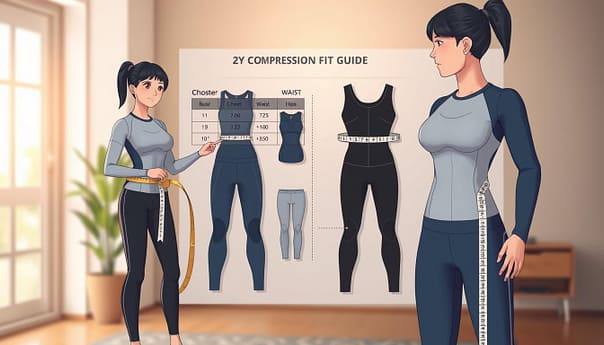
Finding the right balance is like solving a puzzle. It’s about finding the sweet spot where science meets personal comfort. It’s like the right amount of government intervention in the economy – enough to help, but not too much.
Through trial and error, I’ve learned the right fit should support you without feeling too tight. Remember, this isn’t just about looking good. For more on materials and construction, check out this essential guide to compression sportswear.
The perfect fit is all about what you prefer. Tighter fits offer more benefits and show off your shape. Looser fits are more comfortable and let you move better. Pick what’s best for you and your goals.
Measurement Guide
Let’s dive into your body’s details, shall we? Taking measurements for your athletic wear is like mapping new lands. It needs precision.
Chest measurement isn’t just about size. It’s about finding the fullest part. Make sure the tape is straight, not slanted.
Waist measurement is about finding that sweet spot. It’s where your body bends sideways. Think of it like finding the perfect balance.
Hip measurement is all about the curve. It’s like analyzing data to find the peak. I take it very seriously.
Size charts are not just suggestions. They’re the rules for your compression wear. They guide you from XS to XXL, for tops and bottoms.
Measure your chest, waist, and hips carefully. This isn’t a guess. It’s about getting the best fit for your performance.
Fitting Room Checklist
Welcome to your personal biomechanics laboratory. The dressing room becomes your testing ground for finding that perfect second skin.

Can you perform a full squat without feeling fabric resistance? Does the garment feel like a supportive embrace?
Think of this process like judicial review. You’re testing against your personal constitution of comfort and functionality. The ideal balance should make you feel both powerful and free.
Remember: different activities demand different approaches. What works for yoga won’t necessarily serve you during marathon training. Your personal preference ultimately determines the winning combination.
The right compression should enhance movement while celebrating your form. It’s about finding that sweet spot where support meets liberation.
Trying On vs. Online Orders
Welcome to the great retail debate of our time: instant gratification versus analytical precision. Trying on gear in person feels like a live audition. You get immediate feedback on how the fabric performs with your unique physique.
Online shopping demands political strategist-level analysis. You’re cross-referencing size charts like polling data and interpreting product descriptions with forensic precision. Different brands maintain their own sizing constitutions – some consistent like established parties, others more… fluid.
The savvy approach? Treat online orders like preliminary focus groups. Order multiple sizes from retailers with generous return policies. Remember that proper compression gear should feel like a second skin. It should be supportive without restricting your movement or comfort.
Whether you’re team dressing room or team doorstep delivery, your ultimate fit guide remains the same. Measure carefully, read reviews religiously, and never underestimate the power of a good return policy.
Care and Longevity
Think of your compression wear fit as constitutional law – it needs proper maintenance to retain its original intent. These aren’t your basic cotton tees; they’re performance technology woven into fabric form.
The care routine is strict: cold water washes only, no fabric softeners allowed (they harm moisture-wicking), and air drying to avoid damage. It’s not just laundry; it’s keeping your gear in top shape.
Proper care keeps your compression wear fit working right. You’re not just washing clothes; you’re protecting an investment in performance. The right care keeps muscle support and thermal retention strong, just like day one.
Neglect turns high-tech gear into just pajamas. Your compression wear fit should last as long as a well-maintained constitution – technically sound and effective for years.