

Breathable workout fabrics are often marketed as the answer to hot, high-sweat training, but the evidence is more specific than the slogans. The most useful recent research points toward moisture movement, fabric geometry, weight, porosity, and fit working together. For leggings and other workout bottoms, that means a light fabric may feel better during intervals only if it also manages sweat, stretches without distortion, and stays secure during repeated movement.
High-intensity workouts place different demands on bottoms than walking, stretching, or low-load studio sessions. Squats, sprints, cycling intervals, burpees, rowing, and stair work create repeated hip flexion and heat build-up. A fabric that feels soft while standing can feel clingy or unstable once sweat appears. The question is not whether lightweight fabric is always better. The better question is what kind of lightness is being engineered, and whether the garment design supports the activity.
Why Lightweight Fabric Matters During Intervals
Lightweight leggings can reduce the sensation of bulk during fast movement. In high-output sessions, the fabric sits close to large moving joints, especially the hips and knees. Extra mass, thickness, or water retention can make a garment feel heavier as the workout progresses. That does not prove a lighter textile improves performance, but it may reduce distraction for some wearers.
The research notes from 2024–2026 repeatedly point in the same direction: fabric behavior depends on structure, not just fiber name. Polyester, cotton, spandex, lyocell, and blends can behave very differently depending on knit construction, surface treatment, porosity, and how moisture moves through the layers. A thin legging that traps dampness against the skin may feel less comfortable than a slightly heavier fabric with better moisture transport.
Heat, Sweat, And Perceived Comfort
During intense workouts, the body produces heat and sweat. Clothing cannot stop that process. What fabric can influence is how moisture spreads, how quickly damp areas dry, and whether air can move through or around the textile. Recent research on cooling and moisture-responsive fabrics suggests that layered structures, hydrophobic and hydrophilic zones, and ventilation features may change comfort-related measurements under test conditions.
That evidence should be read cautiously. A laboratory fabric sample is not the same as a finished pair of leggings with seams, a waistband, compression zones, pockets, and body-specific stretch. Still, the direction of innovation is relevant: the best workout bottoms are increasingly being designed as systems rather than simple stretchy tubes of fabric.
What Breathable Workout Fabrics Can And Cannot Do
Breathability is often used as a broad retail word, but in textile research it can involve several different properties. Air permeability, water-vapor transport, one-way moisture movement, drying behavior, thermal resistance, and fabric thickness may all affect how a garment feels during sweat-heavy exercise. A product description rarely gives enough detail to judge all of these features.
Breathable Workout Fabrics And Moisture Movement
A 2026 study on hybrid weft-backed cooling fabric tested a structure combining hydrophobic inner layers with hydrophilic and reflective outer layers. The fabric reached a one-way moisture transport index of +614%, reverse penetration of −606%, solar reflectance of about 90.8%, mid-infrared emissivity of about 92.46%, and average sub-ambient cooling of 10.4 °C in direct sun during testing, outperforming cotton by more than 5 °C in that setting cooling fabric research.
Those numbers are notable, but they should not be translated directly into a guarantee for leggings. The study supports the idea that layered fabric architecture can move moisture and reflect heat in useful ways under specific test conditions. It does not show that every pair of leggings using similar language will feel cool in a humid gym, fit every body, or remain comfortable through repeated squats and sprints.
Why Knit Geometry Changes The Result
Another 2026 study used unsupervised machine learning to classify sustainable knitted fabrics by ultraviolet protection and moisture-related comfort. The researchers found that stitch structure, including links-links constructions, could affect the balance between protection and moisture or air transport knitted fabric study. This supports a practical point for shoppers: fiber content on a tag is only part of the story.
For shoppers, breathable workout fabrics should be assessed by how they behave in motion. Two leggings can list similar fiber percentages and still differ in stretch recovery, opacity, airflow, drying feel, and surface friction. Knit geometry may explain why one feels stable during jumps while another slides, bags, or clings.
Leggings Fit Is Still Part Of Fabric Performance
Fabric innovation cannot compensate for a poor fit. A legging may use a light, moisture-moving textile and still fail if the waistband rolls, the gusset pulls, the rise cuts into the body, or the knees bag after repeated flexion. Fit is not only a style question; it changes how textile features are experienced during training.
A Waistband Is A Support System
Sports bras make this principle easy to see. In a bra, support comes from a combination of band tension, cup or panel structure, strap placement, fabric recovery, and coverage. Leggings work differently, but the logic is similar: the waistband, rise, seam placement, knit recovery, and compression zones act together. If one part is wrong, the fabric may need constant adjustment.
For high-intensity bottoms, the waistband should remain secure through jumps, hinges, lunges, and seated positions without feeling restrictive. A very compressive waistband can feel stable at first, then become uncomfortable as breathing and movement intensity rise. A very soft waistband may feel pleasant in a fitting room but slide during intervals. Neither option is universally better.
Opacity And Stretch Need Movement Testing
Lightweight fabric can become more transparent when stretched. That does not make it unsuitable, but it does make movement testing essential. A legging that looks opaque while standing may change during deep hip flexion, squats, or bright outdoor light. Stretch recovery matters as well. Fabric should return toward its original shape after repeated bending rather than remaining loose at the knees or seat.
- Squat and hinge to test opacity, rise, and waistband movement.
- Perform high knees or small hops to check slipping and bounce.
- Sit, kneel, and lunge to feel seam pressure and front-rise comfort.
- Check whether the fabric feels damp, clingy, or abrasive after warming up.
- Assess whether pockets, drawcords, or seams interfere with the workout.
How New Cooling Fabrics Should Be Read
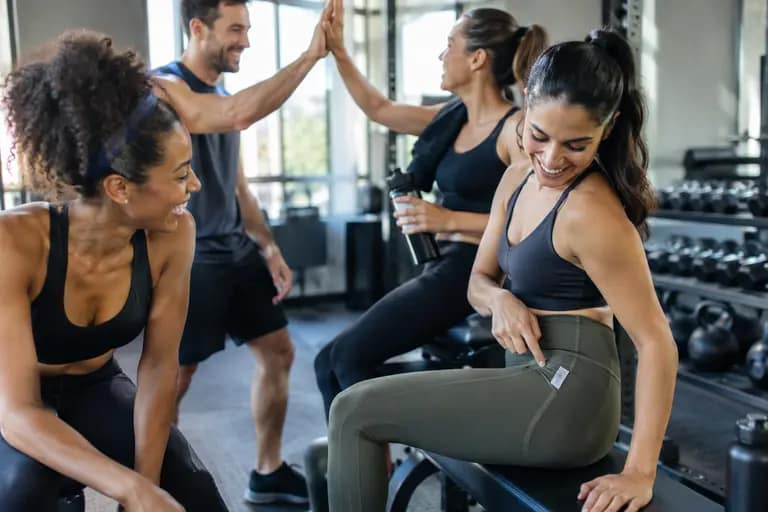
Recent textile innovation is promising, especially around Janus structures, multilayer moisture transport, high-porosity knits, and passive cooling. Several 2026 research notes describe fabrics designed to move sweat in one direction, lower skin-surface temperature under test conditions, or reduce evaporative resistance. Those findings suggest why lightweight activewear is becoming more technical.
Lab Cooling Is Not The Same As A Gym Result
A fabric can perform well in a controlled test and still feel different in a finished garment. Gym temperature, humidity, workout duration, body size, sweat rate, garment fit, and layering all affect perception. Outdoor training adds sun exposure and wind. Indoor cycling may involve less natural airflow than running. A cooling claim should be treated as a fabric property under stated conditions, not a promise of the same result for every wearer.
This is where cautious comparison helps. If two leggings are both described as light, look for more concrete design clues: mesh zones, open knit areas, smooth inner surfaces, gusset shape, waistband construction, and whether the fabric is intended for high-sweat training or low-impact studio work. For related fabric context, climate-focused activewear research is discussed in the broader network where America’s Fair Healthcare offers resources on access and coverage topics. Apparel choices can support comfort, but they do not replace individualized health guidance.
Sustainability Claims Need Specific Evidence
Some newer knitted-fabric research also considers sustainability, but a sustainable claim should be specific. Recycled content, longer garment life, lower-impact dyeing, reduced wash shedding, repairability, and responsible manufacturing are not the same claim. A fabric can be breathable without being durable, and a durable fabric can still have weak moisture transport. Shoppers benefit from separating comfort claims from environmental claims rather than assuming one proves the other.
Activity Matching For High-Intensity Bottoms
The practical benefit of textile research is better matching. Breathable workout fabrics make the most sense when the workout involves heat, sweat, and repeated movement. They are less critical for short mobility work, gentle walking, or low-sweat strength sessions where coverage, softness, or warmth may be more valuable.
Indoor HIIT
For indoor HIIT, leggings should prioritize moisture movement, stretch recovery, and secure fit. Airflow may be limited in crowded rooms, so drying feel matters. A slick surface can reduce cling, but too little structure may lead to sliding. Midweight fabrics sometimes work better than ultralight fabrics if they balance coverage with sweat management.
Outdoor Heat And Sun
For outdoor intervals in heat, reflectance, air movement, and sweat spreading may become more relevant. Research on reflective and moisture-transport fabrics suggests potential comfort advantages under direct sun, but finished apparel still needs real-world testing by the wearer. People with heat sensitivity, pregnancy, medication considerations, or underlying health concerns should discuss safe exercise conditions with a qualified clinician rather than relying on clothing as protection.