

Hybrid training puts unusual demands on workout clothing because one session may combine running, rowing, sled work, lunges, kettlebell exercises, strength movements, and floor-based conditioning without giving the athlete an opportunity to change clothes.
That creates a real apparel problem.
A lightweight running tight can feel excellent during intervals but offer less protection against rough gym equipment. A dense strength-training legging can feel secure during squats but become unnecessarily warm during a hard run. A pocket that works during walking may bounce once the pace increases. A waistband that seems stable in the fitting room may start moving after repeated transitions between standing, rowing, sprinting, and deep hip flexion.
That is why brands are beginning to treat hybrid training as a distinct activewear design challenge.
Oner Active is scheduled to launch its Hybrid capsule on August 28, 2026 at 12 p.m. EDT, describing the range as its first major exploration of apparel built specifically around hybrid training. The collection introduces the company’s lightweight AirMove fabric alongside pocketed UnifiedMove leggings and shorts, as detailed in the brand’s Hybrid training launch. The company says the range is intended for people combining strength, speed, endurance, and varied movement. Those descriptions are manufacturer claims rather than independent evidence that the garments improve athletic performance.
The bigger question is more useful for most gym-goers: does hybrid training actually require a new category of leggings and fabrics?
Not necessarily.
What hybrid training does require is clothing capable of handling several conflicting jobs reasonably well. For people who regularly combine running and strength work in the same session, fabric weight, waistband security, abrasion resistance, sweat management, stretch recovery, squat opacity, and pocket stability all become relevant at once.
For more body-neutral activewear coverage focused on garment behavior rather than judging the body wearing it, cameltoe.org follows the same practical fit-first approach.
Why Hybrid Training Is Harder On Activewear
Traditional workout clothing is often optimized around a fairly narrow movement environment.
Running apparel prioritizes repeated forward motion, low weight, sweat handling, and minimal distraction.
Strength apparel may prioritize opacity, stretch recovery, coverage, abrasion resistance, and a secure waistband.
Studio clothing can put greater emphasis on softness and freedom through large ranges of motion.
Hybrid training combines those demands.
Imagine a session beginning with an 800-meter run, moving into sled pushes, kettlebell swings, lunges, rowing intervals, burpees, and barbell work before finishing with another run.
During the running segments, the leggings experience thousands of small repetitive movements while body temperature and sweat increase.
During squats and lunges, the fabric stretches much more aggressively around the knees, hips, and seat.
During sled work, the athlete spends time in deep hip flexion.
During rowing, the waistband repeatedly moves between flexion and extension.
During floor exercises, the fabric can rub against mats and rough surfaces.
A garment that handles only one of those situations well may become distracting when the workout changes.
Running And Strength Training Want Different Fabrics
One of the central problems in hybrid activewear is fabric weight.
Running apparel can benefit from extremely lightweight construction because less fabric means less material moving with every stride and potentially less retained moisture.
Strength training creates almost the opposite incentive.
A slightly denser textile can provide more coverage during deep squats, feel more secure around the waist and hips, and tolerate repeated contact with benches, mats, and other equipment.
That does not mean heavy fabrics are automatically better for lifting or that ultralight fabrics are unsuitable for strength work.
It means designers have to balance properties that can work against one another.
Heat adds another layer.
Recent reporting drawing on textile researchers explains that exercise comfort depends on air permeability, evaporation, fabric construction, fit, and activity level—not simply whether a garment is made from cotton or polyester. Engineered synthetic fabrics can help move perspiration during intense exercise, while some natural fibers may retain more moisture once saturated. The broader explanation is available in the AP’s guide to fabric performance in extreme heat.
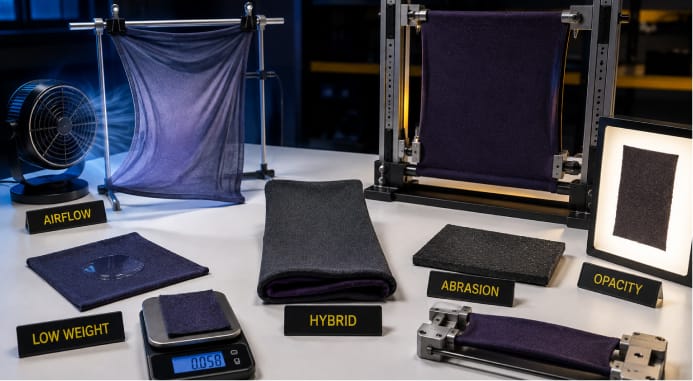
Hybrid clothing therefore needs enough material for coverage and durability without creating unnecessary heat during the conditioning portions of the session.
Oner Active’s Hybrid Collection Shows The Tradeoff
Oner Active’s upcoming capsule is interesting because it does not try to solve hybrid training with one material.
The brand highlights AirMove, which it describes as featherlight, alongside more structured UnifiedMove leggings and shorts with pockets.
That alone suggests there may not be one ideal hybrid fabric.
A running-heavy training day may reward a lightweight short.
A session dominated by squats, sled pushes, and strength work may make a more substantial legging preferable.
A mixed session might sit somewhere between those two extremes.
The collection also includes different garment constructions rather than simply putting one fabric into every silhouette.
That is probably the more realistic future of hybrid activewear: not one miracle textile, but several pieces built around different balances of mobility, durability, coverage, and heat management.
Compression Can Feel Useful Without Making You Faster
Hybrid leggings often lean toward moderate compression because close-fitting fabric can feel stable during rapid transitions.
That can be useful.
A secure legging may move less during running, keep the waistband positioned during squats, and reduce the amount of loose fabric interacting with equipment.
What compression does not reliably do is make someone run faster.
A 2025 updated systematic review and meta-analysis examined 51 randomized controlled trials involving 899 participants. Researchers found no significant improvement in race time or time to exhaustion when runners wore compression garments. Compression did reduce soft-tissue vibration, but the overall certainty of evidence for performance outcomes was low to very low. The findings are available through the PubMed compression-garment review.
That makes compression better understood as a garment characteristic than as a performance shortcut.
Some people prefer a firmly held sensation during training.
Others find strong compression uncomfortable once heat and sweat increase.
For hybrid leggings, the useful amount is the amount that keeps the garment stable without making deep breathing, hip flexion, or extended wear unnecessarily uncomfortable.
Waistband Stability May Matter More Than Compression
Hybrid training is particularly good at exposing poor waistband design.
A waistband can behave perfectly during standing and fail once the workout becomes dynamic.
Running introduces repeated impact.
Squatting changes the relationship between the pelvis, abdomen, and waistband.
Rowing repeatedly compresses the torso toward the thighs.
Burpees move the athlete quickly from standing to floor positions and back again.
If the waistband begins sliding during any one of those movements, the problem becomes more noticeable as the session continues.
A stable waistband may rely on several features:
fabric recovery, appropriate rise, sufficient depth, internal elastic, contour shaping, or a drawcord.
Simply sizing down is not always the answer.
A smaller legging may create more pressure without correcting a pattern that does not match the wearer’s proportions.
That is an important body-neutral distinction.
When leggings repeatedly roll, slide, or pull, the cause may be the garment’s pattern and construction, not the person’s body.
Sweat Management Becomes A Bigger Issue In Mixed Sessions
Strength training often includes rest periods between sets.
Hybrid conditioning can keep the heart rate elevated for longer periods because running, rowing, sleds, carries, and other movements are frequently linked together.
That increases perspiration and heat.
A useful hybrid fabric should be able to move moisture without becoming excessively heavy, sticky, or abrasive.
The phrase “moisture-wicking” does not tell the whole story.
A textile also needs sufficient airflow and evaporation.
Fabric thickness, knit structure, yarn type, surface finishing, garment fit, and environmental conditions all influence what happens once the clothing is wet.
Two pairs of leggings can contain similar percentages of nylon and elastane while behaving very differently during an hour of training.
That is why fiber percentages are useful but incomplete.
The finished fabric matters more.
Quick-Dry Does Not Mean The Leggings Stay Dry
Activewear descriptions sometimes create the impression that sweat-management fabric should remain dry throughout a workout.
That is not realistic.
A quick-drying textile can still become visibly wet during heavy exercise.
The useful property is what happens afterward.
Does the moisture spread across a larger area?
Does the garment retain a large amount of water?
Does the fabric become much heavier?
Does the inside surface begin rubbing once damp?
How quickly does it dry when the exercise intensity drops?
These are more meaningful questions than whether sweat becomes visible.
For someone who trains hard enough to saturate clothing, a fabric can perform well while still showing moisture.
Abrasion Is Where Running Tights Can Struggle
Road running usually does not involve repeated contact with rough equipment.
A gym does.
Barbells can touch the thighs during deadlifts.
Benches repeatedly rub the seat of the leggings.
Mats create friction.
Sled straps, lifting belts, and textured machines can contact clothing.
For hybrid athletes, this means a fabric optimized entirely around minimal weight may not be the best material for every environment.
A very thin surface may feel excellent while running but show wear faster around rough equipment.
A dense strength fabric may tolerate abrasion better but feel warmer.
Again, there is no universal winner.
The best textile is the one that balances the conditions actually present in the workout.
Squat Opacity Still Has To Be Tested
Hybrid training often moves directly from upright conditioning into deep hip flexion.
That makes opacity especially relevant.
A pair of leggings can look completely opaque while standing but allow more light through when stretched during a deep squat.
Fabric density matters.
So does fit.
When a textile is stretched beyond the range intended by the pattern, the knit structure opens and more light can pass through.
That is one reason simply sizing down to create more compression can produce unexpected problems.
A basic hybrid-legging test should include:
- deep squats,
- lunges,
- seated rowing positions,
- a forward hinge,
- running or high knees.
If coverage remains acceptable throughout those movements, that is more useful information than how the garment looks in a static mirror.
Pockets Have To Work At Running Speed
One of the most practical features in Oner Active’s upcoming Hybrid collection is the use of pockets in UnifiedMove leggings and shorts.
Hybrid athletes may actually need them more than some single-sport users.
Moving between a running route and gym floor means someone may want to keep a phone, key, card, or small item close without using a separate belt.
The pocket has to perform under impact.
Put the actual phone inside.
Jog.
Run.
Do high knees.
Squat.
Lunge.
Sit in a rowing position.
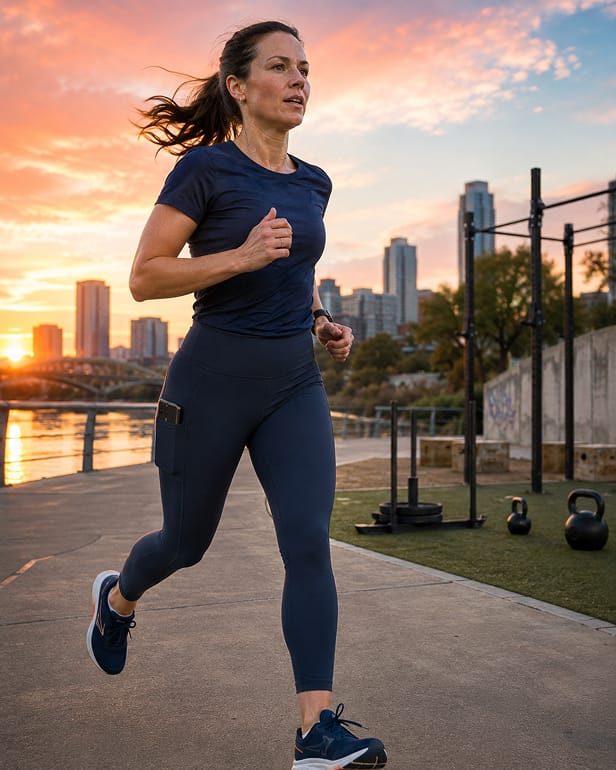
If the phone repeatedly strikes the leg, pulls the waistband downward, or interferes with hip flexion, the pocket is not solving much.
Placement matters almost as much as capacity.
Sports Bras Need Their Own Hybrid Test
Matching leggings and bras should not automatically be treated as one performance system.
A legging can work well for hybrid training while the matching sports bra does not provide enough support for the highest-impact part of the workout.
Someone lifting weights may feel comfortable in a lighter-support bra.
Add running, box jumps, or burpees and that calculation can change.
A useful hybrid sports-bra test should include the hardest movement in the session, not only the easiest one.
The wearer should check:
band stability, strap pressure, coverage, breast movement, breathing comfort, and whether the bra becomes significantly less comfortable when saturated with sweat.
More compression is not automatically better here either.
The correct support level is individual.
What A Good Hybrid Legging Actually Needs
A useful hybrid legging is less about a category name and more about whether several design systems work together.
| Property | Why It Matters |
|---|---|
| Stretch recovery | Helps knees, hips and waistband return to shape after strength work |
| Waistband stability | Reduces adjustment during running, rowing and floor transitions |
| Moderate fabric weight | Balances coverage with heat management |
| Moisture movement | Becomes important during sustained conditioning |
| Abrasion resistance | Helps with benches, mats and gym equipment |
| Squat opacity | Maintains coverage under deep flexion |
| Secure pockets | Keeps essentials stable during running |
| Comfortable seams | Reduces rubbing during repetitive movement |
A material label cannot confirm all of those things.
A polyester-elastane legging can perform extremely well or poorly.
So can a nylon blend.
Patterning and construction often matter just as much as the fibers.
Shorts Can Be A Better Hybrid Solution
Hybrid training does not inherently require leggings.
Running-heavy workouts may feel more comfortable in shorts because less fabric covers the legs.
Oner Active’s capsule reflects that by including lined AirMove shorts as well as UnifiedMove short designs.
A double-layer short can solve several problems at once.
The outer layer provides loose movement and airflow.
The inner layer can provide coverage and stability.
A phone pocket can sit close to the thigh on the inner liner, helping reduce bounce.
That architecture may be more comfortable than full-length tights for some athletes, especially in warm conditions.
Leggings can still be preferable for people who want additional coverage, warmth, or protection from rough surfaces.
Existing Gym Clothes May Already Be Hybrid-Capable
The growth of hybrid-specific collections does not mean existing activewear has suddenly become obsolete.
If your current leggings:
stay positioned while running,
remain opaque during squats,
handle sweat reasonably well,
do not become uncomfortable on a rower,
have useful pockets,
and survive repeated gym contact,
they are already functioning as hybrid leggings.
There is no requirement that the label use the word “hybrid.”
That is worth remembering as brands create increasingly specialized categories.
Specific apparel can solve real problems.
The category itself is not the benefit.
Who Is Most Likely To Notice The Difference?
Someone who regularly combines strength and endurance in one session has the strongest case for paying attention to hybrid-specific design.
A person who strength trains for 50 minutes and finishes with a relaxed five-minute walk may not notice much benefit.
Someone moving repeatedly among running intervals, sled pushes, rowing, carries, lunges, and barbell exercises probably will.
Climate also changes the decision.
A dense legging may work perfectly inside an air-conditioned gym and feel uncomfortable when half the session moves outdoors in summer.
A featherlight tight may be ideal for outdoor running but provide less protection from cold equipment during winter strength sessions.
There is no universal hybrid uniform because hybrid training itself is not standardized.
Test The Hardest Combination You Actually Train
The best way to choose hybrid leggings is to recreate the movements most likely to expose problems.
Put a phone in the pocket.
Perform several deep squats.
Lunge.
Jog or do high knees.
Sit as though rowing.
Move toward a burpee position.
Check the waistband.
Look for excessive knee bagging.
Notice whether the phone moved.
Assess whether seams rubbed.
Check opacity under deep flexion.
A good hybrid legging should let the wearer stop thinking about the garment once the workout starts.
Hybrid Training Creates A Real Design Problem—Not A Performance Shortcut
Oner Active’s August 28, 2026 Hybrid launch is a timely example of activewear becoming more specialized around mixed training. AirMove targets the lighter end of the spectrum, while pocketed UnifiedMove leggings and shorts address a more structured training environment.
That is a legitimate design direction.
It should not be confused with proof that specialized leggings improve athletic performance.
Compression research reinforces that distinction: garments can change fit, soft-tissue movement, and subjective experience without necessarily improving race performance.
The practical benefits of hybrid clothing are more ordinary—and probably more valuable.
A waistband that stays put means fewer adjustments.
A secure pocket means less phone bounce.
Appropriate fabric weight balances coverage and heat.
Good recovery helps the knees and waist retain shape.
Durable material tolerates both strides and gym equipment.
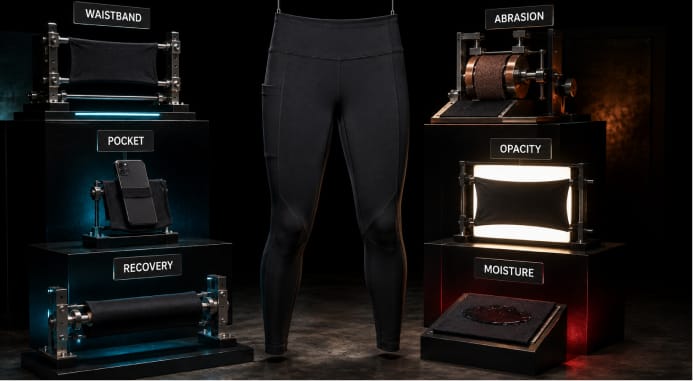
Hybrid training does not necessarily need its own leggings category. It needs leggings capable of doing several conflicting jobs well enough that the wearer can focus on the workout instead of the clothing.
For some people, a pair already in the drawer can do exactly that.
For others—especially those regularly combining running, high-sweat conditioning, and strength work—a purpose-designed hybrid fabric may be a meaningful upgrade.