

Earth tone leggings are no longer just a quiet alternative to black. Based on 2026 color direction from major fashion reports, clay, olive, camel, chocolate, ochre, and warm brown shades have moved into the activewear conversation as practical neutrals for bottoms. As Allison Rivers, I look at this shift less as a fashion command and more as a fabric-and-use question: does the color help you build a workout wardrobe that still performs through movement, sweat, washing, and repeated wear?
The answer is cautious. Earth shades can make leggings and joggers easier to pair with non-gym clothing, and they may feel softer visually than neon or stark black. But color does not make a fabric breathable, opaque, durable, or comfortable. Those properties still come from textile structure, stretch recovery, fit, dye quality, and care habits.
Why Earth Tone Leggings Are Gaining Ground
Earth Tone Leggings In 2026 Color Reports
The clearest support for earth tone leggings comes from broader fashion color reporting rather than gym-specific performance testing. Pantone’s New York Fashion Week Autumn/Winter 2026/2027 report, published on February 11, 2026, identified earth-linked shades including Muted Clay, Arabian Spice, Burnt Olive, Chocolate, and Camel among the season’s standout colors Pantone color report. That does not mean every activewear brand will use each shade, but it shows that these tones were not peripheral in the 2026 fashion cycle.
Hueme’s Autumn/Winter 2026 trend report also placed grounded shades such as Rich Ochre, Burnt Umber, Rust Clay, Chestnut, Camel, and Forest Pine among the 36 colors shown across Paris, Milan, New York, and London runway analysis Hueme AW26 report. For leggings and bottoms, that matters because lower-body garments often act as wardrobe anchors. A clay or olive legging can function more like a neutral pant than a bright training piece.
What The Reports Do Not Prove
These reports support a color trend, not a performance claim. They do not show that chocolate brown leggings dry faster than black leggings, or that camel joggers last longer than navy ones. Color direction and textile performance are separate topics.
That distinction matters for shoppers. A pair of earth tone leggings can be trend-aligned and still fail basic movement checks if the fabric sheers out, rolls at the waistband, traps heat, or loses shape after washing. The trend may help explain why these shades are appearing more often, but the purchase decision should still start with fabric behavior.
What Earth Tones Change In Leggings And Bottoms
Color As A Wardrobe Neutral
Earth tones change how leggings sit inside a wardrobe. Black leggings often read as purely gym-ready or minimalist. Clay, camel, chocolate, olive, and forest green can bridge studio wear, walking outfits, travel clothing, and casual layering more easily for some people. This is especially relevant for bottoms because they cover a large visual area and determine whether an outfit feels sporty, casual, or more polished.
That said, earth tone leggings are not automatically more versatile for everyone. A warm camel may work well with cream, charcoal, navy, or white tops. A rust clay shade may be harder to pair if most of your activewear tops are cool-toned. Olive often behaves like a neutral, but its undertone can lean yellow, grey, or deep green depending on the dye. The practical test is not whether the shade is fashionable; it is whether it works with the tops, socks, shoes, and layers you already own.
Fabric And Care Still Decide Usefulness
Color can hide or reveal different things. Very light camel or sand leggings may show sweat darkening more visibly in some fabrics. Deep chocolate or olive may be more forgiving visually, but that depends on fiber content, fabric thickness, surface finish, and dye saturation. A matte knit, a brushed knit, and a smooth compression fabric can all behave differently in the same color family.
Care is also part of the decision. Stretch bottoms are often built with elastane or spandex blended into nylon, polyester, cotton, or other fibers. Heat, abrasion, and repeated laundering can affect stretch recovery over time, so a good color is not enough. For a more fabric-specific care discussion, the site’s piece on spandex care explains why activewear can lose snapback with use.
To explore more about wardrobe and fabric considerations in a broader context, PetraClass provides insights on related apparel subjects that may be useful.
How To Evaluate Earth Toned Bottoms Before Keeping Them
Movement Checks Matter More Than Shade Names
A shade name such as Burnt Olive or Rust Clay can make a product sound grounded and premium. The fitting-room test should be less romantic. Squat, lunge, hinge at the hips, sit down, step up, and raise one knee toward the chest. Watch whether the waistband folds, the front rise pulls, the knees bag, or the fabric becomes noticeably transparent.
Earth tone leggings deserve the same movement testing as black leggings. In fact, mid-tone colors can sometimes reveal stretch distortion more clearly because the fabric lightens as it stretches. If a clay or camel legging looks patchy over the knees or hips during movement, the issue may be fabric density, dye behavior, or sizing rather than the color itself.
Lighting And Opacity Checks
Opacity changes with lighting. A bottom that looks covered in a dim bedroom may behave differently under gym lighting or daylight. Test the garment in brighter light if possible, especially with lighter earth shades such as sand, camel, pale olive, or warm beige.
For activewear bottoms, opacity is not only about modesty. It also signals whether the fabric is stretching beyond its comfortable range. If the color fades sharply across the seat or thighs during a squat, the fabric may be under strain. Sizing up may help in some cases, but a different fabric weight or knit may be the better choice.
How Earth Tones Fit Different Fitness Settings
Studio And Mobility Work
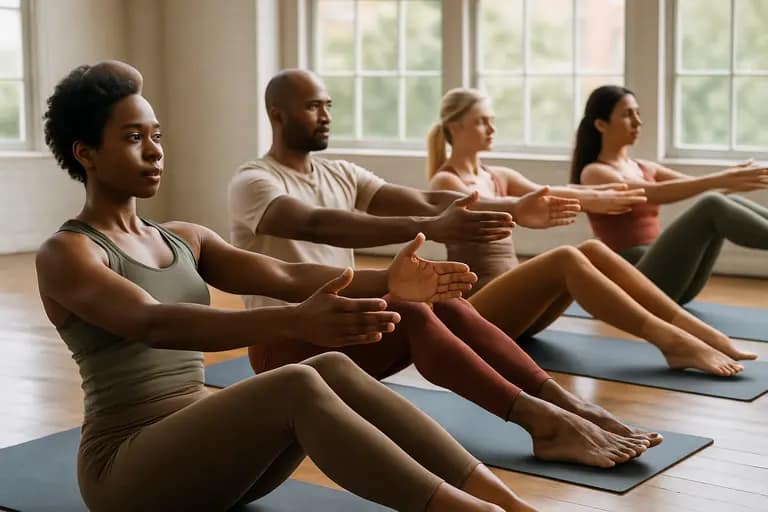
For yoga, Pilates, barre, stretching, and mobility-focused sessions, color choice is mostly a wardrobe preference. The fabric priorities are stretch, recovery, softness against mats, and seams that do not distract during floor work. Earth tones can suit these settings because they pair easily with cream, black, grey, brown, and muted green tops, but they do not replace the need for comfortable movement.
In low-sweat or moderate-sweat sessions, lighter shades may feel more wearable because visible dampness is less of a concern. Still, each fabric behaves differently. A sand-colored rib knit may show moisture differently from a dense olive performance knit. Product photos rarely tell the full story.
Strength, Cardio, And Outdoor Wear
For strength training, the priorities shift toward waistband stability, squat coverage, and fabric recovery. Chocolate, olive, chestnut, and deep forest shades may appeal because they visually sit between black and brighter colors. They can also coordinate with gym shoes and oversized layers without making the bottom feel like a special-occasion piece.
For cardio and higher-sweat training, moisture handling becomes more noticeable. Color will not move sweat away from the skin. Fabric weight, knit structure, ventilation, and drying behavior do that work. If you want earth tone leggings for interval classes or treadmill sessions, evaluate them by how they feel after several minutes of movement rather than how they look while standing still.
Outdoor wear adds another variable: dirt, trail dust, and wet pavement. Olive, brown, and clay tones may appear practical because they visually relate to outdoor surfaces, but that does not mean stains will release easily. Fiber type, finish, and laundering instructions still determine care results.
Earth Tone Leggings And A Practical Wardrobe Test
Buy For Use, Not Just Color Direction
The shift toward earth tone leggings is best treated as a useful styling option, not a rule. If your current black leggings still fit well, recover after wear, and serve your workouts, a color trend alone is not a reason to replace them. If you are already buying a new pair, earth shades may give you more outfit range than another near-identical black bottom.
A practical test is simple: can the shade pair with at least three tops you already wear, and can the fabric handle your most common workout? If the answer is yes, the color trend may work in your favor. If the answer is no, the legging may become a drawer item even if it matches 2026 color forecasts.
The strongest case for earth tones is not that they improve exercise. It is that they may make activewear bottoms feel less separate from the rest of the closet while still allowing the right fabric to support movement. Keep the order of decisions clear: fit first, fabric second, care third, color fourth. If a garment is linked with persistent pain, numbness, significant skin irritation, or other unusual symptoms, discuss those symptoms with a qualified clinician rather than treating a clothing change as medical advice.