

Sustainable activewear is often discussed through fibers, recycled content, stretch recovery, and moisture management. Ethical labor standards belong in the same conversation because fabric performance depends on people who cut, sew, dye, finish, inspect, pack, and ship garments. A sports bra or legging can use a lower-impact material claim and still raise labor questions if the supply chain lacks credible oversight.
That distinction matters for activewear because the category often involves technically demanding construction. Supportive sports bras may combine elastic underbands, stabilizing panels, adjustable straps, molded or seamed cups, and high-stretch fabric. Leggings and compression shorts may rely on dense knits, flat seams, gussets, and consistent sizing. These features are judged by fit and function, but they are also made through labor-intensive production steps.
Why Ethical Labor Standards Matter In Fabric
Ethical Labor Standards Behind Support Fabrics
Ethical labor standards are not visible in the same way as rib texture, stretch, or opacity. A shopper can test whether a bra band rolls or whether leggings turn sheer in a squat, but the conditions behind sewing, wage payment, recruitment, and housing are harder to inspect from a product page. That is why supplier policies, audit systems, and enforcement actions have become part of the sustainability discussion rather than a separate corporate issue.
On June 23, 2026, U.S. Customs and Border Protection issued Withhold Release Orders against garments from Needle Craft Ltd. and Casual Wear Apparel LLC in Jordan. CBP said it had credible evidence of forced labor and cited seven International Labour Organization indicators, including withholding wages, retention of identity documents, and abusive working conditions CBP notice. The case did not focus on one activewear fabric type, but it shows how garment sustainability can be affected by labor conditions at factory level.
Fabric Claims Do Not Answer Labor Questions
A recycled yarn claim, bio-based stretch claim, or performance-fabric claim addresses one part of the product. It does not, by itself, explain whether workers were paid on time, whether recruitment fees were controlled, whether overtime was handled lawfully, or whether workers could raise concerns safely. Readers comparing fiber claims may also find it useful to read about activewear transparency questions, since labor and material claims both require evidence rather than broad branding language.
The same caution applies to sports bras. A label may describe light, medium, or high support, but support is not only a fabric property. It comes from the whole structure: underband tension, strap placement, cup or panel design, neckline coverage, closures, and fabric recovery. A bra can feel supportive in a fitting room yet become distracting during repeated jumping, running, or twisting if the band shifts or the straps dig. That is a fit issue, not proof of ethical or sustainable production.
What Audits Can And Cannot Show
Audit Systems Are A Signal, Not A Guarantee
Factory auditing is one of the main tools brands use to evaluate labor conditions, but an audit is not the same as proof that every risk has been resolved. Fast Retailing, the owner of Uniqlo and other brands, reported changes to its labor audit regime for the fiscal year ending August 2025. The company introduced a tougher A-to-E grading scale for sewing factories, added unannounced third-party audits, and identified 28 sewing factories rated “E” for serious human rights risks. By January 2026, Fast Retailing said half had been remediated or were under corrective action Fast Retailing production partner monitoring.
That information is useful because it gives readers more than a slogan. It identifies a grading system, a time period, a type of audit, a number of serious-risk factories, and a remediation status. Still, it should be read carefully. Corrective action does not mean every worker concern has ended, and a reported audit program does not make every product from a company ethically equivalent.
Why Unannounced Checks Matter
Unannounced audits can reduce some preparation effects because a factory has less time to stage conditions for visitors. They are still limited by sampling, worker interview quality, language access, document accuracy, subcontracting visibility, and whether workers feel safe speaking honestly. For activewear, the challenge can extend beyond final sewing to fabric mills, dyeing houses, trim suppliers, elastic suppliers, and packing sites.
This is why sustainability language should be specific. “Responsibly made” is too broad unless a brand explains what it measured, which sites were covered, how often assessments occurred, who conducted them, and what happened after problems were found. For related business context across this network, you may explore adjacent supply chain and commerce topics on Up Offshore.
Sports Bra Support And Factory Accountability
Support Is Built Into The Whole Bra
Sports bras are a useful example because they show how design and labor intersect. A supportive bra is not created by one fabric panel alone. The lower band usually anchors the garment. Straps help manage vertical and lateral movement. Cups, lining, compression panels, or encapsulation structures shape how support is distributed. Closures and adjusters can change fit range. Stitching accuracy affects whether those parts sit evenly on the body.
From a buyer’s point of view, the practical test is activity-specific. For walking, yoga, or light studio work, some people prefer softer stretch and lower pressure. For running, court sports, or repeated jumping, some may prefer a firmer structure. Neither choice should be treated as a health intervention, and no bra style should be framed as universally better. Comfort, support preference, body shape, and activity demands vary.
Labor standards enter this discussion because consistent construction depends on trained workers, reasonable production systems, and quality control that does not rely on excessive pressure. If seams are uneven, bands twist, straps stretch out quickly, or sizing varies across colors, shoppers may see quality problems. Those visible issues do not prove a labor violation, but they can prompt reasonable questions about production oversight.
Fit Testing Still Matters
Before keeping a sports bra, test it in the movements it is meant for. Raise both arms, rotate the torso, bend forward, and try controlled steps or hops if that matches the intended activity. The band should feel secure without making breathing feel restricted. Straps should not carry all the load. Fabric should recover after stretching rather than staying distorted.
This is general clothing education, not medical advice. If a garment is associated with persistent pain, numbness, skin irritation, breathing discomfort, dizziness, or heat-related symptoms, discuss those symptoms with a qualified clinician rather than assuming a different garment will solve the issue.
Buyer Questions For Sustainable Activewear
Fit, Price, And Evidence
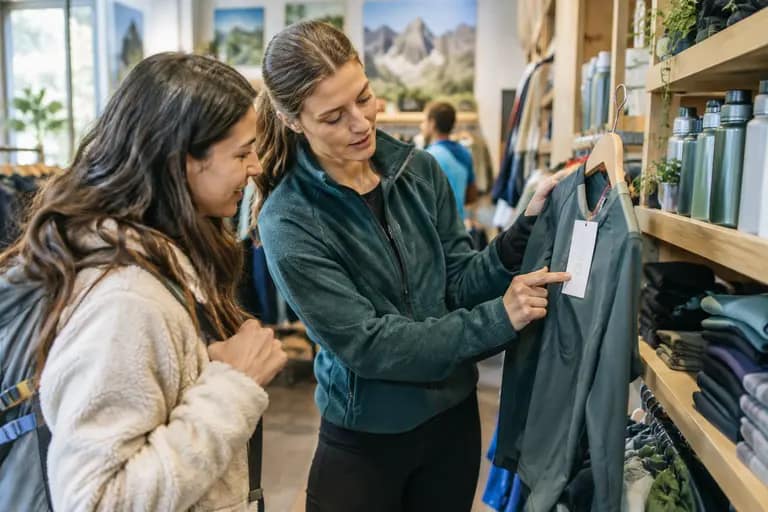
Activewear shoppers often balance price, fit, design, support, and sustainability. Labor standards may matter to a buyer, but they compete with immediate fit concerns. That tension is especially clear with sports bras: the most ethically framed product is still a poor choice if it does not support the intended movement comfortably, and the best-fitting product may still deserve questions about factory oversight.
- Does the brand identify supplier standards, audit methods, and remediation steps in clear language?
- Does the garment fit the activity: low-impact studio work, lifting, running, court sport, or mixed training?
- Does the sports bra support come from a stable band, appropriate straps, and fabric recovery rather than tightness alone?
- Are recycled, lower-impact, or responsible-material claims separated from labor claims?
- Does the company explain what happens when a factory fails to meet minimum expectations?
These questions do not require a shopper to become a supply-chain investigator. They create a practical filter. A strong answer includes dates, defined standards, outside review where available, and follow-up after noncompliance. A weak answer relies on broad values language without saying what was checked.
Ethical Labor Standards In Sustainable Activewear
Ethical labor standards sit beside fabric science, not behind it. Sustainable activewear cannot be assessed only by recycled content, softness, compression, or sweat management. The labor system behind cutting and sewing also shapes whether a garment deserves the sustainability label.
For activewear fabrics, the most careful approach is to separate claims. Ask one set of questions about performance: stretch, opacity, breathability, support, washing durability, and comfort during the target activity. Ask another set about production: factory monitoring, worker protections, audit quality, and corrective action. A sports bra should be judged both as a support garment and as a product of a supply chain.
No single label can answer all of that. Better evidence, clearer reporting, and better fit testing give shoppers a more grounded way to compare activewear without treating any brand claim as a guarantee.