
Ever wonder why some shirts feel like wearing a portable sauna while others feel like a gentle breeze? Welcome to the molecular drama happening between your skin and your clothing.
I’ve suffered through enough poorly chosen workout gear to appreciate modern textile engineering. This isn’t just marketing jargon – it’s actual physics.
We’re talking about fiber structure, weave patterns, and moisture management technologies. These elements make all the difference between feeling wet and feeling dry.
Think of this as your crash course in textile thermodynamics. Nobody wants to feel like they’re wearing a wet blanket during their morning run.
Most Popular Technical Materials
Your wardrobe deserves better than fabrics that don’t perform well. We’re talking about materials that actually work, not just look good.
The right technical fabric can make a big difference. It can make you feel cool and collected, or like a damp handshake. Here’s what really works when it’s hot.
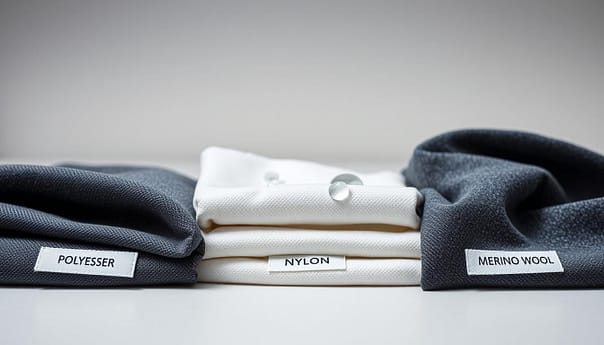
Cotton is like the old, reliable grandparent of fabrics. It’s comfortable but doesn’t handle sweat well. It absorbs moisture and wears it proudly. It’s great for lazy days, but not for active ones.
Merino wool is like the smart politician of fabrics. It’s not itchy and handles moisture like a pro. It wicks sweat away and keeps you comfortable in any weather. It’s nature’s original moisture wicking fabric that works in both heat and cold.
Bamboo is the eco-friendly choice. It feels like silk but is more responsible. It’s breathable and has natural antibacterial properties. But, its sustainability claims need more fact-checking.
Nylon is the durable workhorse of synthetic materials. It’s strong, lightweight, and dries fast. But, it can get smelly quickly.
Micro modal and viscose are the luxury fabrics. They feel great but might not handle sweat well.
Then there are the blends. They combine materials to create super-fabrics. Sometimes they work great; other times, not so much.
| Material | Moisture Wicking | Breathability | Durability | Best Use |
|---|---|---|---|---|
| Cotton | Poor | Good | Excellent | Casual wear |
| Merino Wool | Excellent | Excellent | Good | All-season performance |
| Bamboo | Very Good | Excellent | Fair | Light athletic wear |
| Nylon | Excellent | Fair | Excellent | High-intensity activities |
| Micro Modal | Good | Very Good | Fair | Comfort wear |
There’s no single perfect fabric for every situation. The best moisture wicking fabric depends on your needs. It’s like choosing the right political candidate.
Some fabrics dry fast, others are comfy. A few try to do everything but don’t excel in anything. The key is to find the fabric that meets your needs.
How Each Performs (Wicking, Cooling, Breathability)
Welcome to the fabric Olympics, where technical textiles compete for gold in the sweat management games. Unlike my last family reunion where Uncle Bob claimed his polyester shirt was “performance wear,” we’re dealing with actual engineered workout fabrics that deliver real results.
Wicking
Moisture-wicking isn’t magic – it’s textile engineering that would make NASA proud. Quality performance fabrics pull sweat away from your skin like a well-organized evacuation plan. They transport moisture to the fabric’s surface where it can evaporate quickly.
Polyester and nylon excel at this capillary action, while cotton performs like a sponge at a water park. It holds moisture against your skin, creating that lovely damp feeling nobody wants during exercise.
Cooling
Cooling fabrics are the thermal referees between your body and the environment. They work through two main strategies: moisture evaporation and infrared technology. Some advanced moisture-wicking fabrics can actually feel up to 5°F cooler than the air temperature.
Bamboo and merino wool naturally regulate temperature better than synthetic materials. They’re like having built-in climate control for your skin.
Breathability
Breathability measures how well air passes through fabric. It’s the difference between having a conversation with the atmosphere versus monologuing about how hot you are. High breathability means better ventilation and faster drying times.
Mesh panels and loose weaves increase breathability dramatically. Some technical fabrics achieve breathability ratings over 15,000 g/m²/24h, which is science-speak for “you won’t feel like you’re in a portable sauna.”
| Fabric Type | Wicking Score | Cooling Effect | Breathability Rating |
|---|---|---|---|
| Polyester | 9/10 | Good | 8/10 |
| Nylon | 8/10 | Good | 7/10 |
| Merino Wool | 7/10 | Excellent | 9/10 |
| Bamboo | 6/10 | Excellent | 8/10 |
| Cotton | 2/10 | Poor | 5/10 |
Remember: the best workout fabrics combine these properties strategically. Some areas need maximum moisture-wicking, while others prioritize breathability or cooling. It’s about finding the right fabric for your specific sweat pattern.
Reading the Labels
Clothing tags are like political speeches, and we need fact-checkers for every piece. They’re not just for show; they’re the rules of your wardrobe. Knowing them makes you a fashion expert, not a victim.
Those numbers like “85% polyester/15% spandex” tell you a lot. They show how the fabric will handle moisture and stretch. More polyester means it wicks away sweat better. More spandex means it stretches more.
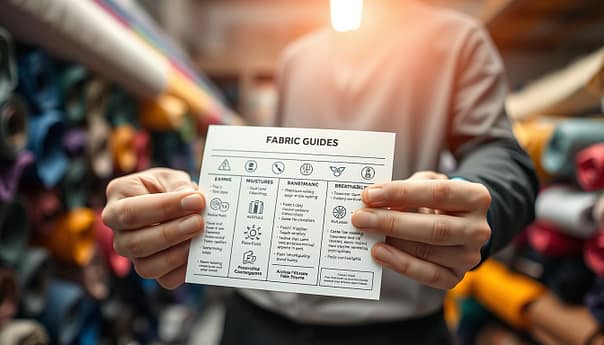
And then there are the care instructions. “Machine wash cold” is not just a hint; it’s a rule. Washing in hot water can ruin the fabric’s ability to keep you cool. Cold water helps it keep its shape and moisture-wicking powers.
When it says “tumble dry low,” listen. High heat can melt synthetic fibers, ruining the fabric. Air drying is safer when you’re unsure.
Don’t fall for marketing buzzwords like “performance-enhanced” and “athletic-grade.” Look for real technical terms like “moisture-wicking” and “four-way stretch.” These are the facts that matter.
The care symbols on labels are like a secret language. An X through the iron means don’t iron. A circle with a P means dry cleaning only. Ignoring these can cost you money and damage your clothes.
For a deeper dive into fabric labels, check out this guide. It explains every symbol and detail. It’s like getting a security clearance for your laundry room.
Treating technical fabrics like old cotton tees is a bad idea. It’s like using a Ferrari to haul gravel. It’s possible, but not wise. Taking care of your clothes means reading the labels right.
Understanding technical fabric guide labels makes laundry a science, not a chore. It keeps your clothes in top shape, saves money, and extends their life. It’s an investment in your wardrobe’s future.
Pros & Cons
Choosing workout fabrics is like picking your path in a story – each choice has its own ups and downs. Cotton is comfy but holds moisture, making it feel like a wet blanket. Polyester, on the other hand, wicks away sweat but can feel like plastic.
Natural fibers like wool and hemp are good for the planet but need special care. Synthetic blends are stretchy and durable but lack that natural touch. It’s a constant battle between wanting to perform well and feeling comfortable.
The key is knowing that no fabric is perfect for everything. That moisture-wicking fabric you love for spin class might be too hot for yoga. Linen is great for summer but not for cold weather. This fabric guide shows that having a variety of fabrics is the best strategy.
Your ideal workout fabrics depend on your needs, activities, and what you can tolerate. The best choice is one that balances performance with comfort. Because even the best technology is useless if you hate wearing it.