

You finish a heavy training session, load your damp gear into your duffel, and zip it shut. Hours later, you open the zipper and a wave of foul air hits your face. This familiar stench does not come from sweat itself. Fresh perspiration is completely odorless. The smell radiating from your bag comes from aggressive bacterial replication. Gym bag hygiene requires strict discipline rather than temporary masking.
The Biology of Gym Bag Malodor
Skin-dwelling microorganisms, primarily Staphylococcus and Corynebacterium, transfer from your body to your apparel during exercise. These bacteria thrive in warm, dark, humid environments. A sealed gym bag provides the exact climate needed for these colonies to explode in population. As the bacteria consume the lipids and proteins embedded in your workout clothes, they excrete volatile organic compounds. These chemical byproducts produce the sharp, sour scent you recognize as gym bag odor. Clinical analysis of bacteria in clothing textiles confirms that synthetic fabrics offer superior breeding grounds for these specific microbes.
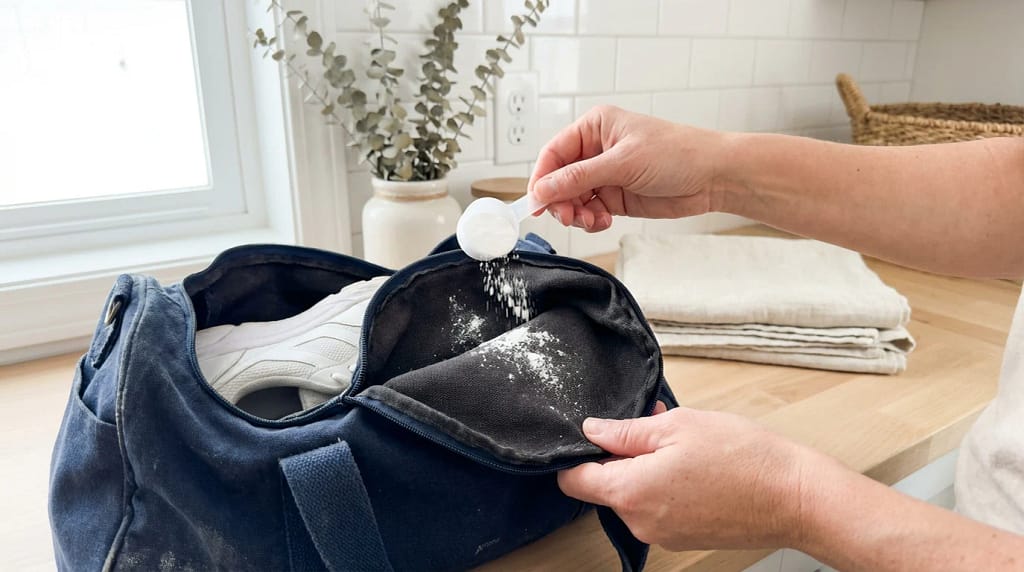
The Failure of Fragrances and Charcoal
Most athletes attempt to solve this problem using scented sprays or activated charcoal inserts. These products fail consistently. They completely ignore the active biological source of the smell. Sprays merely coat the volatile organic compounds with a heavier artificial perfume. Charcoal absorbs ambient moisture and traps floating odor molecules. Neither approach disrupts the cellular function of the bacteria multiplying inside the seams of your bag. The colony survives, reproduces, and generates new odors the moment the temperature rises.
Structural Interventions and Antimicrobial Fabrics
Stopping odor demands physical and chemical interventions. Storing wet gear inside airtight plastic bags creates a greenhouse effect, accelerating bacterial growth exponentially. Using bags with breathable mesh panels lowers the internal humidity, slowing the reproduction rate. Modern textile engineering offers a superior defense through silver-ion integration. Microscopic silver particles embedded directly into the bag’s lining release positively charged ions upon contact with moisture. These ions pierce the bacterial cell wall, bind to respiratory enzymes, and destroy the organism’s DNA. This catastrophic structural failure stops the microbes dead in their tracks. Medical researchers have thoroughly documented how antimicrobial treatments control odor within high-sweat environments.
Maintenance Protocols for Athletic Gear
An antimicrobial bag offers zero protection if you continually pack it with permanently compromised clothing. Proper laundry chemistry stops cross-contamination at the source. Standard detergents struggle to pull heavy lipids out of synthetic activewear. Using an enzyme-based sport detergent breaks down the oils that feed the bacteria. Applying the correct activewear care protocols prevents your clothes from infecting your storage equipment. You must regularly wipe down the interior lining of your bag with an alcohol-based disinfectant to eliminate residual biofilm.
Diagnosing Odor Management Strategies
Evaluating your hygiene routine requires separating chemical marketing from biological facts. The following table identifies exactly how different odor-control methods interact with microbial threats.
| Hygiene Method | Scientific Efficacy | Biological Outcome |
| Fragrance Sprays | Masks volatile organic compounds | Bacterial colonies continue multiplying |
| Activated Charcoal | Absorbs ambient moisture | Fails to kill existing microbes in the fabric |
| Silver-Ion Textiles | Ions rupture bacterial cell walls | Halts microbial reproduction on contact |
| Enzyme Detergents | Strips trapped lipids from synthetic yarns | Eliminates the primary food source for bacteria |
Taking control of your athletic equipment means treating odor as a biological issue. Destroying the bacteria ensures your gear remains fresh, sterile, and ready for your next session.