

Inclusive activewear sizing has moved from a niche topic to a measurable retail issue, but the gap above 3XL remains especially visible in women’s leggings and bottoms. Recent findings point to a split market: some brands promote extended ranges, yet choices in 4X, 5X, 6X, and higher can narrow quickly, especially for printed leggings, multiple inseams, and properly graded waistbands.
The issue is not only whether a size appears on a product page. A legging can technically be available above 3XL and still miss the mark if the rise, waistband width, inseam, print placement, or fabric recovery was not developed for that size range. For shoppers, that creates a familiar problem: more listings, but not always more dependable fit.
Why Inclusive Activewear Sizing Still Stops Short
Women’s activewear has become more fluent in the language of inclusion, but the research notes suggest that the largest sizes are still underserved. Several recent findings describe active leggings and bottoms that stop near XL or 3XL, with far fewer choices above that point. The shortfall appears sharper in patterned active leggings, where print availability can thin out before the upper end of the size chart.
Extended Size Ranges Are Not The Same As Fit
A size chart that reaches 6XL can be useful, but size availability alone does not tell a shopper whether the garment was engineered well. The notes describe repeated complaints in sizes beyond 3XL: inconsistent inseams, rise heights that do not scale well, patterns that appear stretched rather than graded, and fabrics that may sag or lose shape after washing. Those are design and manufacturing issues, not simply naming issues.
This is where leggings differ from looser categories. Bottoms must work through hip flexion, sitting, squatting, walking, and repeated laundering. If the garment was scaled from a smaller sample without checking how the waistband, front rise, back rise, and thigh circumference behave on larger bodies, the size label can become a weak signal.
Inclusive Activewear Sizing Beyond The Size Label
The strongest definition of inclusive activewear sizing goes beyond adding larger numbers at the end of a chart. It includes grading, opacity, fabric recovery, inseam options, rise options, and consistent access to colors or prints. A related analysis of inclusive activewear fit makes a similar point: broader sizing is most useful when the garment’s construction supports the size range.
That distinction matters above 3XL because small grading errors can become more noticeable. A waistband that is acceptable in one size may roll in another. An inseam that works on a standard block may feel short, long, or poorly balanced when the hip and rise are expanded without proportionate testing.
What Recent Research Says About Shopper Trust
Retailers often treat extended sizing as an inventory decision, but research suggests shoppers also read size range as a brand signal. On December 8, 2025, the University of Nevada, Reno reported a study with Washington State University finding that extended size ranges, such as up to 4XL or size 32, increased perceptions of inclusivity and trustworthiness and raised willingness to pay and purchase intention, including among non-plus-size shoppers according to the university report.
Evidence From Inclusive Size Displays
The study finding is useful because it frames size range as more than a service for one shopper group. A broader size display may communicate that a brand has considered more bodies in its planning. That does not prove every extended-size garment fits well, and it does not remove the need for transparent garment measurements. It does suggest that narrowing size ranges can carry reputational risk.
For leggings and bottoms, trust is built through repeatable fit. If a shopper buys one pair in 4X or 5X and finds that the next fabric, print, or rise fits differently, the brand may have technically offered the size but failed to make the sizing dependable.
Why Stock Risk Can Narrow Choice
The market is also dealing with uncertainty around demand. In 2026, The Guardian reported that some fashion brands were reducing XL-plus offerings amid changing demand, with the article discussing GLP-1 weight-loss drugs as one factor brands cited, while also noting Plunkett Research’s estimate that 66% of U.S. women wore size 14 or above as of mid-2025 in its fashion analysis.
This is a retail planning issue, not personal health advice. Consumers use medications, change sizes, and buy clothing for many reasons. Apparel brands should be cautious about treating a short-term sales shift as proof that larger sizes are no longer needed. For activewear, the risk is that brands may reduce the very sizes where selection was already thin.
Fit Problems That Become More Visible Past 3XL
The research notes repeatedly point to fit complaints that are familiar in leggings: waistbands that roll, rises that do not land correctly, prints that distort, and fabric that loses recovery. These issues can occur at any size, but they become more consequential when shoppers have fewer alternative products to try.
Rise, Waistband, And Inseam Scaling
Rise height is one of the least forgiving measurements in leggings. If the front rise is too short, the garment can pull downward or create pressure. If the back rise is not shaped correctly, coverage can become unreliable during bending. Waistband width also matters because a band that looks stable on a hanger may fold, dig, or shift once the wearer moves.
Inseam is another under-discussed variable. A single inseam may exclude people who need petite, regular, or tall proportions within the same size. Above 3XL, the lack of inseam variety can make a technically available legging less useful. For shoppers, a 5X legging in only one length is not equivalent to a full size strategy.
Prints, Pattern Placement, And Opacity
Prints can expose grading shortcuts. A pattern that looks balanced in a smaller size may be enlarged, stretched, or placed differently in a larger size. That does not make prints unsuitable for extended sizes; it means print development should be checked across the full range. The research notes suggest that print parity in 4X to 6X remains uncommon, with some brands offering fewer patterns in larger sizes.
Opacity also depends on fabric behavior under stretch. A legging that appears solid while standing can look different during squats, lunges, or seated positions. For that reason, fabric weight, knit structure, dye or print method, and recovery all matter. A shopper should not have to accept reduced coverage simply because they need a larger size.
A Practical Check For Leggings And Bottoms
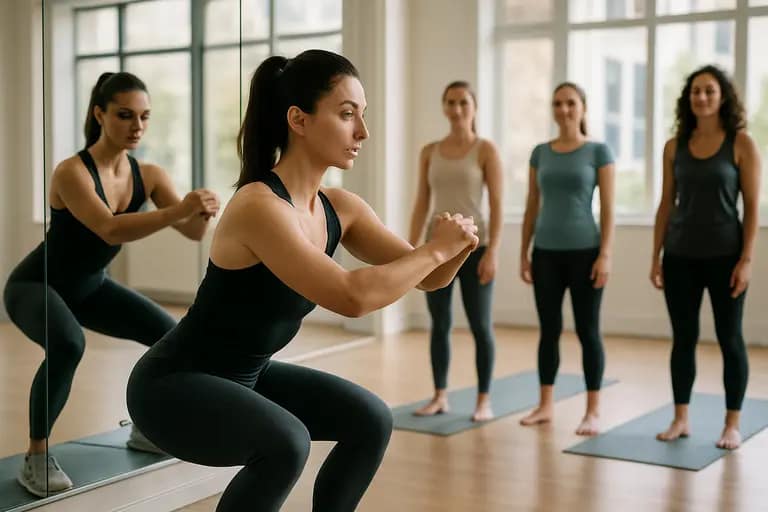
For shoppers, the most useful strategy is to evaluate the garment as a moving object rather than a flat product listing. Product pages may show fabric content and size range, but they rarely reveal how the waistband, rise, and print perform through ordinary movement.
The Movement Test
Before removing tags, if store policy allows, test the leggings in positions that match real use. Sit, bend forward, squat, climb a step, walk briskly, and check whether the waistband rolls or the fabric needs frequent adjustment. Look at the knees, thighs, and seat after movement to see whether the fabric returns toward its original shape.
- Check whether the listed size range includes the same colors or prints above 3XL.
- Look for garment measurements, not only body measurements.
- Review inseam, rise, and waistband details before assuming the fit scales well.
- Be cautious with one-size language or vague stretch claims.
- If the garment causes persistent pain, numbness, or significant irritation, treat that as a reason to stop wearing it and seek qualified advice.
The Product-Page Test
Strong product pages tend to give shoppers more than a size chart. They identify inseam length, rise, fabric composition, intended compression level, and care instructions. For extended sizes, photos on different bodies can help, but only if the brand shows the actual size range rather than one sample size.
For inclusive activewear sizing, transparency is part of fit. A product page that says 6XL but hides inseam and rise leaves too much uncertainty with the shopper. The better approach is to make the engineering visible: measurements, model size information, fabric behavior, and return policy should all be easy to find.
What Inclusive Activewear Sizing Means Beyond 3XL
The clearest reading of the recent findings is that women’s activewear has not solved the above-3XL gap by adding a few larger labels. Brands need to treat 4X, 5X, 6X, and higher as design requirements from the start, not as late-stage extensions of a medium sample.
That means testing rise and waistband structure across the full range, checking prints in every size offered, preserving color and print access, and offering practical inseam choices. It also means being honest about uncertainty. A brand may not know demand perfectly, but reducing larger sizes too aggressively can leave many shoppers with fewer functional bottoms.
Questions For Brands, Shoppers, And Clinicians
Shoppers can ask brands direct questions: Was this legging fit-tested above 3XL? Are the same prints available in 4X to 6X? Are inseam and rise measurements listed by size? Does the waistband change width or construction in larger sizes? Clear answers are more useful than broad inclusion claims.
For readers who connect movement with broader wellness content, a visit to Spiritual Endeavors might provide broader insights within the same network. However, apparel content should not replace professional care. Clothing can support comfort and confidence during activity, yet it is not a treatment, diagnosis, or medical plan.
For inclusive activewear sizing to mean more than availability, the garment has to work in motion and through repeat wear. If leggings cause persistent discomfort, skin irritation, numbness, breathing restriction, or unusual symptoms, discuss those concerns with a qualified clinician rather than relying on a different waistband or fabric as the answer.