

Moisture-wicking innovations are often marketed as if they can make any workout feel cooler, drier, and more controlled. The evidence is more specific than that. Fabric chemistry, yarn shape, knit structure, garment weight, fit, stretch, and care habits all shape how a top, pair of leggings, or shorts behaves once sweat, heat, and repeated movement enter the picture.
For activewear care, that matters because a wicking garment is not just a fiber label. Polyester, nylon, regenerated cellulose, blends, shaped filaments, and layered structures can all be engineered differently. A shopper may see similar claims on two products, yet the wearer experience can vary because moisture movement depends on the complete textile and the way it sits on the body.
This is general education about activewear materials, not medical advice. Clothing can influence comfort during exercise, but it should not be treated as a solution for heat illness, skin conditions, pain, dizziness, or any persistent symptom. Those questions belong with a qualified clinician.
moisture-wicking innovations And What They Do
How moisture-wicking innovations Move Sweat
Moisture management starts with a simple idea: liquid sweat can be moved away from the skin toward the outer surface of a textile, where it can spread and evaporate. That process is usually described as wicking. It does not stop sweat production, and it does not guarantee that a garment will look dry during a hard session.
Fiber behavior helps explain why activewear often leans synthetic. Research summarized by Sweat Explained reports that polyester has a moisture regain of about 0.4%, compared with cotton at around 8.5%, nylon near 4%, and 50/50 cotton-polyester blends near 4.45% moisture-wicking fabric evidence. Lower moisture regain can help a fabric feel less saturated than cotton, though it is not the only factor that matters.
The practical point is that a fabric can feel dryer because it holds less moisture internally, spreads moisture faster, or dries more quickly at the surface. Those are related properties, but they are not identical. A dense legging may wick well yet still feel warm. A very open knit may breathe well but offer less coverage. A soft cotton top may feel pleasant before exercise but hold more water after sustained exertion.
Why Dry Feel Is Not The Same As No Sweat
Many product pages use words such as dry, cooling, fast-drying, breathable, or sweat-wicking. These terms can describe real design goals, but they should be read with care. A garment that moves moisture efficiently can still show visible dampness. A fabric that dries quickly in a lab may behave differently under a backpack strap, waistband, or close-fitting sports bra band.
That is one reason field comfort is hard to predict from fiber content alone. A top made from polyester mesh, a textured polyester jersey, and a smooth polyester blend may all list polyester on the tag, yet the structures can handle heat and humidity differently. For leggings and fitted shorts, stretch changes the spacing between yarns, the contact pressure against skin, and the way moisture spreads.
What Recent Evidence Suggests
Runner Wear Trials And Microclimate
The supplied research notes describe a 2023 wear trial with ten long-distance runners that compared five T-shirt types: 100% cotton, 50/50 cotton-polyester, textured polyester jersey, polyester mesh, and Tencel jersey. Cotton reportedly felt natural at first, but polyester and regenerated cellulose fabrics maintained a lower skin-level microclimate for temperature and humidity during sustained exertion.
That finding supports a cautious takeaway rather than a shopping rule. Synthetic and regenerated cellulose fabrics may support comfort in some sustained-exercise settings, but ten runners and five shirt types do not prove that every polyester item will outperform every cotton garment in every climate. The fabric construction, garment fit, and intensity of use still matter.
For leggings, the same logic applies. A high-rise training tight used for intervals has different demands than a loose warmup pant or a soft studio legging. Moisture movement is useful, but it has to work alongside opacity, recovery, waistband stability, and comfort during bending, sitting, lunging, and sweating.
Lab Cooling Fabrics Are Promising But Limited
One of the more technical examples in the research is a 2026 study of a transpiration-inspired radiative cooling metafabric. The abstract reports solar reflectivity of 99.7% and infrared emissivity of 93.3%, with a cooling effect of 10.2 °C and net cooling power of 110.1 W/m². Under sweaty conditions, the study reported a 20.2 °C temperature drop, along with a one-way transport index of 1330.7% and reverse breakthrough pressure of 15.0 cm H₂O radiative cooling metafabric study.
Those numbers are noteworthy, but they should not be translated directly into a promise about a pair of leggings on a store rack. Lab textiles can show important material possibilities before durability, wash performance, cost, manufacturing scale, and real-wear comfort are fully established. A fabric sample can perform well under test conditions and still require careful garment design before it makes sense for running shorts, cycling kits, or fitted gym bottoms.
Care Choices That Can Protect Wicking Behavior
Start With The Garment Label
Activewear care should be conservative because the research supplied here does not compare specific home laundry routines. The safest starting point is the care label on the garment. If a brand specifies water temperature, drying method, or restrictions on bleach, ironing, or softeners, those instructions are part of how the product was designed to be maintained.
For moisture-moving fabrics, the underlying reason is practical. Wicking often depends on surface characteristics, channels, porosity, and the spacing of yarns. Anything that changes the surface feel, clogs spaces in the fabric, stretches the garment out, or damages elastane may alter how the item feels during workouts. That does not mean every wash mistake destroys performance, but it does argue for avoiding guesswork.
Odor and damp storage are also care concerns, but claims about antibacterial ratings, wash counts, or long-term freshness need evidence for the specific textile. A broad claim on a hangtag is not the same as independent proof for every garment color, cut, and wash routine. For readers comparing activewear habits with broader lifestyle coverage, the site Daily California is part of the same publishing network.
Watch Fit After Washing
Care is not only about cleaning. It is also about whether the garment still fits the activity after repeated wear. A waistband that once stayed flat may begin rolling. Knees may bag. A sports bra band may feel looser or tighter depending on fabric recovery and laundering. These changes can affect comfort even if the fabric still looks acceptable on a hanger.
A practical check is to repeat the movement test after several washes: squat, hinge, sit, lunge, step up, and walk briskly. For tops, raise the arms, twist the torso, and check whether wet areas cling in ways that distract. For bras, assess support and breathing comfort without assuming that tighter always means better. If clothing causes ongoing pain, numbness, significant irritation, or unusual heat-related symptoms, discuss those symptoms with a clinician rather than trying to solve them through fabric choice alone.
Shopping Signals Worth Reading Skeptically
Fiber Shape, Knit, And Finish
The research notes point to several design paths used in modern moisture management: shaped fiber profiles, hollow structures, textured knits, channel-style cross sections, functional finishes, phase-change materials, reflective structures, and waterproof-breathable membranes. Each can address a different part of the heat and moisture problem.
For shoppers, the useful question is not whether a technology sounds advanced. It is whether the feature matches the use case. A close-fitting indoor cycling short needs different behavior than a hiking layer, a studio legging, or a relaxed recovery pant. Moisture-wicking innovations may be most useful when they are paired with a fit and fabric weight that suit the activity.
- For high-sweat cardio: look for light fabric, secure fit, and credible drying or wicking claims.
- For strength training: prioritize coverage, stretch recovery, and waistband stability along with moisture handling.
- For yoga or Pilates: consider softness, flexible seams, opacity in deep bends, and moderate moisture control.
- For hot outdoor sessions: consider color, garment weight, airflow, and coverage as well as wicking.
For a related discussion of comfort claims and real-use limits, this site has covered sweat-wicking fabrics from the standpoint of fit, fiber, and activity demands.
Performance Claims Need Context
Performance language can be slippery. A fabric may support perceived comfort without making someone faster, stronger, or safer. It may help manage moisture during one kind of workout while feeling too compressive, warm, sheer, or restrictive in another. This is especially relevant for bottoms because leggings and shorts must stretch across hips, thighs, knees, and waistbands while maintaining coverage.
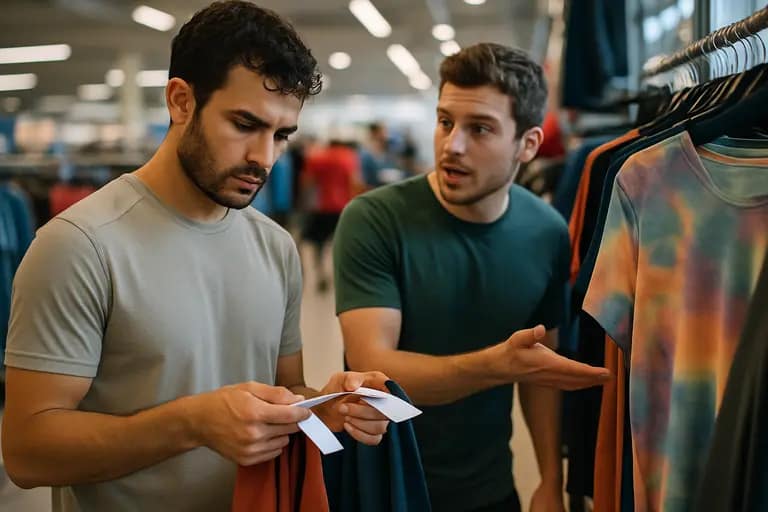
The best fitting-room test is activity-specific. A runner should test bounce, stride, waistband movement, and damp cling. A lifter should test squats, hinges, and loaded positions if possible. A studio user should test deep flexion and floor contact. A hot-weather walker may care more about airflow and garment weight than firm compression.
moisture-wicking innovations In Activewear Care
Moisture-wicking innovations are most useful when viewed as one part of a system: fiber, yarn, knit, garment shape, fit, wash care, and the conditions of use. The strongest evidence supports a cautious middle position. Engineered fabrics can manage sweat differently than cotton, and some lab materials show impressive heat and moisture-transfer properties. Yet no single label term proves that a garment will feel right for every body, workout, or climate.
For activewear care, the practical approach is simple: buy for the activity you actually do, test movement before committing, follow the garment label, and reassess fit after repeated washing. If discomfort is limited to rubbing, slipping, damp cling, or heat buildup, a different fabric or cut may help. If symptoms are persistent, painful, or unusual, ask a qualified healthcare professional what should be checked before treating clothing as the answer.