
Natural fiber activewear has moved from a niche preference into a broader consumer question for leggings and bottoms. The shift is not only about softness or a more familiar fabric hand. It reflects concern about synthetic fibers, interest in certification programs, and a practical search for workout clothing that still stretches, recovers, washes well, and feels suitable for real movement.
The data behind that interest is mixed. Synthetic fibers still dominate much of the activewear market, especially in leggings, because polyester and elastane blends can offer stretch, durability, and drying speed. Research notes from 2026 reported that synthetic fabrics supplied about 70.0% of revenue in the women sport legging market in 2025, while natural and blended fabrics accounted for about 20.0%, and recycled sustainable materials made up nearly 10.0%. That split helps explain why demand for alternatives is visible, but not yet dominant.
Consumer preference is not the same as technical substitution. Cotton, wool, hemp, bamboo-associated fabrics, and lyocell-type cellulosics may appeal to shoppers who want less reliance on fossil-based synthetics. Yet leggings place unusual demands on fabric: four-way stretch, opacity under tension, waistband recovery, abrasion resistance, and drying behavior after sweat or laundering. A fabric can be more appealing on a values level and still be less suitable for a high-sweat interval class.
Why Natural Fiber Activewear Is Getting Attention
Consumer Preference Is Moving Faster Than Supply
Several research points show why shoppers are asking more questions. A 2025-26 survey pattern cited in the research notes found that many U.S. consumers prefer cotton, denim, or cotton blends, and a 2024 Cotton Incorporated survey found that nearly three-quarters of U.S. consumers described those natural fabrics as favorites. Social media interest appears to have amplified the trend: posts tagged #NaturalFibers on TikTok increased by more than 230% between the first halves of 2024 and 2025, according to data shared with Axios and summarized in the research.
Preference, however, does not automatically change the fiber mix used in performance bottoms. A 2025 federal textile-waste report found that demand for natural fibers such as cotton and wool had stayed relatively constant, while demand for synthetic fibers, especially polyester, had continued to increase. The same report stated that about 60% of apparel and 70% of household textiles in the United States contain synthetic fiber, according to the GAO textile waste report.
That gap matters for leggings. Shoppers may say they prefer natural materials, but brands still have to meet expectations for compression, bounce-back, low bulk, and consistent sizing. For leggings, natural fiber activewear often appears as blends rather than pure cotton or wool because elastane, nylon, polyester, or other synthetics may still be used to supply stretch and recovery.
Synthetic Fiber Concerns Are Not One Single Issue
Concern about synthetic clothing comes from several directions. Some shoppers are focused on textile waste and fossil-based inputs. Others are watching chemical-disclosure questions, including PFAS concerns in water-resistant or stain-resistant products. In April 2026, reporting noted that Lululemon was being investigated by the Texas Attorney General’s office over possible PFAS use in activewear, a case that drew wider attention to workout-wear chemistry and disclosure questions, as reported by The Washington Post.
That does not mean every synthetic legging contains PFAS, nor does it mean every natural-fiber garment is automatically preferable. Chemical use can occur across textile production, dyeing, finishing, and water-repellent treatments. The more useful consumer question is narrower: what fibers are listed, what finishes are claimed, what certifications are provided, and does the brand explain its material choices clearly?
Fit And Function Tradeoffs In Natural Leggings
What Natural Fiber Activewear Can And Cannot Do
Natural fibers can bring strengths that matter in lower- to mid-intensity activewear. Cotton is familiar, soft, and widely preferred by many consumers. Merino wool is used in some activewear because it can feel comfortable across varied temperatures. Hemp and cellulosic options such as lyocell are gaining attention in leggings and casual bottoms, though the research notes point to cost and slower drying times as constraints. For readers comparing fiber claims in broader workout apparel, this related discussion of activewear fiber technology explains why stretch, moisture handling, and disclosure questions should be read together.
The main limitation is not whether natural fibers can be used in activewear. They can. The limitation is whether they can perform the same job as a highly engineered synthetic blend in a specific garment. A cotton-rich legging may feel pleasant for walking, stretching, lounging, or low-impact studio work. It may also hold moisture longer than a lighter synthetic knit during high-sweat training. A wool blend may be useful in cooler conditions, but price and care needs can narrow its appeal. A lyocell blend may drape nicely, yet the finished knit structure and elastane content still determine whether knees bag out or the waistband rolls.
This is where fabric percentage alone can mislead. A legging labeled with a natural fiber may still include synthetic stretch fiber. That is not necessarily a flaw. In leggings, a small amount of stretch fiber may help the garment recover after sitting, squatting, or cycling. The practical test is whether the blend supports the activity without relying on vague claims.
Leggings Need Movement Tests, Not Just Fiber Labels
Before keeping a natural or natural-blend bottom, a shopper should test the garment in the positions it will actually face. A standing mirror check is not enough. Squat, sit, lunge, hinge at the hips, and raise the knees. Check whether the fabric becomes sheer, whether the waistband folds, whether the front rise pulls, and whether the knees recover after stretch.
- For walking and daily wear: softness, waistband comfort, and easy laundering may matter more than rapid drying.
- For Pilates or mobility: stretch, opacity in deep flexion, and seam comfort should lead the decision.
- For strength training: recovery, squat coverage, and waistband stability are usually more relevant than a natural-fiber claim alone.
- For high-sweat cardio: drying behavior and fabric weight deserve extra attention, especially in cotton-rich blends.
A slower buying process can also reduce waste. A practical pause before purchasing, such as comparing the garment against activities already in the week, fits the broader time-and-consumption perspective shared by Take Back Your Time, a related site that advocates for mindful consumption and time management.
Certification And Sustainability Claims Need Context
More Certified Material Does Not Solve Every Problem
Certification programs are gaining visibility in activewear, and the research notes show why. Textile Exchange’s Materials Benchmark report, published on September 18, 2025, found that among reporting brands, the share of raw materials under sustainability or reputable certification programs rose from 58% in 2023 to 67% in 2024. The same research notes state that virgin fossil-based polyester use among reporting brands fell from 637,388 tonnes in 2023 to 560,029 tonnes in 2024.
Those numbers suggest movement inside the industry, but they do not prove that any one legging is low impact. Certification can address sourcing standards, recycled content, organic production, or other defined criteria, depending on the program. It may not tell the full story about garment durability, dye chemistry, factory conditions, micro-shedding, repairability, or end-of-life options. For leggings, durability is especially relevant because a garment that loses shape quickly may be replaced sooner.
Shoppers should be cautious with broad words such as “eco,” “clean,” or “green” unless the label explains the basis for the claim. Better questions include: Is the cotton organic, Better Cotton, recycled, or conventional? Is the wool certified by a recognized animal-welfare or chain-of-custody program? Is the cellulosic fiber from a named supplier or certified feedstock? Is the stretch fiber disclosed? Is the care label realistic for repeated use?
Price Premiums May Reflect Demand, Not Guaranteed Quality
The research notes cite a November 2025 Journal of Cleaner Production study from Australia with 570 participants. In that sample, 57% of surveyed consumers strongly preferred natural fibers, especially cotton, over polyester, and were willing to pay about AUD 43 more for a cotton T-shirt compared with polyester. That willingness to pay helps explain why brands are testing more natural and blended activewear lines.
Still, a higher price does not confirm better performance in leggings. It may reflect fiber cost, certification cost, brand positioning, smaller production runs, or marketing. The key is to connect price to observable garment qualities: fabric density, opacity, stretch recovery, stitching, gusset design, waistband construction, and care durability.
How Brands Are Responding To Synthetic Fiber Concerns
Blends Are The Likely Middle Path
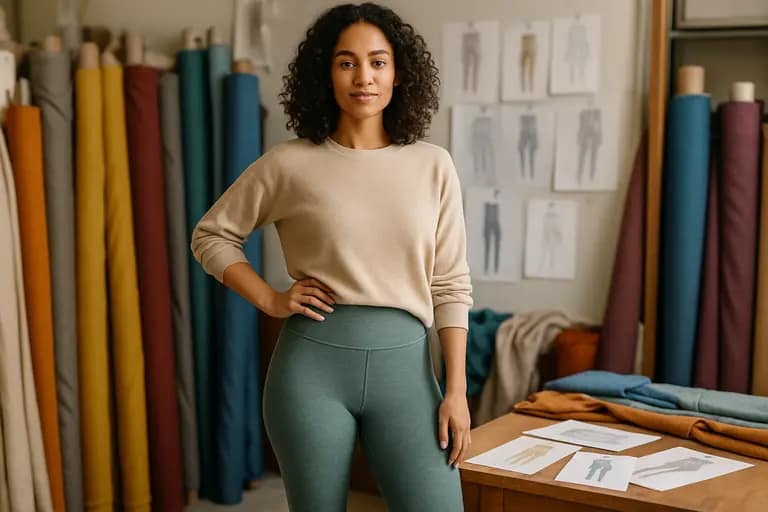
The most practical response from brands is not a full return to pure natural fibers. For activewear bottoms, blends are more likely. Cotton-elastane, wool-nylon-elastane, hemp-cotton-stretch, and cellulosic-stretch fabrics allow brands to signal reduced reliance on conventional synthetics while preserving some movement properties. That puts natural fiber activewear in a more realistic position: not a replacement for every performance tight, but a growing category for lower-impact workouts, studio classes, casual training, and all-day bottoms.
Research notes also point out that pure synthetics still dominate high-performance, stretch, and durable segments. That is not surprising. Leggings used for running intervals, hot gym sessions, or repeated machine abrasion have different demands than lounge pants or low-intensity studio bottoms. A cautious shopper can prefer natural fibers without ignoring those use-case differences.
Brands may also respond through clearer labeling. Fiber percentages, named certifications, PFAS-related statements, recycled-content claims, and repair or take-back information can help consumers compare products. Yet those disclosures should be specific. “Contains natural fibers” is less useful than a full fiber breakdown and an explanation of why each fiber is present.
Natural Fiber Activewear In Leggings And Bottoms
Natural fiber activewear is gaining attention for understandable reasons: shoppers are questioning synthetic fiber growth, chemical-disclosure issues, textile waste, and the feel of polyester-heavy clothing. The supported data also shows a harder truth. Synthetic fibers remain deeply embedded in apparel, and leggings depend on performance properties that natural fibers do not always supply on their own.
The sensible approach is not to treat natural fibers as automatically superior or synthetic fibers as automatically unacceptable. For bottoms, the better filter is activity first, fabric second, claim third. A cotton-rich legging may be a strong choice for walking or low-intensity movement. A wool or cellulosic blend may make sense in selected uses. A synthetic or recycled-synthetic blend may still be the more practical option for high-sweat training where drying speed and recovery matter most.
If clothing is associated with persistent skin irritation, breathing discomfort from tight garments, numbness, or other unusual symptoms, fabric shopping should not replace professional input. Discuss ongoing symptoms, chemical-exposure concerns, pregnancy-related fit needs, medication-related skin sensitivity, or chronic conditions with a qualified clinician who can give personal guidance.