

Responsible Cotton has moved from a broad sourcing phrase to a more measurable activewear issue after Under Armour officially joined the U.S. Cotton Trust Protocol on April 21, 2026. The decision matters because cotton in performance-adjacent apparel is not judged only by handfeel, graphics, or brand identity. It is increasingly judged by whether a company can trace where the fiber came from and report environmental data with enough structure to be evaluated.
Under Armour said it plans to pilot U.S. Cotton Trust Protocol-tracked cotton in its Freedom collection graphic tees in Fall 2026, according to the company’s Under Armour announcement. As of September 17, 2026, that pilot remained framed as a Fall 2026 plan rather than evidence that all Under Armour cotton products had shifted to Protocol-tracked fiber.
That distinction is worth keeping clear. A pilot can be meaningful without being a full supply-chain conversion. It can test article-level traceability, data handling, supplier coordination, and consumer communication before a brand expands the model across more products. For shoppers, it is a signal to look for specificity rather than broad sustainability language.
What Under Armour Announced
The April 21, 2026 Membership Step
Under Armour’s April 21, 2026 move placed the brand inside a voluntary cotton sustainability and traceability initiative focused on U.S.-grown cotton. The Protocol is described as a field-level program that gives participating brands access to verified data tied to key environmental metrics. In practical terms, this can help a brand move beyond a general claim that cotton is sourced more carefully and toward documented information about the farms and production systems behind that cotton.
For an activewear company, that matters because cotton often appears in training-adjacent products such as graphic tees, lifestyle layers, and casual athletic apparel. The April 2026 announcement did not claim that the fiber would change the performance profile of every Under Armour garment. It instead focused on responsible sourcing, traceability, and environmental-footprint verification.
A Fall 2026 Pilot, Not A Full Conversion
The planned Freedom collection graphic tee pilot is narrower than a companywide switch. That should not be read as a weakness. In textile supply chains, pilots can be the stage where brands test whether tracking systems work at product level. Under Armour’s announcement referenced article-level traceability, meaning a system intended to track cotton from the grower’s fields through each later stage to the finished product.
For consumers, the careful reading is this: the Fall 2026 pilot may show how Under Armour applies Protocol-tracked cotton in a defined product group. It does not, by itself, prove that every cotton garment sold by the company has the same traceability or environmental reporting behind it.
Why Responsible Cotton Matters In Activewear
Responsible Cotton Is A Traceability Question
The U.S. Cotton Trust Protocol covers six environmental metrics: land use, water management, soil carbon, soil loss, greenhouse gas emissions, and energy efficiency, according to the Protocol’s consumer overview. Those categories are useful because they give sourcing claims a defined structure. A claim tied to named metrics is easier to examine than a vague reference to being greener or better.
For a buyer, Responsible Cotton is less about assuming a shirt will feel different and more about asking whether the supply chain can be accounted for. A cotton graphic tee may look ordinary on a rack, but the sourcing system behind it can differ substantially depending on whether the brand can connect the finished article back to field-level data.
Why A Graphic Tee Is A Sensible Starting Point
Under Armour’s planned pilot in Freedom collection graphic tees makes sense as an initial test because the product category is clear and cotton-relevant. A graphic tee also gives a brand a contained product group where article-level traceability can be tested without implying a shift across bras, leggings, compression layers, or every training silhouette.
This is where fabric analysis needs restraint. The available announcement supports claims about sourcing and traceability, not claims that the pilot tees will improve athletic output, body temperature regulation, skin comfort, or training results. Fiber origin and garment performance are related only if the brand provides enough product-specific information to connect them. For this announcement, the strongest supported point is supply-chain accountability.
What The U.S. Cotton Trust Protocol Tracks
Six Environmental Metrics
The Protocol’s six-metric framework gives brands a way to organize cotton data around land use, water management, soil carbon, soil loss, greenhouse gas emissions, and energy efficiency. The research supplied for this topic also states that the Protocol offers access to verified data across those areas. That matters because the apparel industry often uses sustainability language that can be difficult for shoppers to verify at the product level.
Metrics do not make a garment automatically preferable for every buyer. They do, however, create a more defined basis for questions. A shopper can ask whether a specific product uses Protocol-tracked cotton, whether the brand provides article-level traceability, and whether the claim applies to the entire garment or only a portion of the cotton input.
Article-Level Traceability
Article-level traceability is the most relevant part of the Under Armour announcement for activewear consumers. It refers to tracking cotton from the grower’s fields through subsequent production stages to the finished product. That approach can support more precise product claims than a broad brandwide statement.
Still, traceability should be interpreted carefully. It is a documentation and supply-chain system. It does not, on its own, say that a tee will last longer, wash better, feel softer, or fit differently. Those questions depend on garment construction, fabric weight, finishing, print method, sewing quality, and care practices. The announcement supports a sourcing interpretation, not a performance guarantee.
How Shoppers Should Read The Claim
Treat The Pilot As Evidence, Not A Finish Line
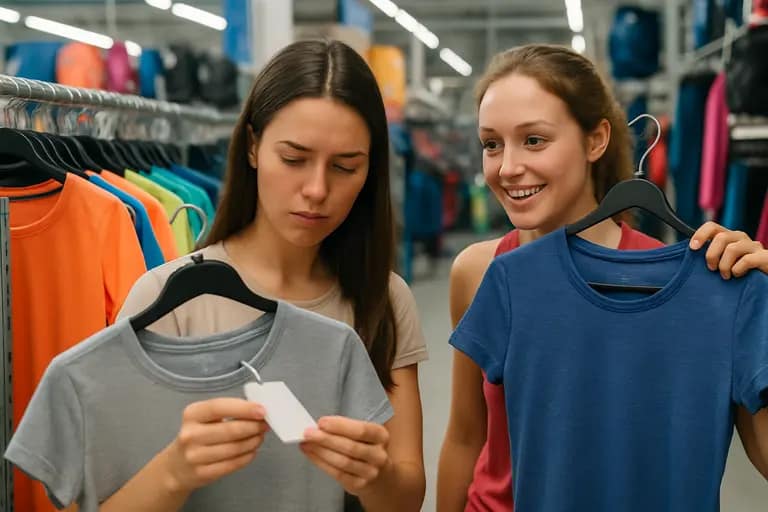
Under Armour joining the Protocol is a concrete step, but the Fall 2026 Freedom collection pilot should be treated as an early application. The supported facts show a company joining a voluntary field-level initiative and planning to use tracked cotton in a specific product group. They do not show completed rollout across all cotton products.
That is why cautious shoppers should look for product-page details once the pilot products are available. The most useful language would identify whether Protocol-tracked cotton is used, how it is traced, and whether the claim applies to the article being sold. A related discussion of Under Armour cotton sourcing can help frame why a traceability pilot is different from a total product-line shift.
Care Labels Still Matter
Sourcing information does not replace garment-care information. Even if a tee uses tracked cotton, the owner still needs to follow the care label for washing, drying, and storage. That is especially relevant for graphic tees, where decoration and fabric can age differently depending on laundering and heat exposure. The Under Armour announcement supports the sourcing story, while care instructions remain the practical guide for preserving the garment as sold.
For activewear wardrobes, this is the fabric-care lesson: responsible sourcing and durable use are separate questions. A traceable cotton program may support supply-chain transparency, while washing habits influence what happens to the garment after purchase. Both matter, but one should not be used as proof of the other.
Responsible Cotton And The Under Armour Signal
What This Change Does And Does Not Say
Under Armour’s Protocol membership signals a stronger commitment to transparent cotton sourcing. It also gives the company a way to verify environmental footprint metrics for cotton used in selected apparel. That is meaningful in a market where consumers, investors, and regulators increasingly ask brands to support supply-chain claims with quantified reporting.
Responsible Cotton, in this case, should be read as a sourcing and traceability development. It should not be read as a medical, fitness, or body-composition claim. No cotton program should be treated as a substitute for personal fit assessment, comfort testing, or professional guidance for health concerns.
What To Discuss If Clothing Affects Comfort
Most clothing decisions are ordinary fit and preference questions. If a garment causes persistent pain, unusual irritation, numbness, or other ongoing symptoms, fabric sourcing information is not enough to explain the issue. A qualified clinician can help assess personal concerns, and related education networks such as the Trinity Bariatric Institute provide supportive guidance, complementing broader wellness discussions without replacing individualized medical advice.
The clearest takeaway for activewear buyers is measured rather than dramatic: Under Armour’s April 21, 2026 decision gives cotton sourcing a more traceable pathway, beginning with a planned Fall 2026 graphic tee pilot. The value is not a promise that one shirt changes training. The value is a better way to ask where the cotton came from, which data supports the claim, and whether the product in hand is part of the traced system.