

Natural fiber activewear is no longer limited to soft cotton tees or wool base layers. The more interesting 2026 developments sit in fibre engineering, bio-based polymers, algae-derived inputs, and yarn structures designed to reduce reliance on conventional synthetics without pretending that performance tradeoffs have disappeared.
As a fabric specialist, I would frame these developments cautiously. A fibre can come from a renewable or lower-impact feedstock and still need proof on durability, wash performance, stretch recovery, dyeing impact, cost, and end-of-life handling. The activewear category is demanding because garments are stretched, sweated in, washed repeatedly, and expected to hold shape across movement. Sustainability claims have to survive that use pattern.
For readers comparing this topic with broader fabric shifts, our related analysis of sustainable fabric innovations covers adjacent developments in bio-based stretch and recycling. This article focuses more narrowly on natural and bio-derived inputs in performance clothing.
Why Natural Fiber Activewear Is Changing
Natural Fiber Activewear And Stretch
The main technical question is not whether natural fibres can feel comfortable. Many already do. The harder question is whether they can deliver the stretch, recovery, drying behavior, opacity, and strength that gym users expect from elastane-rich synthetic blends.
Several 2026 examples show how suppliers are working around that limitation. Nuyarn has been reported as engineering Merino wool fibres with fine-denier nylon filament through twist-free spinning, with claims around elasticity without spandex, lighter weight, faster drying, thermoregulation, and improved strength. That does not make wool a universal substitute for polyester-elastane leggings, but it shows how construction can shift performance without relying only on chemical finishes.
BYR International’s SolucellAir yarn, introduced in 2026, takes a different route. The yarn is described as 100 percent cotton during its final state, after a dissolvable filament core is removed under alkaline conditions to create a hollow-core structure. The reported purpose is to improve moisture management, breathability, lower weight, and skin comfort without synthetic finishes. This is a meaningful direction for natural fiber activewear because it treats cotton as an engineered structure rather than a simple heritage material.
Bio-Based Does Not Always Mean Natural
One of the more visible 2026 developments came from Avantium, which debuted plant-based polyethylene furanoate sportswear prototypes with Casa da Malha and Lacatoni at Milano Unica, held on July 7–9, 2026. The prototypes included yarns, knitted fabrics, and a sports shirt, according to an Ecotextile News report.
PEF should not be confused with cotton, wool, hemp, or algae fibre. It is a plant-based polymer, not a traditional natural fibre. Still, it matters to the discussion because activewear brands are searching for lower-fossil inputs that may behave more like performance synthetics. The cautious reading is that plant-based PEF may broaden the material menu, but prototypes do not automatically prove large-scale durability, recycling pathways, or superior environmental outcomes across every use case.
Fiber Structure Before Chemical Finishes
Algae-Based Fibres Are Moving From Concept To Testing
The ALLGAE project began on December 1, 2024 and was described as running for about two years. It is developing 100 percent algae-based textile fibres using seaweed side streams, with partners including Nordic Seafarm, Manatee Biomaterials, Houdini Sportswear, RISE, and CIT. The project also integrates algae pigments during fibre spinning to reduce pollution associated with dyeing, as described by the RISE project page.
For activewear, algae-derived fibres are worth watching because they address two concerns at once: feedstock sourcing and coloration. Dyeing can be resource-intensive, so incorporating pigment earlier in fibre formation may reduce later processing steps. The uncertainty is equally clear. As of September 24, 2026, the research supports development activity, not a broad claim that algae garments already outperform established sportswear fabrics in repeated training and laundering.
This is where the distinction between a material innovation and a finished garment matters. A fibre can look promising in a lab or pilot line, while a legging or sports top still depends on knitting method, elastomer choice, seam design, waistband construction, garment patterning, and care instructions.
Natural Fibres Are Entering Technical Textile Spaces
At Techtextil 2026, held April 21–24, 2026, more than 110 exhibitors were certified under the new Nature Performance label, according to the research notes. The materials highlighted included jute, industrial hemp, coir, sisal, short flax fibres, kapok, and abaca, with annual production figures ranging from tens of thousands of tonnes for some fibres to millions of tonnes for jute.
Those fibres will not all become running tights or studio leggings. Some are more likely to appear in reinforcement, footwear components, trims, packs, padding, or hybrid technical textiles. Still, their presence in a performance-textile trade setting signals a broader shift: brands are testing whether natural fibre characteristics can be placed where strength, texture, structure, or lower synthetic content are useful.
Natural Inputs Are Not A Simple Swap
Comfort Claims Need Wear Testing
Natural fiber activewear can sound reassuring because cotton, wool, hemp, and cellulosic fibres are familiar. Familiarity does not remove the need for testing. A cotton-rich legging may feel pleasant for yoga, but it may dry more slowly than a lighter synthetic blend depending on yarn structure and knit density. A wool blend may help with thermal comfort, but some wearers find wool texture noticeable against the skin. A bio-derived elastane may improve stretch in a natural blend, but it does not make the whole garment biodegradable or impact-free.
Hyosung FDC’s Fall/Winter 2027–28 Earthy Comfort trend, announced on March 26, 2026, emphasized bio-derived elastane from sources such as sugarcane blended with cotton, modal, Tencel, or wool. That points to a practical direction: many next-generation products are likely to be blends, not purist single-fibre garments. Blends can improve fit and recovery, but they may complicate recycling and disposal.
- Stretch: Check whether the garment recovers after squats, lunges, and seated positions.
- Drying: Treat “moisture management” as a property to verify through use, not a guarantee from fibre name alone.
- Opacity: Test coverage under movement and bright light, especially in leggings.
- Care: Review wash instructions because heat, friction, and repeated laundering can change fit and surface feel.
For those interested in integrating clothing choices with broader lifestyle habits, related perspectives on reflective wellness can be found on our network at Spiritual Endeavors. This resource emphasizes behavioral connections rather than technical specifics, illustrating how mindful purchasing can complement advances in garment technology.
How To Read Claims In Natural Fiber Activewear
Look For Specifics, Not Broad Green Language
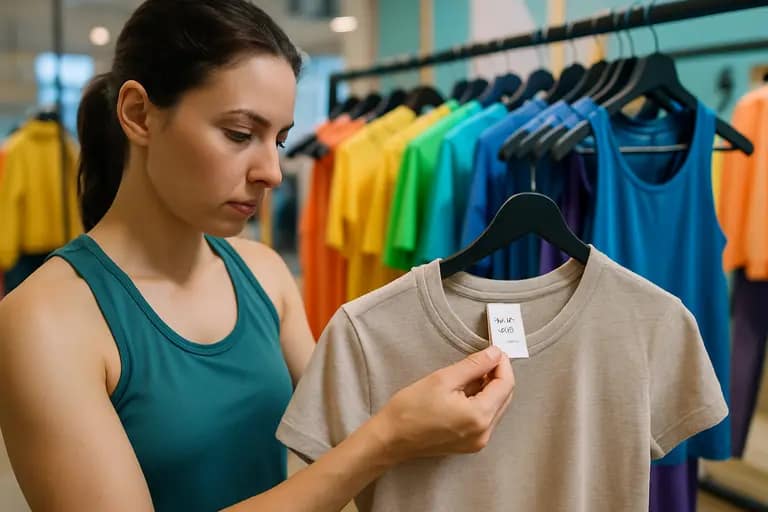
The strongest product claims usually name the fibre content, the yarn structure, the dyeing route, and the performance test. Vague language such as “eco performance” or “naturally technical” is less useful unless the brand explains what changed in the fabric and how it was measured.
For natural fiber activewear, useful questions include whether the garment contains elastane, nylon, polyester, or other synthetics; whether the claimed bio-based input is certified or only described by the brand; whether the fabric has been tested after repeated washing; and whether the product is designed for studio work, base layers, high-sweat sessions, or casual wear.
Regulatory and consumer pressure around microplastic pollution and persistent finishes such as PFAS has helped push interest toward natural fibres, man-made cellulosic fibres such as lyocell and modal, and blended performance garments. That does not mean every natural blend is lower impact by default. Farming practices, chemical processing, dyeing, transport, garment lifespan, and disposal systems all affect the assessment.
Regenerative Cotton Shows The System View
The Armani Agroforestry Cotton Living Lab, launched in 2023 in Apulia, southern Italy, was reported to have completed its first three growing seasons through 2025. The research notes report a 35 percent improvement in land-use efficiency, with garments reaching retail in July 2025. This example is relevant because it treats material sourcing as an agricultural system rather than only a fibre label.
That is a better direction for sustainability analysis. The fibre content tag is only one part of the story. A cotton garment can differ widely depending on cultivation, irrigation, soil practices, dyeing, finishing, garment durability, and how often the wearer uses it before replacement.
What Natural Fiber Activewear Still Needs To Prove
The next phase for natural fiber activewear is evidence under ordinary use. Pilot projects and trade-fair prototypes are useful, but activewear earns credibility after repeated stretch, sweat, washing, abrasion, and storage. Brands should be expected to show clearer data on wash durability, shape retention, drying time, fibre shedding, dye fastness, and end-of-life options.
The most promising direction is not a return to untreated basics. It is a shift from surface finishes toward fibre structure, yarn architecture, bio-derived stretch components, and lower-impact coloration. That approach may reduce dependence on some conventional synthetic systems, but it still needs proof at garment scale.
For shoppers, the cautious approach is practical: match the fabric to the activity, buy only what fills a real gap, and judge performance after movement rather than from a hangtag. If a garment appears to cause persistent skin irritation, numbness, unusual pressure, or breathing discomfort, discuss those symptoms with a qualified clinician and ask whether fit, skin sensitivity, or another issue should be assessed.