

Biodegradable Performance Fabrics are moving from sustainability presentations into activewear development, but the useful question is not whether a fiber sounds greener. The useful question is whether the finished garment can still manage stretch, recovery, moisture, support, and repeated wear for the activity it is meant to handle.
The 2026 research and trade-show record points to real movement. Bio-based polyester alternatives, bio-based elastane systems, PLA blends, and lyocell biodegradation claims all suggest that fabric engineering is shifting beyond recycled content alone. That does not mean every garment labeled bio-based or biodegradable is ready for hard training, high-sweat sessions, or sports-bra support needs. The material has to be judged as part of a garment, not as an isolated fiber story.
What Biodegradable Performance Fabrics Actually Promise
A 2026 Shift From Coatings To Fiber Chemistry
In July 2026, Lever Style reported FURIX PEF for the Autumn/Winter 2027 season. The company described it as 100 percent bio-based and biodegradable, with performance positioned as comparable to the polyesters it aims to replace. Lever Style also reported that the fiber is naturally antibacterial and avoids finishing treatments that may degrade over time Lever Style fabric report.
That distinction matters because many activewear claims have historically depended on surface finishes: antimicrobial treatments, moisture treatments, or hand-feel treatments applied after the base fabric is made. If a claimed property comes from the fiber structure itself, the design logic is different. The claim may still need wear testing, laundering data, and end-of-life verification, but it is not simply a coating story.
In March 2026, at Performance Days in Munich on March 18-19, Brugnoli, Fulgar, and The Lycra Company launched Br4/E1, a technical fabric reported to contain 89 percent bio-based content. The launch positioned the fabric around elasticity, comfort, fit, and lower environmental impact compared with conventional options Knitting Industry report.
What Biodegradation Does Not Settle
Biodegradability is not a single, universal outcome. The research notes identify different material pathways, including bio-based PEF, PLA, lyocell, biodegradable polyester, and bio-based stretch fibers. They do not prove that every garment will break down in the same way in every disposal setting. Conditions such as water, soil, oxygen, temperature, and industrial processing can affect end-of-life behavior.
That is why Biodegradable Performance Fabrics should be evaluated with two questions at the same time: what does the fiber claim, and what does the garment actually require from the wearer? A base layer for hot weather, a running tight, and a high-support sports bra place different stress on fabric. A biodegradable claim does not automatically answer questions about opacity, abrasion resistance, elastic recovery, or fit after repeated washing.
Stretch, Support, And Moisture Tradeoffs
Bio-Based Elastane And Recovery
Stretch is one of the hardest activewear properties to replace because many gym garments rely on elastane or spandex for recovery. The research notes describe several 2026 examples of brands and suppliers working on this problem. PANGAIA’s SS26 Courtside Capsule was reported to use 72 percent bio-based nylon from corn and roughly 70 percent renewable-content plant-based elastane while maintaining conventional activewear properties such as stretch and recovery. Hyosung TNC also expanded its regen BIO spandex line in 2026 by shifting feedstock from corn to sugarcane, with a stated target of producing 50,000 tons of bio-BDO from sugarcane by the end of 2026.
Those developments suggest that the stretch layer is receiving more serious attention. Still, a shopper cannot assess recovery from a fiber percentage alone. A fabric can contain a lower-impact stretch component and still fail if the knit structure bags at the knees, the waistband rolls, or the bra band loses tension too quickly.
Biodegradable Performance Fabrics In Sports Bras
Sports bras make the tradeoff especially clear. Support is not created by one fiber. It comes from the underband, cup or panel structure, strap placement, neckline coverage, closures, fabric recovery, and how those parts interact on a specific body during movement. Biodegradable Performance Fabrics may supply part of that system, but they do not replace fit testing.
For lower-impact studio work, some wearers may prefer a softer, less compressive bra if the band stays in place and the straps do not distract. For running, jumping, court drills, or high-repetition intervals, many people look for more structured support through firmer panels, a stable lower band, and straps that limit bounce without creating uncomfortable pressure. The best option can vary by bust size, activity, posture, prior preferences, pregnancy status, and sensitivity to pressure.
- Check that the lower band stays level during arm raises and light jogging in place.
- Look for cup or panel coverage that feels secure without gaping or digging.
- Test straps through overhead reach, rotation, and forward bending.
- Confirm that the fabric returns toward shape after being stretched.
- Stop using a garment for training if it causes persistent pain, numbness, or significant irritation, and seek professional guidance if symptoms continue.
Activity Matching Without Overbuying
Low-Impact Studio Work
For Pilates, yoga, mobility, and light strength work, the fabric priorities often lean toward stretch, softness, opacity through deep flexion, and low distraction. A pure PLA fabric, according to the research notes, was reported in a Journal of the Textile Institute study to offer strong air and water vapor permeability, which may make PLA concepts more relevant for base layers or hot-weather use. Hybrid PLA/PET configurations were reported to balance breathability and durability while reducing fossil-based fiber use.
That does not mean PLA automatically belongs in every studio garment. Mat work can involve kneeling, sliding, compression against equipment, and repeated laundering. A material that breathes well still needs enough durability and recovery for the garment’s role.
Running, Jumping, And Mixed Gym Training
For higher-impact activity, a fabric has to manage more than comfort at rest. The garment must stay in position, dry at a reasonable rate, resist distortion, and avoid distracting pressure. For leggings, that means waistband stability, squat opacity, and recovery. For sports bras, it means matching support structure to movement rather than assuming the most compressive option is always the best choice.
This is where a cautious activewear approach helps. A garment with biodegradable elastane making up a small share of total weight may still behave similarly to standard stretch blends if the rest of the design is sound, but the research notes also point to cost premiums for some biodegradable elastane systems. That cost has to be weighed against durability, use frequency, and whether the garment works across more than one activity.
Readers comparing broader sustainability themes can also review our related discussion of sustainable fabric innovations. Additionally, explore more about the supply chain and industrial material context from the same network at UP Offshore.
Fabric Claims, Care, And Verification
Labels Need Context
The phrase bio-based can refer to feedstock origin, not necessarily biodegradation. The phrase biodegradable can refer to behavior under specific conditions, not necessarily home composting or landfill breakdown. A garment can also contain several fiber types, trims, dyes, elastics, labels, and sewing threads that complicate recycling or disposal.
Forall Lab’s 2026 forecast, according to the research notes, identified mono-material PET or nylon 6 garments with minimal elastane as one path toward circular design because those constructions can be more compatible with mechanical or solvent recycling. That creates a tension: a garment designed for recycling may not be the same as a garment designed for biodegradation. Both approaches can be valid, but they should not be treated as interchangeable.
Care Still Affects Performance
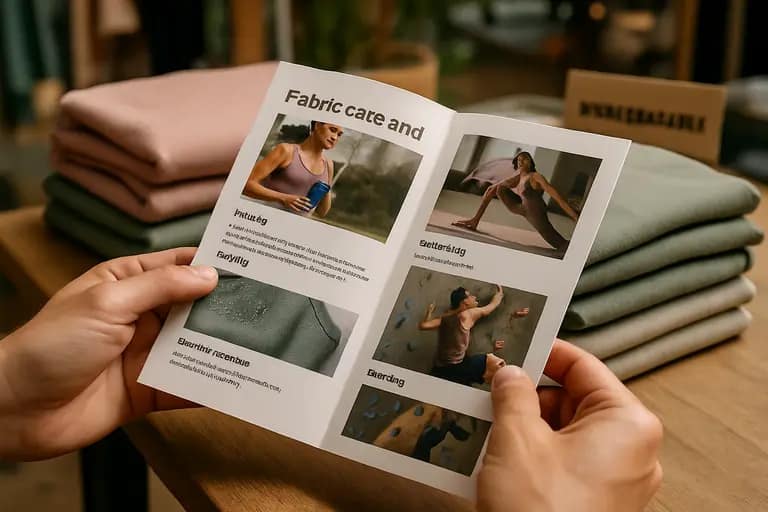
Activewear performance is also a care issue. Heat, abrasion, detergents, and repeated wear can affect stretch and hand feel over time. A fabric innovation may look strong in launch materials but still needs ordinary use data: wash cycles, sweat exposure, abrasion, drying time, odor retention, and fit changes after repeated wear.
For sports bras, care is closely tied to support. If the lower band stretches out, the straps lose recovery, or the cup panels distort, the garment may no longer serve the same activity even if the fabric still looks intact. That is not a medical claim; it is a fit and function issue.
Biodegradable Performance Fabrics For Real Workouts
Biodegradable Performance Fabrics are most promising where sustainability goals and garment mechanics are evaluated together. A bio-based base layer should still breathe and dry appropriately. A biodegradable stretch fabric should still recover. A sports bra using lower-impact fibers should still provide the level of support the wearer needs for the activity.
The practical buying test is simple: match the garment to the hardest movement it will face. Squat, reach, rotate, jog in place, and check whether the fabric shifts, sheers out, overheats, or loses shape. For bras, test the band, straps, and cup structure separately from the leggings or top. Matching sets can be visually consistent while serving different mechanical jobs.
This information is general education and not medical advice. If a sports bra, waistband, seam, or fabric consistently causes pain, breathing discomfort, numbness, skin irritation, or other unusual symptoms, discuss the symptoms, activity type, garment fit, and pressure points with a qualified clinician.