

Silk-based activewear can be comfortable for walking, mobility work, gentle yoga, Pilates, warmups, travel, and some lower-intensity strength sessions. Whether it can handle running, indoor cycling, high-intensity intervals, or long, sweaty workouts depends less on the word “silk” and more on the complete fabric construction, stretch fibers, garment fit, drying speed, seam design, and wash durability.
That distinction is important following the July 16, 2026, launch of LILYSILK’s SILKAIRY collection in New York. The company describes its third activewear collection as a silk-blend range designed for “movement, travel and everyday life.” Its fabric uses smooth inner and outer knit surfaces, a hollow middle layer, and integrated stretch intended to create a lighter, cushioned feel with shape recovery. (Sweaty Workout Clothes: The Right Way to Clean)
Those features make the collection relevant to the growing overlap between activewear and athleisure. They do not establish that the garments wick sweat, dry quickly, resist abrasion, or outperform technical polyester and nylon during demanding exercise.
No independent wear trial or standardized performance report was identified for SILKAIRY during this review. The most responsible answer is therefore conditional: silk-based apparel may handle a real workout, but the activity level and garment engineering matter more than the luxury fiber story.
What LILYSILK Launched in July 2026
SILKAIRY includes wide-leg pants, shorts, a short-sleeve half-zip top, and a cropped track jacket. According to the company, the three-layer fabric places a hollow air space between two smooth knit surfaces. Stretch fibers are integrated to help the garments move and recover their shape.
LILYSILK CEO David Wang said the company developed the material to bring the feel of silk into clothing that is lighter, more flexible, and easier to wear throughout the day. The wording is revealing. The official launch emphasizes modern lifestyles, travel, comfort, and daily movement rather than competitive running, endurance training, court sports, or high-output gym sessions.
As of August 5, 2026, the U.S. product pages listed the collection in sizes XS through XL:
| SILKAIRY Product | Listed Price | Design Emphasis |
|---|---|---|
| Curve Hem Shorts | $109 | High rise, concealed drawstring, curved panels and integrated stretch |
| Short Sleeve Half-Zip Top | $139 | Relaxed shape, adjustable neckline and silk-charmeuse trim |
| Wide Leg Lounge Pants | $159 | High waist, internal drawstring, wide leg and soft drape |
| Zipped Track Jacket | $159 | Cropped fit, elasticized cuffs and hem, lightweight layering |
The SILKAIRY shorts have a four-inch listed inseam and a loose leg shape rather than a tight compression fit. The half-zip top is described as relaxed and slightly boxy. The wide-leg pants and track jacket are similarly presented as versatile lifestyle pieces. Prices, sizes, and availability can change.
This silhouette mix suggests that SILKAIRY belongs closer to movement-friendly athleisure than to specialized performance equipment. That does not make it unsuitable for exercise. It means buyers should judge it according to the specific workout rather than the activewear category printed on a marketing page.
Silk Absorbs Moisture, but Absorption Is Not the Same as Wicking
Silk is a protein fiber with a meaningful ability to absorb atmospheric moisture. The Food and Agriculture Organization’s silk-testing guidance uses an accepted moisture-regain coefficient of approximately 11%. At the fiber level, silk can take in water and feel less immediately clammy than a completely nonabsorbent material. (FAO silk properties)
That does not automatically make silk a strong high-sweat fabric.
Effective sportswear must do more than absorb perspiration. It should move liquid away from the skin, spread it across a larger surface, permit water vapor and air to pass through, and allow the moisture to evaporate. A fabric that absorbs sweat but holds it close to the body may eventually feel heavy, damp, or clingy.
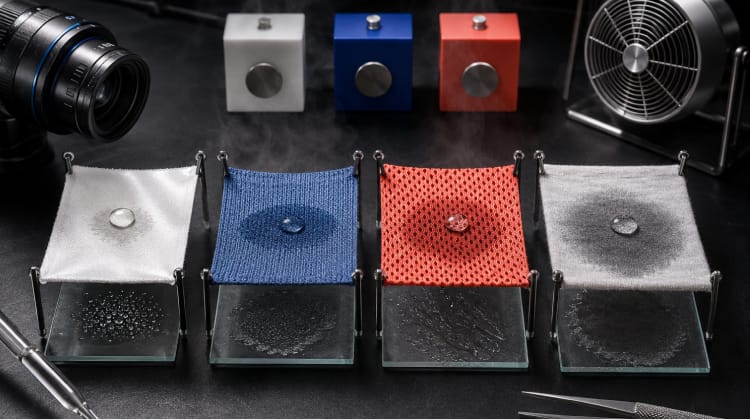
A 2025 review of sports-textile development identified moisture transport, thermoregulation, stretch, mechanical support, and fabric architecture as central performance requirements. Fiber type is only one variable. Yarn shape, knit density, pore size, garment fit, layers, coatings, and finishes can significantly alter how a fabric behaves during exercise. (Sports-textile materials review)
That is why “silk breathes” is too broad to serve as a workout guarantee. A thin, loose silk-blend knit may permit useful airflow. A dense three-layer structure may trap more warmth. A loose top may feel airy during walking but fail to move sweat away from the skin during a hard run because it has limited contact with the body.
SILKAIRY’s hollow core could reduce weight and cling, as the company claims. Without independent measurements for air permeability, water-vapor transmission, liquid spreading, drying time, or overall moisture-management capacity, consumers cannot determine how it compares with a purpose-built running fabric.
What Happens When Silk Gets Wet?
Traditional silk loses some strength when saturated. FAO guidance states that silk fiber strength decreases by approximately 20% when wet and generally returns after drying. That figure describes conventional silk fiber behavior, not a prediction that a particular blended garment will tear after a sweaty workout. Stretch fibers, knit construction, yarn selection, and finishing can materially change the finished fabric.
The data still explain why wet handling and laundering matter. Pulling, wringing, aggressively scrubbing, or stretching a damp silk-rich garment can place stress on fibers while they are more vulnerable.
Silk is also hydrophilic, meaning it has an affinity for water. A 2025 materials study seeking to create faster sweat transfer in silk fabric described natural silk’s hydrophilicity as a limitation for rapid evaporation. Researchers engineered an asymmetric structure that moved moisture in one direction more effectively, illustrating that silk may need deliberate fabric engineering to perform like modern technical sportswear. That experimental material is not the same as SILKAIRY, and its results should not be attributed to commercial garments. (Engineered silk moisture-management research)
The practical question is therefore not whether silk can become an effective performance textile. It can be engineered in many ways. The question is whether a specific retail garment has been designed and tested for the amount of sweat, friction, heat, and washing its wearer will generate.
Which Workouts Are the Best Match?
Silk-based activewear is most convincing when the exercise involves moderate movement, relatively low abrasion, and manageable perspiration.
Walking is a logical use. The relaxed SILKAIRY top, shorts, and pants permit a broad range of motion without the strong compression associated with running tights. A drawstring can help stabilize the waistband as the wearer moves.
Gentle yoga, mobility sessions, and stretching may also suit a soft, flexible knit. The garment still needs to stay in place during forward folds, seated positions, and overhead reaching. Loose tops can shift, while wide-leg pants may interfere with foot placement or equipment.
Pilates and lower-intensity strength training are possible, particularly when the workout does not involve rough benches, knurled barbells, floor dragging, or repeated contact with hook-and-loop straps. Smooth silk-led surfaces may feel comfortable against the skin, but smoothness can also make a garment slide on benches or mats.

Warmups, cooldowns, commuting, and travel are perhaps the clearest applications for the collection. The track jacket and wide-leg pants appear designed for exactly that transition between activity and everyday use.
High-sweat workouts present more uncertainty. Long runs, indoor cycling classes, hot yoga, high-intensity intervals, and outdoor summer training require efficient moisture transport and drying. A garment that absorbs sweat faster than it releases it may become heavier and more adhesive over time.
The current public product information does not supply enough performance data to recommend SILKAIRY over specialized running, cycling, or hot-weather apparel for those conditions.
Stretch Does Not Automatically Mean Workout Support
The collection includes integrated stretch fibers, but stretch and support are different properties.
A fabric may extend comfortably without providing the hold needed for running, jumping, lateral movement, or high-impact training. Shape recovery describes whether the garment returns toward its original dimensions after being stretched. It does not describe breast support, muscle compression, waistband stability, or resistance to downward movement.
The wide-leg pants and shorts use internal drawstrings, which may help the waist remain secure. The shorts still have a loose four-inch inseam. That shape may work for walking or casual training but may permit skin-on-skin thigh friction, exposure during floor movements, or fabric movement during running.
The half-zip top does not replace a sports bra for people who need breast support. Its boxy construction may also shift during inverted or floor-based exercises. The cropped jacket is a layering piece rather than a sweat-management base layer.
A body-neutral fitting test should focus on movement rather than appearance. Squat, hinge, reach, sit, walk briskly, and raise both arms. Check whether the waistband rolls, fabric pulls into sensitive anatomy, hems rise, seams rub, or the garment becomes transparent when stretched.
No luxury fiber can correct poor fit.
Friction and Abrasion May Be the Bigger Limitation
Workout garments encounter more mechanical wear than many everyday clothes.
Running creates thousands of repeated movements at the underarms, waistband, inner thighs, and sock line. Strength training brings fabric into contact with benches, bar knurling, cable attachments, floor surfaces, and textured pads. Hiking adds backpack straps, branches, rocks, and repeated hip-belt friction.
Traditional silk can be strong for its weight, but fine surfaces may snag or abrade. LILYSILK describes SILKAIRY as a double-faced knit with a structured core, which may improve its practical durability compared with thin silk charmeuse. However, the company’s public launch materials do not provide abrasion-cycle results, pilling scores, snag resistance, seam-strength data, or long-term athlete wear tests.
A 2026 textile study demonstrates why construction and finishing cannot be judged in isolation. Researchers modifying silk fabric found that changes improving moisture absorption and wrinkle recovery could simultaneously reduce air permeability, elongation, or initial abrasion resistance. The experiment involved a specific chemical treatment rather than consumer activewear, but it illustrates a broad design reality: improving one textile property can weaken another.
For buyers, the low-risk approach is to test silk-based activewear first during a short, low-abrasion session. Avoid making an expensive new garment the only outfit available for a long run, demanding hike, or high-friction gym workout.
Repeated Washing Is Part of Real Workout Performance
A piece of activewear is only practical if it can be cleaned as often as the wearer needs.
Workout clothing collects sweat, skin oils, deodorant, sunscreen, and environmental dirt. Garments worn directly against the skin may require frequent washing, especially after high-sweat sessions. A fabric that performs well once but deteriorates rapidly after cleaning is not effective activewear.
LILYSILK sells several machine-washable silk technologies, but the company advises shoppers to follow the care instructions attached to each individual product. Its general machine-washable silk guidance recommends a gentle cycle for items specifically labeled for machine washing. Traditional silk pieces may require hand washing or other delicate care.
The accessible SILKAIRY product descriptions reviewed for this article did not display detailed laundering instructions or independent wash-test results. Shoppers should therefore inspect the sewn-in care label before purchase rather than assuming that every silk-blend activewear item can enter a normal workout-clothing cycle.

A practical care routine should follow the garment’s own label. Where machine washing is permitted, a cold delicate cycle, mild detergent, mesh laundry bag, and air drying may reduce agitation. Avoid wringing wet silk-rich fabric. Bleach, high heat, aggressive stain treatments, and fabric softener may damage certain fibers or affect stretch components.
Workout apparel also needs enough time to dry fully before being worn or stored. Buying one costly set that requires slow, delicate care may be less practical than owning several durable garments that can rotate through regular training.
Does Silk Reduce Chafing or Skin Irritation?
A smooth textile surface may feel pleasant and may create less obvious rubbing than a coarse or heavily brushed fabric. That does not mean silk prevents chafing or treats sensitive skin.
Chafing depends on moisture, pressure, repetition, body movement, garment fit, seam placement, surface texture, and workout duration. A soft fabric can still irritate if a waistband rolls, a seam crosses a high-friction area, or wet material repeatedly moves against the skin.
Silk may also absorb sweat and become more adhesive as it gets wet. The garment’s loose or fitted construction can therefore matter more than the fiber’s dry hand feel.
People with persistent itching, burning, spreading rashes, broken skin, or recurrent exercise-related irritation should not assume the cause is a particular fabric. Detergent residue, dyes, elastane, finishes, heat, sweat, infection, or an unrelated skin condition may be involved. A qualified healthcare professional or dermatologist can evaluate ongoing symptoms.
Silk-based clothing should be presented as a comfort option, not a medical treatment or hypoallergenic guarantee.
What to Check Before Buying Silk Activewear
The most useful shopping test separates brand storytelling from measurable workout needs:
- Read the complete fiber-content and care labels rather than relying on the word “silk.”
- Check whether the garment is designed for exercise, athleisure, travel, or lounging.
- Look for published information on drying time, moisture transport, abrasion, pilling, stretch recovery, and wash testing.
- Test squats, reaches, floor positions, and a brisk walk before removing tags.
- Inspect waistbands, front seams, armholes, zipper guards, hems, and inner surfaces for pressure or friction.
- Confirm that the return policy permits a meaningful indoor fit test.
- Begin with a short, low-sweat workout before using the garment for heat, endurance, or high-friction training.
The product’s price also changes the calculation. A $109 pair of shorts or $159 pair of pants may be worthwhile to someone prioritizing silk-led softness and day-to-evening styling. A runner seeking fast drying, secure storage pockets, reflective elements, and tested sweat management may find better value in conventional technical apparel.
The Practical Verdict
Silk-based activewear can handle real movement. It may also handle real workouts when the activity is moderate, the garment fits securely, the fabric has enough stretch, and laundering is manageable.
The July 2026 SILKAIRY collection appears strongest as premium athleisure for walking, travel, mobility work, light exercise, warmups, and daily transitions. LILYSILK’s three-layer construction and integrated stretch address some limitations associated with traditional silk, but the available evidence does not establish that the collection matches specialized synthetic activewear for sweat transport, fast drying, abrasion resistance, or repeated high-intensity use.
Silk itself is neither automatically impractical nor automatically superior. Its natural moisture absorption and smooth texture may support comfort, while its wet behavior and care requirements can create tradeoffs. Blending and fabric engineering may improve performance, but those improvements should be demonstrated rather than assumed.
For low- to moderate-intensity movement, silk-based activewear can be a legitimate choice. For long runs, hot classes, high-output cycling, or abrasive training environments, consumers should look for independent performance data—or select a garment already tested for those specific demands.